
The modern radiologist is no longer just looking for a faster way to identify a lung nodule; they are fighting a losing battle against a fragmented digital architecture that prioritizes individual data points over the human clinical experience. While the previous decade focused on the “point solution” gold rush—where hundreds of independent AI algorithms were developed to solve specific, narrow diagnostic tasks—the current landscape has shifted toward a more sophisticated necessity. This review examines the rise of the orchestration layer, a technology that acts as the central nervous system for medical imaging, moving the needle from mere computational speed to systemic, integrated coordination.
The Shift: From Velocity to Integrated Coordination
The transition from isolated AI tools to comprehensive orchestration layers marks a departure from the “speed at all costs” mentality that initially defined healthcare automation. In the past, a health system might have implemented a standalone tool to detect intracranial hemorrhages, only to find that the seconds saved in detection were immediately lost as the clinician struggled to manually move that data into the patient’s electronic record. Orchestration fixes this by creating an intelligent organizational control layer. It functions as the connective tissue that manages the flow of information between raw storage and the final clinical interpretation, ensuring that data is not just processed, but properly positioned within the workflow.
This evolution is primarily fueled by the alarming rates of clinician burnout and the obsolescence of legacy infrastructures. When a radiologist has to toggle between four different screens to compare a current CT scan with historical lab results, the technical “efficiency” of an AI algorithm becomes irrelevant. Orchestration layers address this by automating the logistical heavy lifting. By managing the queue and context of every case, these systems allow physicians to return to the core of their profession: high-level diagnostic reasoning rather than digital data entry and system navigation.
Core Components: The Orchestration Ecosystem
Data Normalization: Intelligent Routing
One of the most profound technical hurdles in medical imaging is the lack of uniformity across different clinical environments. A scan performed in a high-intensity emergency department often uses different metadata and protocols than one performed in a routine outpatient setting, leading to a “digital language barrier” that slows down the diagnostic process. Modern orchestration layers utilize AI to standardize these disparate formats into a consistent, normalized structure. This ensures that the imaging data is ready for immediate consumption by both secondary AI algorithms and the human specialists who ultimately sign off on the reports.
Beyond simple formatting, the power of these platforms lies in their ability to manage workloads through intelligent routing. Instead of a static “first-in, first-out” queue, the orchestration engine analyzes the complexity of the case, the urgency of the clinical findings, and the specific sub-specialty expertise of the available physicians. This means a suspected stroke case is automatically prioritized and routed to the most qualified neuro-radiologist on duty, while a routine wellness screening is placed appropriately in the secondary queue. This level of automation transforms the worklist from a passive list into a dynamic, prioritized asset.
Contextual Workflow: Seamless Integration
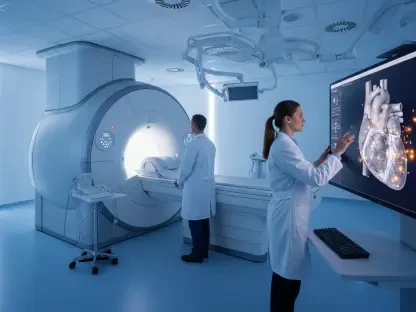
The era of “swivel-chair interoperability” is finally being challenged by standards-based integration that embeds AI findings directly into the primary clinical interface. In a truly orchestrated environment, a clinician never has to leave their primary viewer to see the output of a deep-learning model. The orchestration layer fetches the AI results and overlays them onto the original image, while simultaneously pulling in relevant laboratory data and historical clinical notes. This creates a holistic patient view that was previously impossible to achieve without significant manual effort.
This contextual alignment is not just about convenience; it is a critical safety feature. When an imaging study is viewed in isolation, the risk of a “false positive” or a missed correlation increases significantly. By automatically surfacing a patient’s prior history of malignancy or a recent change in blood chemistry alongside the current scan, the orchestration platform provides the necessary clinical guardrails. This synthesized approach ensures that the diagnostic process is informed by the totality of the patient’s medical journey rather than a single, disconnected snapshot in time.
Cross-Specialty Interoperability: Breaking Silos
Historically, the medical imaging world was divided into rigid digital silos, where radiology, cardiology, and oncology lived on separate islands of data. Orchestration frameworks are finally dismantling these barriers by utilizing technical frameworks that allow for a unified viewer experience. This allows a multidisciplinary team to access a comprehensive set of patient data simultaneously, regardless of which department originally captured the images. For example, a surgical team planning a complex procedure can now view cardiac ultrasound data and radiological CT reconstructions in one synchronized environment.
The significance of this interoperability cannot be overstated in the context of collaborative care. When a tumor board meets to discuss a patient’s treatment plan, the ability to flip between different types of imaging without technical friction allows for a more nuanced and accurate discussion. This unified access ensures that every specialist involved is working from the same “source of truth,” reducing the likelihood of conflicting interpretations and improving the overall precision of the care plan.
Emerging Trends: Enterprise Imaging
The industry is currently witnessing a decisive move toward modular IT infrastructures. Unlike the rigid systems of the past, modern orchestration platforms are designed to be “plug-and-play,” allowing hospital administrators to swap out specific algorithms as better versions become available without having to re-engineer their entire system. This modularity is essential for future-proofing healthcare investments, ensuring that a hospital is not locked into a single vendor’s ecosystem for a decade.
Moreover, the adoption of cloud-native orchestration platforms is facilitating a new era of remote access and scalable processing. As healthcare systems expand across larger geographic regions, the ability to process massive amounts of imaging data in the cloud—rather than on local servers—allows for more consistent performance and easier collaboration between distant facilities. This transition to the cloud also supports the growing trend of remote work among specialists, providing them with the same high-powered tools at home that they would have in a traditional hospital setting.
Real-World Applications: Sector Impact
In large-scale hospital networks, orchestration layers have moved from experimental pilot programs to essential infrastructure. These networks use orchestration to manage staggering diagnostic workloads that would otherwise paralyze a traditional system. By automating the triage of life-threatening findings in emergency medicine, these platforms ensure that critical cases are flagged in seconds rather than minutes. This rapid prioritization is often the difference between a successful intervention and a permanent disability in time-sensitive scenarios like acute ischemic stroke.
Beyond the emergency room, orchestration is proving its worth in multidisciplinary surgical planning. In complex cases where cardiology and radiology data must be synthesized, the orchestration layer provides the digital bridge necessary for surgeons to visualize the entire anatomical landscape. This level of detail allows for more precise preoperative mapping, which often leads to shorter surgery times and improved recovery outcomes for the patient.
Technical Obstacles: Governance Challenges
Despite the clear benefits, integrating legacy PACS and EHR systems with modern orchestration layers remains a significant hurdle. Many older systems were never designed to communicate with external AI platforms, leading to “integration debt” that requires significant time and financial resources to resolve. Furthermore, there are valid regulatory and safety concerns regarding the “human in the loop.” As systems become more automated in their routing and prioritization decisions, maintaining transparency and ensuring that a human remains the final authority is paramount.
The necessity of multidisciplinary oversight teams is more critical than ever. These teams must constantly validate AI accuracy and establish safety protocols that account for potential system failures. Without a robust governance framework, there is a risk that “automation bias” could lead clinicians to trust the system’s prioritization too blindly. Therefore, the implementation of orchestration must be accompanied by rigorous training and a culture of continuous auditing to ensure that the technology serves the clinician, and not the other way around.
The Future: Orchestrated Medical Intelligence
The trajectory of this technology points toward a convergence with generative AI to automate the more tedious aspects of clinical documentation. In the coming years, orchestration layers will likely not only route images but also draft the preliminary text of a report based on the AI’s findings and the patient’s history. This would allow the radiologist to act more as an editor and final clinical validator, further reducing the administrative burden that currently defines the profession.
We are also likely to see breakthroughs in predictive orchestration, where the system anticipates hospital staffing needs based on incoming imaging volumes from various departments. By analyzing trends in real-time, the platform could alert administrators to potential bottlenecks before they occur, allowing for more efficient resource allocation. Ultimately, the long-term impact of these advancements will be the gradual fading of technology into the background, allowing the patient-provider relationship to reclaim its position at the center of clinical care.
Final Assessment: AI Orchestration
The transition from fragmented, speed-based tools to a unified, interoperable ecosystem represented a fundamental shift in medical imaging. This review found that while individual AI algorithms provided the initial spark, it was the orchestration layer that provided the sustainable flame. By moving beyond simple detection and focusing on the intelligent management of data and workflows, these systems have proven their ability to mitigate the chronic burnout plaguing the radiology profession while simultaneously increasing the accuracy of complex diagnoses.
The implementation of these platforms succeeded most when built upon open standards like HL7 and DICOM, which ensured long-term flexibility and scalability. Although technical and regulatory challenges persisted, the shift toward a more connected and automated infrastructure appeared irreversible. Ultimately, the verdict on AI orchestration was clear: it served as the essential bridge between raw computational power and meaningful clinical impact, transforming medical imaging from a series of isolated tasks into a cohesive, patient-centered discipline.