
The medical landscape across Northeast Ohio is experiencing a profound digital transformation as flagship institutions like the Cleveland Clinic, University Hospitals, and Summa Health integrate high-level artificial intelligence into their core radiological workflows. This shift is not merely an incremental update to existing software but a fundamental reimagining of how diagnostic imaging functions within a high-pressure healthcare environment. By deploying sophisticated algorithms to analyze CT scans, MRIs, and mammograms, these hospitals are significantly increasing the speed and precision of their diagnostic capabilities. This technological evolution allows for the identification of life-threatening conditions much earlier than previously possible, particularly as emergency departments and outpatient clinics face an unprecedented volume of imaging data. The objective is to utilize these tools to provide a comprehensive safety net that supports clinical decision-making while ensuring that the massive influx of patient information is processed with a level of scrutiny that matches the urgency of modern medical needs.
Collaborative Intelligence: The Human-Machine Partnership
The cornerstone of this integration is the firm principle that artificial intelligence serves as a sophisticated secondary observer rather than a replacement for the nuanced expertise of a trained radiologist. Medical leadership within the region consistently emphasizes a human-centered model where AI performs the preliminary heavy lifting of scanning thousands of images for anomalies, but a human professional always adjudicates the final diagnosis. This specific partnership is designed to address the increasing challenge of physician burnout and fatigue, which can occur when specialists are required to review hundreds of complex scans during a single shift. By filtering out the routine data and highlighting areas of concern, the software allows physicians to dedicate their high-level cognitive resources to the most challenging cases that require deep clinical judgment and experience. This synergy ensures that the final interpretation of a medical image remains a deeply human process, bolstered by the tireless consistency of digital calculation.
Within this collaborative framework, the role of the AI is described by experts at University Hospitals and the Cleveland Clinic as a form of connective tissue that binds various stages of patient care together. Every algorithmic result is subjected to a rigorous visualization process where the radiologist must confirm the findings before any treatment plan is initiated. This prevents the “black box” scenario where machines make decisions in isolation; instead, the technology provides a structured starting point for a more detailed human investigation. The integration of these systems has led to a noticeable shift in how radiology departments manage their daily caseloads, moving from a first-in, first-out mentality to a more dynamic, data-driven prioritization. This ensures that the most complex or alarming images receive immediate attention from the most experienced staff members, effectively utilizing the machine’s speed to enhance the human’s professional impact within the hospital.
Clinical Precision: Detecting Silent Health Threats
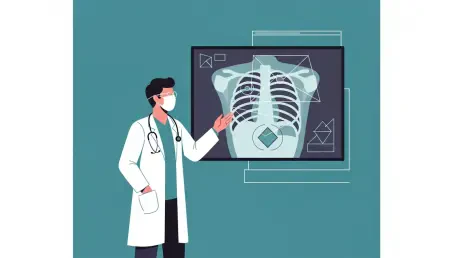
One of the most significant clinical advantages observed in the current deployment of AI is the detection of incidental findings, particularly small lung nodules that might otherwise go unnoticed. These tiny tissue masses often appear on scans performed for entirely unrelated reasons, such as evaluating a rib injury after a fall or investigating heart-related concerns. Because a radiologist is naturally focused on the primary reason for the diagnostic request, these subtle anomalies can be overlooked in a traditional manual review. Summa Health has successfully utilized AI to flag these suspicious areas, resulting in the identification of hundreds of early-stage cancer cases that were previously hidden in plain sight. This proactive detection capability is proving to be a game-changer for patient survival rates, as identifying malignancy in its earliest stages allows for much less invasive treatments and significantly better long-term outcomes than diagnoses made after symptoms have progressed.
Beyond the realm of visual image analysis, artificial intelligence is proving its worth through the application of natural language processing to manage the vast sea of medical documentation. This specific software scans thousands of radiology reports in real-time, searching for critical keywords and specific phrases that indicate a high-risk patient status. Instead of relying on manual administrative reviews that can take days, the system generates an immediate, prioritized list for clinical teams to act upon. This automated triage ensures that patients with urgent findings are moved to the front of the line for specialist consultations, effectively bridging the gap between the initial scan and the start of treatment. By reducing the administrative friction that often slows down healthcare delivery, these algorithms are helping to ensure that the most vulnerable patients receive the attention they need at the exact moment it is most likely to result in a positive medical outcome.
Operational Excellence: Redefining Patient Throughput and Comfort
At the Cleveland Clinic, artificial intelligence is being utilized to address the physical and psychological challenges associated with diagnostic imaging, specifically regarding MRI scans. By employing advanced image reconstruction algorithms, the system can produce high-resolution scans in a fraction of the time traditionally required for such detailed work. This advancement significantly reduces the amount of time a patient must remain perfectly still inside the imaging machine, which is a major benefit for individuals suffering from claustrophobia or those dealing with chronic pain. Faster scan times not only improve the individual patient experience but also allow the hospital to serve more people in a single day, reducing the backlog of scheduled appointments. This operational efficiency is essential for maintaining the high standards of care expected in the Northeast Ohio region, especially as the demand for advanced diagnostic services continues to grow annually.
The efficiency gains provided by AI also extend to the post-processing and reporting stages of the radiological workflow, where automated tools assist in drafting findings. Instead of spending valuable time on repetitive dictation and describing standard anatomical features, radiologists can now use AI-generated drafts as a starting point. The software pre-populates reports with basic measurements and routine observations, allowing the doctor to focus exclusively on verifying the accuracy of the data and adding critical clinical context. This acceleration of the reporting process means that primary care physicians and patients receive their results much faster than in the past, often within the same day of the procedure. By cutting down the wait time for definitive answers, the healthcare system reduces patient anxiety and enables a more seamless transition to subsequent care steps, whether that involves further testing or the immediate commencement of a surgical or medicinal plan.
Future Trajectory: Navigating Technical and Ethical Frontiers
Despite the rapid successes of these technologies, medical professionals remain objective and cautious regarding the inherent limitations and potential vulnerabilities of AI systems. There is a broad consensus that while algorithms are incredibly efficient, their error patterns differ fundamentally from those of human practitioners. A human might miss a detail due to fatigue, but an AI might misinterpret a simple digital artifact or software glitch as a legitimate medical abnormality. To mitigate these risks, hospitals in Northeast Ohio maintain a redundant safety net where the machine and the human professional provide a continuous check on each other. This dual-verification system ensures that a technical failure or a momentary human oversight does not compromise the quality of care. Furthermore, the reliance on robust data networks means that hospitals must invest heavily in IT infrastructure to prevent disruptions that could slow down these newly integrated digital workflows.
The successful implementation of artificial intelligence in radiology was achieved by positioning these tools as a new standard of care rather than a separate, experimental procedure. Healthcare providers determined that the integration of AI should be as seamless as the transition from film to digital imaging, leading to a policy where explicit disclosure is often limited to specific areas like mammography. Moving forward, the focus was placed on expanding these capabilities into other diagnostic specialties, ensuring that every patient benefits from the enhanced accuracy that algorithmic oversight provides. By fostering a culture of continuous evaluation and technological literacy among staff, these medical centers solidified their role as leaders in the digital health revolution. The strategic path ahead involves refining these algorithms further to minimize false positives while ensuring that the human element of medicine remains the ultimate authority in every diagnostic decision made for the local community.