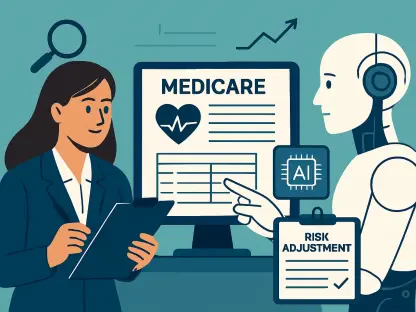

The discourse surrounding artificial intelligence has become dominated by a narrative of human obsolescence, fueling widespread anxiety that the rapid advancement of generative AI is destined to trigger mass unemployment across countless industries. However, a meticulous examination of both historical precedent and current economic data paints a far more nuanced and optimistic picture, one where AI serves not as a replacement for human ingenuity but as a powerful catalyst for its evolution. This evidence strongly suggests a pattern of labor augmentation and task specialization, where intelligent tools amplify human capabilities, drive productivity, and ultimately transform professional roles rather than eliminate them entirely. Instead of succumbing to deterministic fears, a shift toward a more grounded understanding of this technological wave reveals a future of collaboration and redefined value.
A Look Back at Technological Disruption
A compelling historical precedent that challenges the job replacement narrative is the introduction of the Automated Teller Machine (ATM) in the 1970s. The prevailing logic at the time predicted the swift demise of the bank teller profession, as machines could efficiently handle the core tasks of dispensing cash and accepting deposits. Contrary to these expectations, economist James Bessen’s research revealed a paradoxical outcome: as nearly 400,000 ATMs were installed across the United States between the 1980s and 2010, the number of human bank tellers actually grew from approximately 500,000 to nearly 600,000. This counterintuitive result occurred because the automation of routine transactions fundamentally altered the nature of the job. It liberated tellers from mundane cash-handling duties, allowing them to evolve into “relationship bankers” focused on higher-value activities that machines could not perform, such as addressing complex customer needs, cross-selling financial products, and building personal relationships that foster loyalty.
A more recent cautionary tale against overestimating AI’s immediate impact comes from the medical field. In 2016, the renowned AI pioneer Geoffrey Hinton declared that deep learning would surpass human radiologists within five years and that medical schools should “stop training radiologists now.” This stark forecast from a leading expert sent ripples of fear through the medical community, suggesting an entire highly skilled profession was on the brink of extinction. Yet, a decade later, this prediction has been proven incorrect. The number of radiologists has not collapsed; it has grown substantially, and the field is now grappling with a critical shortage of professionals, leading to significant backlogs in medical imaging. Hinton has since acknowledged his error, conceding that the more likely future is one of collaboration, where AI acts as a powerful assistant to augment the skills of human radiologists, improving diagnostic speed and accuracy. This example powerfully illustrates the common analytical flaw of underestimating the complexity of professional roles.
Insights from Current Economic Research
Moving from historical analogy to the present, recent empirical studies on AI’s labor market effects largely reinforce the patterns of augmentation and transformation. An analysis by the Brookings Institution found that, contrary to popular fears, firms that adopt AI tend to increase their employment rather than reduce it. These companies typically experience faster growth and greater innovation, which in turn leads to a higher demand for human workers to manage, develop, and leverage the new technology. This finding directly challenges the simplistic notion that investment in automation is a zero-sum game that necessarily leads to a smaller workforce. Instead, it suggests that AI can be a powerful engine for business expansion, creating new opportunities for human labor in the process of enhancing operational efficiency and fostering new product or service development.
Further reinforcing this optimistic view, a landmark study on the implementation of a generative AI assistant in a customer service setting revealed a 15% average increase in productivity. Crucially, the benefits were most pronounced for lower-skilled and less-experienced agents, who saw their performance improve by over 30%. The AI tool effectively disseminated the knowledge and best practices of top performers, acting as a “leveling” agent that democratized expertise across the organization. This outcome is significant because it inverts the historical trend of “skill-biased technological change,” where new technologies primarily benefited high-skilled workers. Additionally, research from MIT Sloan highlights that the impact of AI is contingent on the scope of task automation. When AI automates only a subset of tasks within a specific job, employment often increases as workers pivot their efforts to complementary, high-value activities that AI cannot replicate, echoing the ATM narrative.
Decoding a Complicated Narrative
Despite the growing body of evidence pointing toward augmentation, corporate announcements frequently attribute recent layoffs to the implementation of AI, creating a confusing and often alarming public narrative. However, a critical examination of these claims suggests the presence of a phenomenon that can be termed “AI-washing.” This practice involves companies using AI as a convenient, forward-looking justification for workforce reductions that are actually motivated by more conventional business factors, such as correcting for pandemic-era overhiring, responding to economic downturns, or managing general cost pressures. Attributing layoffs to AI can soften the public relations impact and project an image of a company that is innovating and preparing for the future, even if the technology’s role in the decision was minimal or aspirational at best.
Experts in labor economics have observed that there is currently very little empirical evidence of significant, widespread job cuts directly caused by the operational impact of AI. In fact, some firms that announced AI-driven layoffs later had to rehire staff, indicating that their decisions were based on premature expectations of AI’s capabilities rather than its actual, implemented performance. The synthesis of historical cases and contemporary research leads to a clear conclusion for the current erthe dominant effect of AI is labor augmentation, not labor replacement. The failure to distinguish between the automation of individual tasks and the elimination of entire jobs remains the fundamental error in most apocalyptic forecasts. By automating certain tasks, AI frees up human capital to focus on more creative, strategic, and interpersonal work, which ultimately enhanced productivity and opened new avenues for employment.