
From Experimental Tech to Essential Infrastructure
In a decisive move that signals a seismic shift in manufacturing, German engineering giant Bosch is committing €2.9 billion to integrate artificial intelligence into its core operations by 2027. This landmark investment is not a speculative foray into futuristic technology; it represents the strategic transition of AI from isolated pilot projects to the fundamental backbone of its global production network. The initiative aims to solve one of modern industry’s most persistent paradoxes: the “data-rich, information-poor” factory. This article will explore how Bosch’s bet on AI is designed to transform untapped data into tangible efficiencies, creating a blueprint for the future of intelligent manufacturing and resilient supply chains.
The Evolution of the Smart Factory: From Automation to Intelligence
The journey toward the modern factory began with automation, where machines took over repetitive physical tasks. The next wave, often dubbed Industry 4.0, blanketed production floors with sensors, cameras, and software, generating unprecedented volumes of data. However, this deluge of information often overwhelmed human decision-makers, failing to prevent equipment breakdowns or subtle quality deviations. This historical context is critical because it highlights the missing piece of the puzzle: an intelligence layer capable of analyzing this complex data in real time. Bosch’s investment is a direct response to this need, marking a pivotal evolution from the automated factory to the truly intelligent one, where AI provides the cognitive power to optimize physical systems.
AI in Action: Turning Raw Data into Operational Excellence
Revolutionizing Quality Control with Real-Time Defect Detection
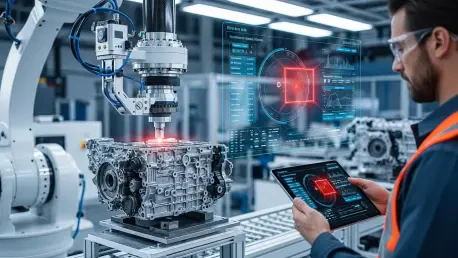
A significant portion of Bosch’s AI strategy targets manufacturing quality control, an area traditionally plagued by inefficiency. In conventional systems, defects are often identified only after a product is fully assembled, leading to costly scrap and rework. Bosch is now deploying sophisticated AI models that analyze real-time camera feeds and sensor data directly on the assembly line. These systems can detect microscopic deviations in materials or machine performance as they happen, flagging potential issues before they cascade into a batch of faulty products. This proactive approach empowers workers to make immediate corrective adjustments, drastically reducing waste and ensuring a higher standard of quality from the outset.
Predictive Maintenance: Eliminating Unplanned Downtime
Unplanned equipment downtime remains a primary driver of lost productivity and revenue in manufacturing. Moving beyond outdated fixed-schedule inspections, Bosch is implementing AI-driven predictive maintenance. By training models on historical and real-time sensor data—such as subtle changes in vibration, temperature, and energy consumption—the system can accurately forecast when a machine component is likely to fail. This enables maintenance teams to transition from a reactive, emergency-based model to a planned, proactive one. The result is a dramatic reduction in unexpected production stoppages, an extended operational lifespan for expensive machinery, and a far more stable and predictable manufacturing environment.
The Technological Backbone: Edge Computing and the Hybrid Cloud Model
Central to making these applications viable is a strategic emphasis on edge computing. For time-sensitive tasks like defect detection or machine control, sending data to a distant cloud server for processing introduces unacceptable latency and risk. A momentary network failure could halt production or create a safety hazard. Consequently, Bosch is deploying its AI models “at the edge,” running them on local hardware within the factory itself. This ensures millisecond-level responsiveness and operational autonomy, even without an active internet connection. While the cloud remains essential for training complex models and analyzing long-term trends, the immediate, critical action takes place at the edge, establishing a hybrid model that balances security, speed, and analytical power.
Forging a Pragmatic Path for Industrial AI
The trends emerging from Bosch’s strategy point toward a future defined by pragmatic, operationally-focused AI. As economic pressures like rising energy costs, labor shortages, and thinning profit margins intensify, the industry’s focus is shifting from flashy, consumer-facing AI to invisible, efficiency-driving systems. Future innovations will likely deepen this integration, with AI not only predicting failures but also autonomously optimizing production parameters to maximize energy efficiency or adapt to supply chain disruptions. This evolution will see AI become as fundamental to a factory as electricity, an indispensable utility for managing the immense complexity of modern global manufacturing.
Strategic Imperatives in an AI-Driven Industrial Age
The primary takeaway from Bosch’s initiative is that AI is no longer an optional upgrade but a strategic necessity for competitive survival in the industrial sector. The focus is squarely on tangible returns: reducing waste, maximizing equipment uptime, and making intricate systems more manageable and resilient. For other businesses, the key recommendation is to move beyond isolated experiments and develop a holistic strategy that integrates AI into core processes. Success will depend on treating AI not as a standalone IT project, but as a critical business tool to augment human workers, solve complex operational challenges, and unlock new levels of efficiency that are simply unattainable through conventional methods.
The Dawn of the Truly Intelligent Factory
Bosch’s €2.9 billion investment is more than just a financial commitment; it is a clear declaration that the era of the truly intelligent factory has begun. By systematically converting vast seas of dormant data into actionable intelligence, the company is laying the groundwork for a future where manufacturing systems are not just automated, but are adaptable, predictive, and self-optimizing. This pragmatic and relentless focus on solving real-world operational problems is what will ultimately define the value of AI in industry. It represents a powerful call to action for the entire sector: to embrace intelligence as the core engine of future productivity and resilience.