
The traditional landscape of biological research is currently facing a monumental shift as the integration of advanced artificial intelligence, precision robotics, and high-throughput biological engineering creates a new standard for industrial innovation. Bota has recently introduced SAION AI, a comprehensive platform designed to dissolve the long-standing barriers between digital computational reasoning and the physical constraints of wet-lab experimentation. This sophisticated “physical AI” system represents a departure from the era of manual laboratory labor, offering a unified framework that manages the entire lifecycle of bio-manufacturing research with minimal human intervention. By automating the transition from a digital hypothesis to a tangible biological product, the platform addresses the primary bottlenecks of speed and scalability that have historically hindered the biotech industry. As global demand for sustainable materials and novel therapies increases, such systems are becoming the essential backbone of a modernized, data-driven manufacturing ecosystem.
Moving beyond the fragmented workflows of the past, this new approach replaces the linear and often error-prone “Design-Build-Test-Learn” cycle with a synchronized, closed-loop environment. In conventional settings, a scientist might spend weeks or months manually pipetting reagents, monitoring fermentation cultures, and interpreting disparate data sets before refining a single hypothesis. SAION AI centralizes these functions, allowing for a level of operational continuity where digital models and physical robots communicate in a shared language. This integration ensures that the vast amounts of data generated during experiments are immediately utilized to optimize the next round of research, effectively compressing years of development into a matter of months. This evolution signifies that the next generation of “researchers” will not be defined by human endurance alone, but by the synergy between human strategic oversight and the tireless precision of automated intelligence.
The Functional Architecture of Autonomous Research
Integrated Intelligence and Workflow Orchestration
At the foundation of the SAION AI platform lies the Cognition Layer, a sophisticated intellectual engine that leverages the extensive data within Bota’s Cell2Cloud Biofoundry alongside vast global repositories of scientific literature and genomic databases. This layer does not simply store information; it functions as a reasoning core capable of interpreting the complex relationships between genes, proteins, and metabolic pathways to propose viable biological theories. By identifying subtle patterns in historical research that might be overlooked by human analysts, the Cognition Layer provides a robust starting point for every new project. This capability ensures that the design phase of bio-manufacturing is grounded in high-fidelity predictive modeling, reducing the likelihood of pursuing unproductive experimental paths. The system effectively transforms raw biological data into actionable intelligence, allowing the platform to “think” through the implications of a specific genetic modification before a single drop of liquid is moved in the physical laboratory.
The bridge between these high-level theories and actual laboratory work is managed by the Orchestration Layer, which utilizes a multi-agent framework powered by Large Language Models to coordinate complex research tasks. This layer acts as a digital project manager, selecting from a library of over 300 specialized scientific tools to construct a precise experimental protocol. Whether the task involves sequence analysis, protein folding simulations, or metabolic modeling, the Orchestration Layer ensures that every digital tool is utilized at the optimal moment within the workflow. By arbitrating between these various computational resources, the system maintains a seamless flow of information and prevents the departmental silos that often slow down traditional research organizations. This level of coordination allows for the management of massive, parallel workstreams that would be impossible for a human team to track manually, ensuring that the transition from a digital concept to a lab-ready protocol is both rapid and mathematically rigorous.
Physical Execution and Feedback Loops
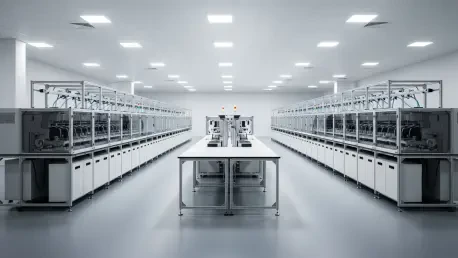
Translating digital designs into physical reality is the primary function of the Execution Layer, which utilizes a proprietary Biological Protocol Language to communicate directly with advanced laboratory hardware. This system directs a fleet of robots to perform essential “wet-lab” tasks such as precision liquid handling, microbial fermentation, and cell culture maintenance with a degree of accuracy that far exceeds manual capabilities. By removing the variability inherent in human movement, the Execution Layer ensures that every experiment is conducted under identical conditions, which is crucial for achieving reproducible results in industrial bio-manufacturing. This automation not only accelerates the physical pace of research but also allows laboratories to operate around the clock without the need for constant human supervision. The result is a high-throughput environment where the physical construction of biological systems keeps pace with the rapid speed of digital design and computational analysis.
A defining characteristic of this physical layer is the immediate integration of experimental results back into the centralized analysis system, creating a self-correcting feedback loop that drives continuous improvement. As the robotic systems complete their assigned tasks, the resulting data—ranging from growth rates to metabolic yields—is instantly funneled back to the Cognition Layer for real-time assessment. This iterative process allows the AI to learn from both successful outcomes and unexpected failures, refining its internal models to produce increasingly accurate predictions for subsequent cycles. This closed-loop architecture essentially allows the laboratory to function as a self-learning organism, where every data point contributes to a growing body of institutional knowledge. By automating the data collection and interpretation phases, the platform minimizes the time spent on manual reporting and ensures that the most promising biological candidates are identified and scaled up with unprecedented efficiency.
Market Trends and the Future of Bio-Manufacturing
Benchmarking Success and Global Competition
The practical utility of SAION AI is reflected in its performance across several rigorous scientific benchmarks, indicating a high level of readiness for complex real-world challenges. The platform has demonstrated a 70.7% accuracy rate in tasks related to the comprehension of scientific literature and a remarkable 88.2% success rate in reasoning tasks involving DNA, RNA, and protein sequencing. Furthermore, Bota has reported that the system can complete end-to-end research workflows—from initial analysis to physical execution—with a success rate exceeding 90%. These metrics suggest that the integration of AI and robotics has moved beyond the experimental phase and is now a viable solution for industrial-grade biological development. While performance on benchmarks is often a controlled measure, the consistency of these results across different biological domains points to a versatile system capable of handling the diverse requirements of the modern pharmaceutical and chemical industries.
This technological advancement occurs within a highly competitive global landscape where major technology and biotechnology firms are racing to claim leadership in the automated manufacturing sector. For instance, NVIDIA and Multiply Labs are collaborating on the use of “digital twins” to automate the production of cell and gene therapies, while Alphabet’s Isomorphic Labs continues to push the boundaries of AI-driven drug discovery. This intense competition is driven by the significant economic potential of the bio-manufacturing market, which is projected to surpass a $1 billion valuation within the current year of 2026. As traditional chemical synthesis methods are increasingly replaced by more sustainable bio-based processes, the ability to rapidly iterate through research cycles has become a critical competitive advantage. The shift toward biological production is no longer just a scientific trend but a strategic economic necessity for companies looking to thrive in an environment defined by rapid innovation and environmental responsibility.
Navigating Complexity and the Human Element
Despite the impressive strides made in automation, biological systems remain notoriously complex and often exhibit unpredictable behaviors that can challenge even the most advanced AI models. Living organisms are sensitive to minute environmental fluctuations, and the inherent volatility of biological matter means that experiments do not always yield the expected results on the first attempt. Because of this unpredictability, the role of the human scientist has evolved rather than disappeared; expert personnel are still required to provide high-level strategic guidance and ethical oversight. While the AI manages the repetitive and data-intensive aspects of research, human experts focus on troubleshooting hardware malfunctions, interpreting anomalous data, and defining the long-term goals of the research program. This partnership ensures that the speed of automation is balanced by the nuanced judgment and experience of seasoned professionals who understand the broader implications of their work.
The future of bio-manufacturing lies in this harmonious synergy between human intuition and robotic precision, where the laboratory operates as an augmented environment rather than a fully independent factory. To move forward, organizations should focus on developing standardized data protocols that allow different AI systems and robotic platforms to communicate more effectively across the industry. Furthermore, there is a pressing need for updated regulatory frameworks that can keep pace with the speed of AI-driven research, ensuring that new biological products are both safe and effective before they reach the market. Companies should also invest in training their workforce to operate alongside these “physical AI” systems, fostering a culture of collaboration where technology serves to expand the boundaries of what is humanly possible. By embracing these actionable steps, the biotechnology sector can fully realize the potential of autonomous laboratories to solve some of the most pressing challenges in global health and sustainability.
As the industry matures, the focus will likely shift from simply automating existing processes to designing entirely new biological systems that were previously unimaginable. The success of Bota’s SAION AI has demonstrated that the technical foundation for this transition is already in place, but long-term growth will require a continued commitment to transparency and cross-disciplinary cooperation. Researchers and policymakers must work together to ensure that the benefits of automated bio-manufacturing are distributed equitably, avoiding a digital divide that could leave smaller labs behind. Ultimately, the transition to an AI-robotic research model was not merely about efficiency; it was about creating a more resilient and responsive scientific infrastructure. By leveraging these tools to their fullest extent, the global community can accelerate the delivery of life-saving medicines and eco-friendly materials, marking a significant milestone in the ongoing evolution of human ingenuity and technological progress.