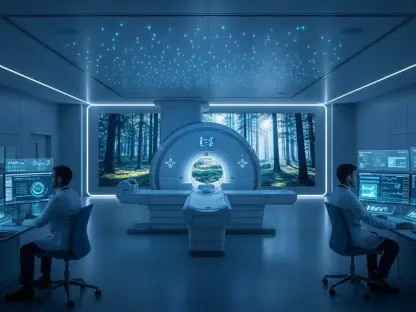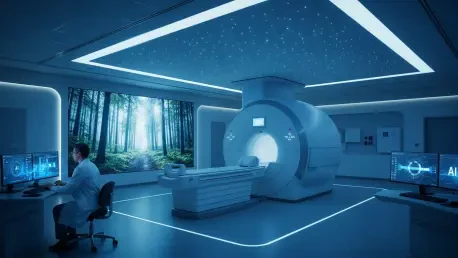

The long-standing bottleneck in diagnostic medicine has often been the claustrophobic and time-consuming nature of magnetic resonance imaging, a reality that is rapidly changing with the launch of the SingHealth MRI Centre at Dunearn Village. By integrating sophisticated artificial intelligence into the imaging workflow, this facility has successfully managed to reduce the duration of standard scans by approximately twenty-five percent. This significant leap in efficiency is not merely a technical triumph; it translates into roughly eighteen thousand additional scanning slots annually across the health cluster, directly tackling the chronic issue of long patient wait times and limited appointment flexibility. Utilizing advanced machinery from United Imaging Healthcare, the center employs AI-driven algorithms to handle complex image reconstruction. These systems allow for much faster data acquisition and substantial noise reduction, ensuring that the accelerated speed does not come at the expense of the high-fidelity clarity required for accurate diagnoses.
Redefining the Patient Experience Through Spatial Design
Moving beyond the underlying mathematical algorithms, the design of the diagnostic environment represents a deliberate shift toward a more human-centric model of clinical care. Two of the center’s three machines feature seventy-five-centimeter bores, which are wider than traditional models to significantly alleviate the physical and psychological stress often associated with claustrophobia. This spatial improvement is complemented by an immersive atmosphere featuring tranquil nature visuals, integrated high-quality audio systems, and specialized starlight lighting designed to lower patient anxiety levels. Enhanced cooperation from relaxed patients leads to fewer motion artifacts, further refining the quality of the data collected during the procedure. Safety protocols have also been modernized through the installation of door frame ferromagnetic detectors for instantaneous metal screening, while on-site nurse-led prescription dispensing ensures immediate support for those with specific allergies during the visit.
The implementation of these automated technologies established a new benchmark for radiological excellence as the healthcare sector moved toward deeper digital integration. Beyond the immediate success at Dunearn Village, the broader strategy involved incorporating AI across various disciplines, including specialized breast imaging and rapid CT brain screenings for detecting intracranial hemorrhages. Supported by a substantial one hundred and five million dollar donation from the estate of Khoo Teck Puat and a strategic partnership with Philips, the initiative positioned the region as a leader in harmonizing high-tech automation with compassionate patient care. To maintain this momentum, clinical leaders focused on the continuous training of radiological staff to interpret AI-enhanced data and expanded the use of accelerated protocols to more complex neurological and cardiovascular cases. This transition demonstrated that the primary solution for modern healthcare challenges lay in the seamless marriage of operational productivity and improved patient outcomes.