
An evaluation involving 443 clinical cases showed that general-purpose vision models achieved an Area Under the Curve of 0.942 when distinguishing between different stages of renal cell carcinoma. This finding represents a seismic shift in how medical professionals approach artificial intelligence in the year 2026, transitioning from narrow, highly specialized algorithms to versatile systems capable of multimodal reasoning. Traditionally, the clinical pathway for kidney cancer patients involves a high degree of uncertainty prior to surgery, as definitive staging relies heavily on the physical examination of excised tumor tissue by a pathologist. However, the recent study published in BMC Medical Imaging suggests that the massive semantic datasets used to train everyday chatbots also contain the architectural depth necessary to decode complex radiological patterns. By leveraging these off-the-shelf models as feature encoders, researchers have successfully bridged the gap between general-purpose artificial intelligence and the high-stakes environment of oncological diagnostics, offering a glimpse into a more integrated future.
Clinical Staging: Bridging the Diagnostic Gap
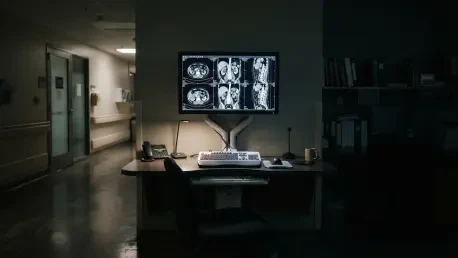
In 2026, the management of renal cell carcinoma remains heavily dependent on precise staging to determine whether a patient requires a partial nephrectomy, a radical nephrectomy, or perhaps aggressive adjuvant therapy. The American Joint Committee on Cancer staging system provides the gold standard for these decisions, yet its most accurate application usually occurs after the surgery has already taken place. This retrospective nature of staging often leaves clinicians in a position of having to plan significant interventions based on incomplete data. The introduction of vision-language models into this workflow promises to mitigate this risk by providing a robust preoperative estimate of the pathological stage using only non-contrast computed tomography scans. By identifying subtle textures and structural anomalies that might elude the human eye during a standard review, these models provide a level of predictive clarity that was previously reserved for postoperative microscopic analysis, thereby allowing for much more personalized surgical strategies.
The core innovation lies in the repurposing of semantic knowledge that these models acquire during their initial training on billions of diverse image-text pairs found across the internet. Instead of being limited to identifying common objects or generating creative prose, the internal weights of these vision-language models have proven capable of recognizing the biological signatures of advanced malignancy within renal structures. Researchers found that the “off-the-shelf” nature of these systems does not hinder their medical utility; rather, their broad training allows them to act as sophisticated feature encoders that translate raw pixel data into clinically meaningful categories. This ability to generalize from non-medical data to the specificities of kidney cancer staging suggests that the underlying architecture of modern AI is far more flexible than earlier iterations. It moves the needle away from the necessity of curating massive, expensive medical-only datasets, proving that the intelligence required for oncology is already embedded within these large-scale systems.
Systematic Methodology: Benchmarking the GPT-5.6 Sol
To validate the effectiveness of these general-purpose tools, the research team implemented a highly controlled study design that scrutinized over 2,000 different combinations of models and data processing techniques. This exhaustive approach ensured that the results were not merely a product of chance or specific data biases but were instead representative of a reliable clinical workflow. The study utilized a development cohort of 260 cases alongside an external validation cohort of 183 cases from Shanxi Bethune Hospital to test the models’ performance in a real-world setting. Among the numerous configurations tested, the GPT-5.6 Sol model emerged as the most effective variant for this specific task. The systematic methodology involved analyzing exactly 21 slices per CT scan, ensuring a comprehensive view of the renal anatomy while maintaining computational efficiency. This rigorous testing phase highlighted the importance of workflow optimization, demonstrating that the success of AI in medicine depends as much on how the model is utilized as it does on the underlying technology.
A key technical breakthrough in this methodology was the integration of a TabTransformer classifier, which processed 128 unique semantic features extracted by the vision-language model. This hybrid approach allowed the researchers to combine the visual processing power of the vision-language model with the structured data handling capabilities of a transformer-based classifier. By taking bilateral crops of the kidneys from the non-contrast CT scans, the system focused its attention on the most relevant anatomical regions, ignoring potential noise from surrounding tissues. This precise spatial targeting was crucial for achieving high accuracy, as it allowed the model to hone in on the specific morphology of the tumor. Furthermore, the team emphasized the reproducibility of their findings, ensuring that the AI produced identical numerical outputs across multiple tests under fixed conditions. This focus on consistency addresses one of the primary concerns regarding AI in healthcare, establishing a foundation of trust that is necessary for the eventual adoption of these tools in daily clinical practice.
Strategic Integration: The Future of Human-AI Synergy
Beyond individual performance, the research highlighted the transformative potential of human-AI collaboration in the diagnostic process. By using the vision-language model as a decision-support tool, physicians were able to refine their own assessments, leading to a measurable increase in their collective accuracy. In a sequential design test, the physician consensus F1 score improved from 0.688 to 0.750 when they had access to the AI’s staging predictions. This observed improvement indicates that the AI can act as a valuable second opinion, highlighting features or patterns that a human observer might overlook during a high-volume shift. While the researchers noted that further studies are needed to confirm the statistical significance of this boost across larger populations, the preliminary signal was undeniably positive. It suggests a future where AI does not function in a vacuum but instead enhances the capabilities of the medical workforce, providing a layer of objective data that supports more confident and accurate preoperative staging for patients.
In conclusion, the study established that general vision models were capable of providing highly accurate preoperative staging for kidney cancer, rivaling the performance of human experts and specialized deep learning architectures. By validating these models across diverse datasets and clinical environments, the researchers confirmed that the semantic knowledge embedded in large-scale AI could be effectively harnessed for critical medical applications. For medical facilities looking to integrate these advancements, the next logical step involved the implementation of standardized AI-assisted workflows that prioritized physician oversight while leveraging the predictive power of the vision-language model. Stakeholders were encouraged to continue validating these systems across a wider range of institutional settings to ensure universal reliability. Ultimately, this research paved the way for a new era in oncology where diagnostic tools became more flexible and efficient. The successful repurposing of general AI highlighted a future where the distinction between specialized and general intelligence continued to blur for the benefit of patient outcomes.