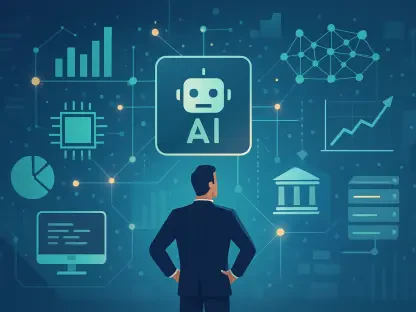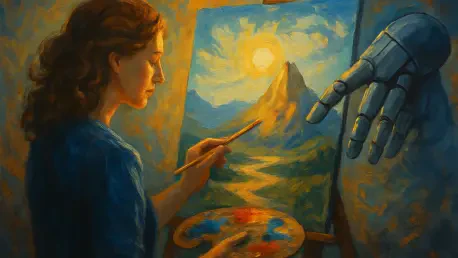

The rapid integration of generative artificial intelligence into the fabric of daily life has fundamentally altered the way society interacts with art, literature, and the very concept of original thought. As Large Language Models and sophisticated image generators become standard components of the professional landscape, a profound tension has emerged between technological efficiency and the authentic human heart required for genuine expression. Isabella Taylor’s recent examination of this creative crisis highlights a worrying trend where individuals increasingly sacrifice emotional depth for the convenience of algorithmic output. While these tools offer undeniable speed, they often produce results that lack the lived experience and nuance inherent in human-led projects. To counter this shift toward synthesized content, many creators are beginning to revisit analog methodologies, specifically the principles established in Julia Cameron’s seminal work. This movement suggests that reclaiming an individual voice from the encroaching flood of automated material requires a deliberate return to structured, human-centric habits that prioritize process over the immediate gratification of a digital prompt.
The Crisis of Authenticity in the Digital Age
Understanding the Erosion of Human Effort
The contemporary creative crisis is rooted in a systemic devaluation of the artistic process, as many students and professionals now routinely outsource their critical thinking to complex algorithms. This transition indicates a fundamental change in how the modern world perceives the value of creative output, shifting focus away from the years of disciplined practice needed to master a craft toward the generation of immediate, albeit hollow, results. When a creator utilizes a prompt to produce a final version of a story or a painting, they effectively bypass the intrinsic struggle and iterative failures that historically gave art its profound meaning. This shortcut does more than just save time; it erodes the foundation of skill development and replaces emotional honesty with a clinical imitation of style. By removing the human element from the initial stages of ideation, the resulting work often feels like a dead rendition of existing ideas, lacking the spark of true innovation that characterizes the greatest achievements in human history and culture.
This shift toward automated production risks transforming art into a mere commodity, stripped of the unique perspectives that connect a creator to their audience on a psychological level. The reliance on generative software creates a feedback loop where new content is built upon the averaged data of the past, leading to a homogenization of aesthetic and literary styles. As this trend persists, the distinction between a soulful composition and a statistically probable arrangement of pixels or words becomes increasingly blurred. Furthermore, the psychological impact on the creator cannot be ignored, as the act of clicking a button to “create” fails to provide the same sense of accomplishment and growth found in traditional methods. The loss of this developmental journey means that future generations of artists may lack the resilience and depth of thought necessary to tackle complex social and emotional themes. Consequently, the challenge lies not only in the quality of the output but in the preservation of the human capacity to imagine, feel, and construct meaning in an increasingly automated world.
Ethical Implications and Public Perception
The widespread integration of artificial intelligence into creative sectors has moved well beyond its origins as a 1950s novelty, evolving into a pervasive expectation that carries heavy ethical baggage. In the mid-twentieth century, early computational experiments were seen as curious attempts to mimic styles like those of Bach, but today, AI is often viewed as a mandatory utility for survival in a fast-paced market. This transition has birthed a significant sense of cognitive dissonance among modern creators, who frequently experience a sharp internal conflict between their artistic values and their practical reliance on algorithms. When an artist uses software that draws from vast datasets of existing human work without providing proper attribution or compensation, the concept of original ownership begins to crumble. This crisis of authenticity is not merely a theoretical concern; it represents a fundamental threat to the integrity of the creative identity and the legal frameworks that have long protected individual intellectual property.
Public sentiment regarding this technological shift reflects a deep-seated unease, with research indicating that a vast majority of audiences react negatively to work once its algorithmic origins are revealed. Studies have shown that approximately 73% of individuals view a piece of art with significantly less favor if they learn it was generated by a machine rather than a human hand. This visceral reaction suggests that society still places a high premium on the “human heart” and the effort invested in a project. The perception of AI-generated content as a form of sophisticated plagiarism remains a primary barrier to its acceptance in high-stakes creative environments. As long as these tools operate by synthesizing existing data into derivative patterns, they will likely struggle to gain the respect afforded to traditional works. This widespread skepticism underscores a collective desire for genuine connection and transparency, reinforcing the idea that the value of art lies as much in the identity and intention of the creator as it does in the final visual or auditory experience presented to the viewer.
Defining the Role of Technology
Distinguishing Tools from Crutches
Protecting the future of human creativity requires a clear and firm distinction between using technology as a functional tool and allowing it to serve as a crutch for the mind. In academic and technical settings, software like ChatGPT can be immensely beneficial for clarifying complex calculus problems or summarizing dense historical data, providing a foundation for further learning. However, the danger arises when these systems are asked to perform the creative heavy lifting that should reside within the human imagination. Experts in the field argue that technology is most effective when it handles repetitive, mundane tasks or provides minor “idea seeds” to help a creator get started. When the algorithm moves beyond these secondary roles to dictate the tone, structure, and emotional core of a project, it ceases to be a helpful assistant and instead becomes a replacement for the creator’s unique perspective. This reliance can lead to a state of intellectual atrophy, where the ability to generate original concepts becomes secondary to the ability to refine a machine’s output.
The current trajectory of the industry leans dangerously toward a model of quick consumption, where art is devalued into a processed output tailored for maximum engagement rather than artistic merit. This environment encourages creators to prioritize speed over substance, often leading them to accept the first iteration provided by an AI rather than pushing through the difficult stages of refinement. By delegating the non-creative, administrative elements of work to digital systems, humans should theoretically have more space for deep work; yet, the reality is often the opposite. The ease of generation has created a glut of content that requires less effort to produce, which in turn lowers the barrier for entry and floods the market with “derivative slop.” To maintain the integrity of artistic fields, there must be a conscious effort to keep the human mind as the primary architect of emotional and narrative arcs. Maintaining this boundary ensures that technology remains a subordinate element in the creative process, supporting the artist without overshadowing the essential human qualities that define great work.
The Limits of Automated Emotional Manipulation
While modern algorithms are exceptionally good at identifying patterns and mimicking common emotional tropes, they are fundamentally incapable of experiencing the feelings they attempt to simulate. This limitation creates a ceiling for AI-produced art, as it can only ever offer a synthetic manipulation of human sentiment based on historical data rather than a response to lived experience. The most resonant pieces of music, literature, and visual art are often born from a specific moment of pain, joy, or revelation that a machine cannot truly replicate. When audiences interact with a piece of work, they are often looking for a mirror of their own humanity, a connection that is severed when the source of the expression is a cold sequence of mathematical probabilities. The reliance on these systems for “emotional” content leads to a hollow aesthetic that may appear polished on the surface but lacks the underlying weight of a perspective shaped by the complexities of physical existence.
This gap between human emotion and algorithmic simulation highlights the risk of a culture dominated by “dead renditions” of traditional beauty and profound thought. If society continues to accept these synthesized outputs as a replacement for human art, the collective vocabulary of emotional expression may begin to narrow. We see this trend manifesting in the repetitive nature of AI-generated poetry and the sterile perfection of digital imagery, both of which often miss the subtle imperfections that make human art relatable. The pursuit of perfection through automation ignores the reality that vulnerability and error are often the very elements that make a work of art memorable. By recognizing that AI lacks the capacity for genuine empathy or spontaneous inspiration, creators can find a renewed motivation to lean into their own lived histories. This recognition serves as a powerful argument for preserving the human-centric nature of storytelling and design, ensuring that the art of the future remains a reflection of life rather than a data-driven imitation of it.
The Path to Creative Recovery
Reclaiming the Internal Voice through Practice
A structured return to deliberate, human-centric habits offers the most effective defense against the digital saturation that threatens to overwhelm individual inspiration. Julia Cameron’s twelve-week program, The Artist’s Way, provides a practical roadmap for this recovery by emphasizing the importance of long-form, physical writing. The practice of “Morning Pages”—three pages of stream-of-consciousness writing performed immediately upon waking—serves as a vital exercise for clearing mental clutter before digital devices can interfere with the brain’s natural flow. By engaging in this analog activity, individuals can bypass the analytical, AI-reliant mind and tap into a more authentic internal voice. This process fosters a direct connection with one’s own thoughts, allowing unique ideas to surface without the filtered influence of search engines or generative prompts. The physical act of moving a pen across paper creates a neurological link to the creative self that is often lost in the sterile environment of a keyboard or a voice-activated AI interface.
Beyond daily writing, the program incorporates weekly “Artist Dates” and specific physical tasks designed to fuel the imagination through direct sensory experience. These solo outings, whether they involve a quiet walk through a forest or a visit to a local museum, are intended to provide the “well” of inspiration that a creator must draw from for their work. Unlike the digital prompts that offer pre-packaged solutions, these lived experiences allow for the spontaneous discovery of details and emotions that no algorithm could ever predict. This method forces the creator to be present in the world, observing the play of light, the nuances of conversation, and the textures of the environment. Such sensory input is essential for producing work that feels grounded and real, rather than synthesized and derivative. By prioritizing these analog experiences, creators can overcome the self-doubt and mental fatigue that often drive them toward the easy shortcuts provided by modern software, ultimately rediscovering the profound satisfaction of true authorship.
Sustainable Strategies for Human Authorship
The effectiveness of these deliberate practices is not merely theoretical, as many of the most successful figures in the contemporary arts, including Olivia Rodrigo and Alicia Keys, have long credited such analog methods for their longevity and originality. These artists prioritize the slow, sometimes painful process of self-discovery over the rapid-fire convenience of technological aids, proving that the most resonant work still comes from a place of personal vulnerability. By focusing on affirmations and consistent creative exercises, they have built a mental framework that resists the temptation to settle for the homogenized outputs of generative systems. This approach emphasizes that the value of the final product is inextricably linked to the integrity of the process. For those seeking to preserve their creative identity in an automated world, these examples provide a clear blueprint for success that balances modern tools with timeless human effort. By following these established paths, creators can ensure that their work remains a true reflection of their unique spirit.
Looking back at the shifts in the creative landscape, it became evident that active preservation was the only way to prevent human ingenuity from being entirely subsumed by digital processes. The most successful creators were those who established strict boundaries, treating technology as a functional assistant for logistics while keeping the ideation phase entirely within the human domain. They moved forward by keeping laptops shut and phones away during the critical moments of inspiration, allowing their minds to function without the interference of predictive text or algorithmic suggestions. This disciplined rejection of “digital slop” allowed for the continued production of art that felt genuinely alive and meaningful. By choosing to prioritize the internal voice over the convenience of a prompt, the creative community ensured that art remained a humane, lived experience. The ultimate takeaway from this era was the realization that while machines can process data, only humans can translate the complexities of existence into something that truly matters to another person.