
For decades, the standard approach to uncovering hidden heart disease often involved pushing the body to its limits on a treadmill, a method that provided clues but rarely a complete picture of coronary health. That paradigm is now being fundamentally challenged by technologies that can peer directly into the heart’s arteries with astonishing clarity, shifting the focus from indirect assessment to direct visualization and transforming cardiovascular diagnostics.
The Evolving Landscape of Cardiac Diagnostics
The field of heart health assessment is currently dominated by two primary tools: the traditional stress test and the increasingly sophisticated Cardiac CT Angiography (CCTA). While both aim to detect heart disease, their methodologies are worlds apart. A stress test indirectly evaluates the heart’s functional response to physical exertion, watching for signs of distress that might indicate an underlying blockage. In contrast, CCTA directly visualizes the coronary arteries themselves, offering a detailed anatomical map of any plaque buildup.
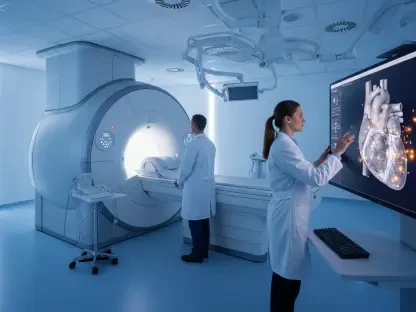
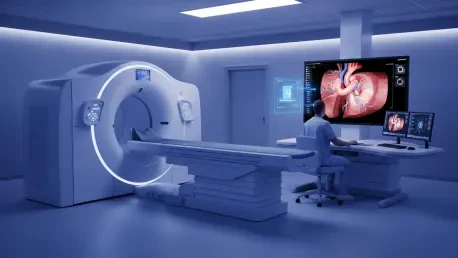
This evolution is driven by advanced technologies and artificial intelligence platforms that are setting a new standard for precision. Dedicated cardiac CT scanners, such as the 560-slice Arineta Spotlight Duo, now provide images of unprecedented quality. These high-fidelity scans serve as the foundation for powerful AI analysis tools like Heartflow and Cleerly, which can quantify plaque and assess its potential risk. As a result, CCTA is rapidly emerging as a first-line diagnostic for identifying arterial blockages, capable of detecting serious conditions even in asymptomatic individuals who might otherwise be overlooked.
A Head-to-Head Comparison of Diagnostic Capabilities
Accuracy in Detecting Arterial Blockages
When it comes to the crucial task of identifying coronary artery disease, the diagnostic accuracy of CCTA stands in stark contrast to that of traditional stress tests. With its high-definition spatial resolution, CCTA offers a definitive, non-invasive diagnosis by creating a clear and direct image of the arteries. This allows physicians to see the exact location, extent, and nature of plaque buildup without needing to perform an invasive procedure.
This level of precision is a significant leap forward from older methods. In fact, the effectiveness of a traditional stress test in diagnosing significant blockages has been described by some cardiologists as being only as effective as a “coin flip.” Its indirect approach means it can miss significant plaque deposits that do not yet cause a major functional impairment during exercise, leaving patients with a false sense of security while a potentially dangerous condition progresses undetected.
Technological Sophistication and AI Integration
The technological divergence between the two methods is profound. Stress tests rely on physiological metrics like heart rate, blood pressure, and EKG changes during exercise. CCTA, on the other hand, leverages advanced imaging physics. Dedicated cardiac scanners like the 560-slice Arineta Spotlight Duo produce exceptionally clear images, a critical factor that has been shown to reduce the rate of suboptimal or blurry scans from as high as 10% down to less than 1%.
This leap in image quality is the key that unlocks the full potential of artificial intelligence in cardiology. AI analysis tools such as Heartflow and Cleerly depend on pristine images to accurately analyze plaque characteristics and vulnerability. When scans are crisp and detailed, these platforms can provide robust, reliable data on vessel wall health. Conversely, blurry images from less advanced scanners can introduce significant errors into the AI’s analysis, undermining the diagnostic value of the test.
Patient Safety and Invasiveness
From a patient’s perspective, the experiences are markedly different. A CCTA is a non-invasive procedure that involves a simple intravenous line and a quick scan. Modern dedicated machines have also dramatically improved the safety profile by lowering radiation exposure. The radiation dose from a dedicated cardiac CT is now between 1 to 3 millisieverts, an amount comparable to a standard mammogram. This low dose makes the procedure safer for initial diagnosis and enables more frequent follow-up scans to monitor plaque progression over time.
In contrast, a stress test requires patients to undergo significant physical exertion, which may not be suitable or safe for individuals with mobility issues, severe arthritis, or other health conditions that limit their ability to exercise. The physical strain is the entire point of the test, but it inherently carries a risk for patients who may already have a compromised cardiovascular system, making the non-exertional nature of CCTA a more universally applicable option.
Limitations and Practical Considerations
Despite its advancements, CCTA is not without its own set of practical considerations, chief among them being its dependency on high-quality imaging. The accuracy of the entire diagnostic process, especially when augmented with AI, hinges on the clarity of the initial scan. Degraded or blurry images can lead to significant misinterpretations by AI-driven analysis platforms like Heartflow and Cleerly, potentially resulting in an incorrect assessment of a patient’s risk. This underscores the importance of using dedicated cardiac CT equipment rather than general-purpose scanners.
The primary limitation of stress tests, however, remains their fundamentally lower diagnostic accuracy and their inability to directly visualize plaque. A stress test can only indicate that blood flow may be compromised during exertion; it cannot reveal the underlying cause, the specific location of a blockage, or the characteristics of the plaque itself. This lack of detail means a positive result often requires a follow-up CCTA or an invasive angiogram to confirm the findings, making the stress test an often inconclusive preliminary step.
The Verdict: A New Standard in Cardiovascular Screening
The comparative analysis revealed that modern CCTA, when paired with sophisticated AI tools like Heartflow and Cleerly, offered superior accuracy, more detailed analysis, and a better safety profile than traditional stress tests. Its ability to provide a definitive, non-invasive diagnosis by directly visualizing coronary arteries established it as a more powerful and reliable diagnostic tool.
Based on this evidence, CCTA was positioned as the new first-line standard for identifying arterial blockages in both emergency and outpatient settings. Experts envisioned a future where a cardiac CT scan could become a routine preventative screening for adults, much like a colonoscopy, to catch cardiovascular disease in its earliest stages. This proactive approach held the potential to not only prevent heart attacks but also to improve overall vascular health, which could yield secondary benefits for other conditions linked to blood flow, such as dementia.