
The rapid integration of generative artificial intelligence into the creative landscape is no longer a speculative future but a tangible force actively reshaping industries from music and film to design and literature. This technology is not emerging as a simple replacement for human creators but as a deeply transformative tool that alters the foundational processes, economics, and very definition of creative work. It stands as a powerful catalyst, introducing a duality of immense promise and profound uncertainty. This shift is compelling a fundamental reevaluation of the artist’s role, pointing toward a future where human creativity is not rendered obsolete but is instead redefined and, perhaps, valued more than ever before for its unique, irreplaceable qualities.
Redefining the Creative Process
AI as a Tool, Not the Visionary
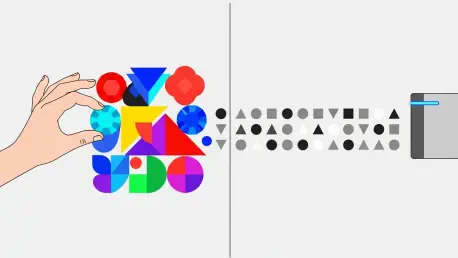
Generative AI has fundamentally altered the creative starting point by dismantling long-standing barriers to entry across numerous artistic disciplines. Tasks that once required years of technical training, expensive equipment, or extensive development timelines can now be initiated almost instantaneously through simple text-based commands. A graphic designer can now generate hundreds of distinct visual concepts in minutes, a musician can explore complex orchestral arrangements without access to a full studio, and a writer can outline multiple narrative pathways in the time it once took to draft a single paragraph. This unprecedented acceleration of the ideation phase provides a vast canvas of possibilities. However, it is crucial to recognize the inherent limitations of this technology. AI systems operate without genuine intention, lived experience, or a unique emotional perspective; they are incapable of originating a core message or shaping a distinct identity that gives art its resonance and meaning.
In this evolving landscape, artificial intelligence serves not as the originator of ideas but as a powerful amplifier for a creator’s pre-existing vision and voice. The technology effectively expands the creative toolkit, but the artist remains the sole arbiter of what to create and, more importantly, why. A powerful AI can generate a technically flawless piece of music, but it cannot imbue it with the vulnerability derived from personal struggle or the joy of a specific memory. Similarly, it can produce a visually stunning image but cannot convey an authentic political statement or a deeply personal worldview. Therefore, as the initial technical hurdles of creation are lowered, the importance of a strong, well-defined artistic identity is magnified. The creators who will thrive are not those who simply master the prompts, but those who use these new tools to more effectively communicate a clear, consistent, and deeply human message that was theirs to begin with.
The Challenge of Cutting Through the Noise
The democratization of advanced creative tools is one of the most significant consequences of the AI revolution, empowering individuals with a level of production capability that was previously the exclusive domain of large, well-funded teams. A teenager with a laptop can now produce visual effects, musical scores, or written works of a quality that might have once required an entire studio of professionals. This shift has thrown the doors of creative industries wide open, allowing new and diverse voices from previously marginalized communities to participate and share their stories. This influx of fresh perspectives has the potential to enrich the cultural landscape immeasurably, breaking down the traditional gatekeeping mechanisms that have long dictated who gets to be an artist. This new accessibility represents a profound and positive structural change, fostering a more inclusive and varied creative ecosystem where talent can emerge from anywhere.
However, this newfound accessibility comes with a formidable challenge: an exponential increase in the sheer volume of content being produced and distributed on a daily basis. This creates an environment of what can only be described as “louder noise,” where the struggle for visibility and discoverability becomes more intense than ever. In this saturated market, mere technical proficiency, which AI can readily replicate, is no longer a sufficient differentiator. Instead, the qualities that allow a creator to cut through the clutter are strategic clarity, consistency of message, and a powerfully articulated identity. As the world becomes more crowded with content, an artist’s ability to stay true to a core message and build a genuine connection with an audience becomes their most critical asset. It is no longer enough to simply create; one must create with such distinct purpose and vision that the work becomes impossible to ignore amid the endless stream of alternatives.
The Enduring Value of the Human Touch
The Rising Premium on Authenticity
An intriguing paradox has begun to emerge from the proliferation of AI-generated content: the more technically perfect and effortlessly producible art becomes, the more audiences appear to instinctively value and seek out work that feels personal, grounded, and unmistakably human. A growing discernment is developing among consumers, an ability to sense when a piece of work, despite its polished exterior, lacks a genuine story, an emotional through-line, or the weight of lived experience behind it. This is leading to a greater appreciation for the very qualities that AI is designed to smooth over—the imperfections, idiosyncrasies, and vulnerabilities that characterize human creativity. People, it turns out, connect with honesty and shared experience, not with flawless, algorithmically generated execution. The slight waver in a singer’s voice, the visible brushstroke in a painting, or the raw, unfiltered emotion in a line of prose are becoming markers of authenticity, a form of currency in an increasingly synthetic world.
This premium on authenticity stems from a core limitation that artificial intelligence, in its current form, cannot overcome. AI systems are masterful remixers, capable of analyzing and reassembling vast datasets of existing human creations, but they cannot replicate the unique vulnerability of a lyric born from personal heartbreak or the spontaneous energy of a sketch drawn from life. These systems lack a body, a history, and a consciousness; they have never experienced loss, love, or wonder. As such, they can only mimic the patterns of human emotion, not generate it from a place of genuine feeling. The profound truth embedded in a personal narrative, the quiet rebellion in an unconventional artistic choice, and the shared understanding that comes from a piece of art that says “I have been there, too” are all products of a human journey. It is this irreplaceable connection, rooted in the shared condition of being human, that audiences crave and that artists alone can provide.
Navigating New Ethical and Economic Frontiers
Beyond the creative process itself, the rapid advancement of generative AI has raised urgent and complex ethical and economic questions that the entire creative industry must now confront. One of the most widespread concerns among creators is the prevalent practice of using their published work to train AI models, often without their knowledge, consent, credit, or financial compensation. This practice raises fundamental issues of ownership, intellectual property, and the intrinsic value of an artist’s labor and unique style. The ability of an AI to replicate a painter’s brushwork, a writer’s voice, or a musician’s signature sound after analyzing their body of work poses a direct threat to their livelihood and artistic identity. This unprecedented challenge forces a reevaluation of what it means to own a style and how creators should be compensated when their work becomes the raw material for a new, automated form of production.
In response to this technological disruption, regulatory bodies and industry leaders are currently struggling to keep pace, leaving a vacuum where legal and ethical norms have yet to be established. The path toward a sustainable and equitable future requires the proactive development of new frameworks that can protect human creators while still allowing for technological innovation. The industry must establish transparent systems for obtaining consent, providing clear attribution, and ensuring fair value-sharing when an artist’s work is used in the development of AI tools. This ongoing tension between the forward march of technology and the protection of individual creators’ rights is not a peripheral issue but the defining challenge that will shape the next phase of the creative economy. Resolving it successfully will be essential to fostering an environment where both human artists and technological tools can coexist and flourish, rather than one where innovation comes at the expense of the very people who built the cultural foundation upon which it stands.
The Evolution of Creative Roles
In the wake of this technological shift, widespread fears of mass job elimination in creative fields were understandable, but historical precedent suggested a different outcome. Much like the advent of digital audio workstations did not eliminate musicians but instead created roles like the bedroom producer, and the rise of streaming platforms transformed music distribution rather than destroying it, AI’s integration prompted a transformation, not an obliteration, of creative professions. New specialties began to emerge, focusing on shaping, curating, and directing AI-generated content. These roles required a sophisticated understanding of both the technology and the artistic domain, positioning the human as a visionary guide for powerful new tools. This evolution ultimately elevated the value of distinctly human skills that could not be automated, such as refined taste, critical judgment, and overarching strategic vision. The creators who thrived in this new era were those who successfully integrated AI into their workflow without allowing it to supplant their unique identity and voice. The essence of creative work—the fundamental human craving for connection—remained unchanged and unfulfilled by machines. Audiences still attended events, visited galleries, and read books to feel something real and intentional. By automating the more repetitive and time-consuming tasks, AI had freed human creators to concentrate on the core elements of their craft: vision, meaning, story, and personality, challenging them to create with greater clarity, purpose, and originality than ever before.