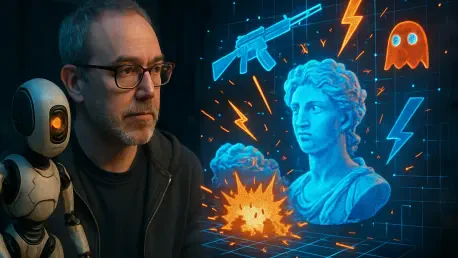

The intersection of veteran game design and burgeoning generative technologies has created a landscape where the definition of interactive storytelling is being fundamentally reimagined by the industry’s most respected creators. Erik Wolpaw, the celebrated writer behind legendary titles such as Portal and Half-Life 2, has recently entered this discourse by sharing his nuanced observations regarding the integration of artificial intelligence in the modern development cycle. While many observers view the rise of generative tools with a mixture of trepidation and unbridled enthusiasm, Wolpaw maintains a more pragmatic stance, grounded in his recent experimental work with a small, informal group of colleagues. These explorations were not driven by a corporate mandate or a specific commercial project, but rather by a desire to understand the actual utility of these tools in a craft that relies heavily on timing, humor, and emotional resonance. His findings suggest that while the technology currently falls short of replacing human ingenuity, it possesses a unique capacity to facilitate a level of environmental reactivity that has remained elusive for decades.
Reevaluating the Creative Role of Generative Models
The Distinction Between Scripting and Reactivity
The primary utility of current generative models in the gaming sector is not found in their ability to craft compelling narratives from scratch, but in their potential to act as a reactive catalyst for player agency. Wolpaw posits that while artificial intelligence is consistently poor at high-level creative writing, it can excel in the role of a grounded “straight man” within a chaotic digital environment. Using the open-world framework of a title like Grand Theft Auto as a theoretical baseline, he suggests that machine-driven characters could be programmed to react realistically to the unpredictable and often nonsensical actions of a human player. This approach shifts the focus away from pre-written branching dialogue and toward a dynamic system where the world itself acknowledges the player’s specific brand of chaos. By allowing a non-playable character to follow the flow of a player’s logic with greater flexibility, developers can create a more immersive sense of presence that feels responsive rather than merely mechanical or scripted in nature.
Building on the foundation of earlier innovations, such as the procedural dialogue systems found in Left 4 Dead, the current goal for many veteran designers is to evolve the industry’s pursuit of naturalistic interaction. The challenge lies in moving beyond the rigid constraints of traditional voice lines and toward a fluid system where the non-playable character serves as a believable anchor for the player’s performance. Wolpaw identifies a specific opportunity for these models to function as grounded entities that perceive and comment on the absurdity of the game world. This does not require the machine to be inherently funny or creative; instead, the humor emerges from the contrast between the realistic reactions of the AI and the erratic behavior of the user. This specific application ensures that the technology remains a tool for enhancing the player’s unique experience rather than a replacement for the intentional, authored narrative that serves as the game’s backbone. Such a system would prioritize the simulation of social chaos over the generation of static plot points.
Challenges in Mimicking Human Nuance
Despite the technical advancements observed throughout 2026, generative models continue to struggle with the complexities of subtext and comedic timing that define professional scriptwriting. Wolpaw remains largely unimpressed by the creative output of current systems, noting that they often produce derivative or tonally inconsistent content when tasked with genuine storytelling. Humor, in particular, requires a deep understanding of human psychology and cultural context that current algorithms simply cannot replicate with any degree of reliability. Because of these inherent limitations, the technology is not viewed as a viable threat to professional writers who specialize in high-concept world-building and character development. The lack of a “soul” or a coherent artistic vision in machine-generated text means that the human element remains indispensable for creating stories that resonate on a personal level. The industry must therefore distinguish between functional reactivity and the intentional craft of narrative architecture.
Furthermore, the disparity in quality between human performance and synthetic generation is particularly evident in the realm of voice acting. Wolpaw notes that AI-generated voices currently lack the subtle emotional cues and expressive range that professional actors bring to a role. This technical gap reinforces the idea that the most effective use of automation is in the background systems of a game rather than as the primary interface for character interaction. While a model can be trained to produce intelligible speech, it cannot yet capture the specific intentionality of a human performance directed by a creative lead. As the industry navigates the middle of this decade, the consensus among veterans suggests that the most successful projects will be those that leverage machine learning for systemic complexity while reserving the core creative pillars for human experts. This balance ensures that the technological shift enhances the medium’s capabilities without diluting the artistic integrity that has defined the most iconic gaming experiences.
Ethical Implications and the Human Element
Rejecting Development Shortcuts for Innovation
A defining aspect of the current discussion around automation in game development is the ethical framework through which these tools are implemented. Wolpaw has explicitly rejected the notion of using generative systems as a means of reducing development costs or streamlining production by replacing human labor. Instead, he argues that the only valid reason to adopt these technologies is to enable gameplay experiences that were previously impossible to achieve through traditional methods. This perspective places the focus squarely on innovation and the enhancement of the player’s experience rather than on corporate efficiency or the optimization of profit margins. By prioritizing the unique capabilities of the technology, such as real-time social simulation, developers can justify its inclusion as a specialized tool for expanding the boundaries of the medium. This approach protects the livelihoods of creative professionals while encouraging a more thoughtful and deliberate integration of new technologies into the workflow.
The insistence on using technology for novelty rather than cost-reduction is a crucial distinction that separates veteran-led projects from more opportunistic ventures. As the industry moves forward, the focus should remain on creating value through unique mechanics that provide the player with a sense of genuine discovery. Wolpaw’s stance reflects a broader sentiment among creators who view the rise of automation as a double-edged sword, capable of both revolutionizing art and causing significant disruption to the creative ecosystem. By framing the conversation around the impossibility of certain mechanics without the aid of advanced systems, designers can steer the narrative toward progress rather than displacement. This methodology ensures that every technological addition serves a clear design purpose, such as increasing the density of environmental feedback or providing a more nuanced reaction to player choices, rather than simply filling a void left by a reduced workforce or a lack of creative direction.
Navigating the Existential Risks of Automation
The historical parallels drawn by industry veterans often compare the arrival of generative tools to the invention of photography or even more destructive technologies. Wolpaw has likened the potential impact of these advancements to the atom bomb, suggesting that while the public may be enamored with the convenience and novelty of the tech, the long-term consequences for the craft must be managed with extreme caution. This perspective encourages a protective stance over the traditional skills of game development, such as manual animation, deliberate writing, and directed performance. As developers explore the capabilities of these tools, they must remain vigilant about the potential for technological debt and the erosion of the artistic standards that have historically defined the medium. The goal is to maintain an objective distance from the hype, ensuring that the technology is utilized as a sophisticated instrument rather than a panacea for the inherent challenges of high-level creative work.
Looking toward the near future, the industry’s primary objective should be the establishment of clear boundaries that define where machine logic ends and human creativity begins. Wolpaw’s observations highlight the fact that while the technology is currently too expensive and resource-intensive for widespread deployment at scale, its potential for simulating complex social dynamics offers a fascinating path for future innovation. The curiosity of veteran developers is tempered by a deep respect for the human talent that has built the industry’s most enduring legacies. By fostering a culture that values the quality of the player experience over the speed of production, the community can ensure that the transition into an era of more autonomous systems is handled with the necessary foresight. This cautious optimism suggests that while the landscape is changing, the core principles of great game design—surprise, responsiveness, and emotional depth—will continue to be driven by the intentionality and vision of human creators.
Future Directions for AI Integration
The discourse surrounding the integration of generative systems in game design reached a critical turning point as developers moved beyond mere experimentation. It was established that the most effective application of these tools resided in their ability to foster a dynamic, reactive world where players felt their actions had immediate and logical consequences. Rather than attempting to automate the entire creative process, successful teams focused on deploying technology to handle the systemic minutiae of environmental response, leaving the thematic and emotional core to human experts. This strategy provided a clear roadmap for organizations aiming to balance innovation with ethical responsibility. The focus remained on the unique capability of the technology to serve as a foil for the player’s agency, creating a specialized niche for “straight man” characters that grounded the inherent absurdity of many gameplay loops.
Moving forward, stakeholders in the development community prioritized the preservation of human craft by ensuring that automated tools were used only to achieve previously impossible design goals. They recognized that the value of a gaming experience was tied to its intentionality and the quality of the performances within it. Actionable steps involved the implementation of hybrid workflows where machine reactivity was strictly bounded by human-authored scripts, ensuring that the narrative stayed true to the creator’s vision. Developers also invested in training programs that taught writers and designers how to direct these systems effectively, treating them as sophisticated instruments of performance rather than autonomous agents. By maintaining this distinction, the industry ensured that the technological advancements of the mid-2020s resulted in richer, more immersive worlds that still felt fundamentally human. Insightful leaders concluded that the future of the medium depended on the ability to master these tools without losing the soul of the work.