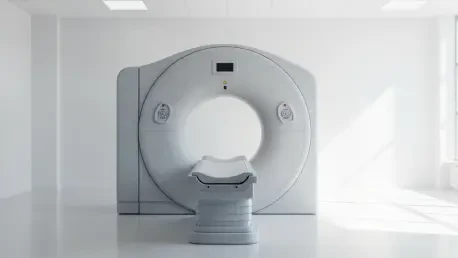

The landscape of medical imaging reached a defining moment as the FDA officially granted 510(k) clearance to a technology that fundamentally alters how physicians peer into the human body. This regulatory milestone for the Photonova Spectra marks the arrival of photon-counting computed tomography (PCCT) as a primary diagnostic tool, moving beyond the experimental phase into the heart of clinical practice. By utilizing a direct-conversion detector system, this platform bypasses the decades-old limitations of traditional scanners, offering a level of precision that was previously considered the domain of laboratory physics rather than bedside medicine. The shift represents a move toward a truly digital era of radiology, where every individual X-ray photon is accounted for, measured, and translated into high-fidelity diagnostic data.
This transition is not merely an incremental update but a structural evolution in how internal structures are visualized and analyzed. While traditional CT scanners have served as the workhorse of modern hospitals, they have long been constrained by the physics of scintillator-based detection. The Photonova Spectra addresses these constraints head-on, providing clinicians with the clarity needed to make definitive decisions in the most complex cases. As healthcare systems grapple with rising patient volumes and a growing need for personalized treatment pathways, the introduction of this photon-counting system provides a necessary leap in capability, ensuring that diagnostic imaging keeps pace with the demands of modern medicine.
A New Era in Diagnostic Clarity: Beyond Traditional Scanners
For years, the standard for computed tomography relied on a two-step process where X-ray photons were converted into visible light by a scintillator before being recorded by a photodiode. This conversion process inherently introduced a degree of “blurriness” because light naturally scatters, leading to a loss of geometric precision and energy information. The Photonova Spectra replaces this indirect method with a direct-conversion mechanism. In this new paradigm, individual photons strike a semiconductor, generating an electrical signal that is measured immediately. This eliminates the light-conversion step entirely, preserving the original energy characteristics of the X-ray beam and resulting in a diagnostic image with unprecedented sharpness.
Securing FDA 510(k) clearance signifies that this technology has met the rigorous safety and efficacy standards required for widespread clinical use in the United States. This milestone is viewed by many in the industry as the beginning of a new standard in medical technology, often compared to the transition from black-and-white television to high-definition digital broadcasts. The ability to capture such granular data allows for a direct-conversion diagnostic experience that minimizes information loss. This ensures that the final image is not just a representation of density, but a detailed map of the patient’s internal anatomy, providing the structural and functional insights required for high-stakes medical interventions.
Why Photon-Counting CT Is a Healthcare Game Changer
Conventional CT systems are frequently limited by their inability to distinguish between photons of different energy levels, often grouping them together into a single measurement. This leads to a loss of energy resolution, which can make it difficult to differentiate between materials of similar densities, such as certain types of plaque and contrast agents. The Photonova Spectra utilizes “Deep Silicon” as its primary semiconductor material, a choice that offers superior purity and stability compared to other potential materials. This silicon-based architecture allows the system to measure the precise energy of every photon, effectively filling the information gaps that have historically hindered the diagnostic utility of standard CT scans.
The pressure on modern healthcare environments is immense, with clinicians needing to process high patient volumes without sacrificing the accuracy of their findings. The “One-Scan” philosophy embedded in this system is a direct response to this challenge. In the past, radiologists often had to decide before a scan whether they needed specific spectral data, which could lead to repeat exams or missed opportunities for deeper analysis. The Photonova Spectra captures comprehensive spectral data and ultra-high-definition imagery simultaneously in every single scan. This eliminates the need for predictive protocols, ensuring that the necessary data is always available for retrospective analysis without exposing the patient to additional radiation.
Redefining Diagnostic Boundaries With the Photonova Spectra
The technical prowess of the Photonova Spectra is most evident in its simultaneous acquisition of 8-bin spectral data and ultra-high-definition (UHD) imagery. This dual capability allows for superior spatial resolution while providing deep insights into the chemical composition of tissues. By distinguishing between iodine, fat, and calcium with high sensitivity, the system enables material separation that was previously difficult to achieve. This clarity is vital for identifying subtle pathologies that might be obscured in a standard scan, such as tiny calcifications in a coronary artery or small lesions within a dense organ.
Across medical specialties, the clinical impact is profound. In oncology, the ability to monitor tumor response with higher accuracy allows for more agile adjustments to treatment plans. In cardiology, the system’s rotation speed of 0.23 seconds captures motion-free images of the heart, even in patients with irregular rhythms. Furthermore, neurology and musculoskeletal imaging benefit from the visualization of fine bone structures and intricate nerve pathways. Managing the massive “Data Deluge” created by these high-resolution scans is made possible by NVIDIA accelerated computing. Using GPU-powered CUDA reconstruction, the system processes 50 times more data than previous high-end scanners, ensuring that these complex images are available for clinical action in real-time.
Expert Perspectives and Research-Driven Validation
The path to FDA clearance was paved by rigorous clinical evaluations at prestigious institutions like the University of Wisconsin–Madison. Researchers there have focused on how the silicon-based PCCT can optimize image quality and reduce background noise, which is essential for improving diagnostic confidence. Dr. Giuseppe Toia, a leading voice in the evaluation process, emphasized the importance of “clean spectral signatures.” He noted that the integrity of the data provided by the Photonova Spectra is paramount, as accurate CT numbers are the foundation for any quantitative analysis used in research and long-term patient monitoring.
At Stanford Medicine, the focus has shifted toward pathology-specific advantages and the discovery of new imaging biomarkers. By visualizing biological structures at an ultra-high resolution, researchers are identifying subtle indicators of disease that were previously invisible. This research-driven approach bridges the gap between laboratory innovation and bedside application, ensuring that the technology is not just powerful, but also clinically relevant. These collaborations suggest that the Photonova Spectra will serve as a cornerstone for future medical discoveries, providing the high-quality data necessary to fuel the next generation of AI-driven diagnostic tools and personalized medicine.
Implementing Photon-Counting Technology in Modern Workflows
Operational efficiency is a core component of the Photonova Spectra’s design, particularly through the “CT ONE” operator environment. To reduce the burden on imaging technologists, the system utilizes Auto Positioning and automated interfaces that standardize quality across various scans. This automation ensures that even in a high-traffic hospital setting, the quality of the imagery remains consistent, regardless of the operator’s experience level. By simplifying the workflow, healthcare facilities can maintain a high throughput while ensuring that every patient receives the benefits of photon-counting technology.
Strategic deployment is further simplified by the system’s “CT-ready” footprint. Recognizing that hospital renovations are both costly and time-consuming, GE HealthCare designed the Photonova Spectra to fit into existing spaces that previously housed the Revolution Apex platform. This compatibility allows institutions to upgrade their diagnostic capabilities with minimal structural modifications. Following its debut at the RSNA meeting, the system is now moving toward full commercial availability in the United States. This rapid transition from technological showcase to market readiness ensures that healthcare providers can begin integrating this advanced imaging solution into their daily operations without significant delays.
The arrival of the Photonova Spectra represented a fundamental shift in the capabilities of diagnostic medicine. By successfully merging the precision of Deep Silicon detectors with the processing power of modern accelerated computing, the system addressed the long-standing limitations of conventional imaging. The collaborative efforts between engineers and academic researchers ensured that the technology remained grounded in clinical necessity. As hospitals began to adopt this platform, the focus moved toward utilizing these new insights to improve patient outcomes and streamline hospital workflows. This era of photon-counting CT provided the necessary tools for a more informed and accurate approach to human health.