
The immense logistical operation required to transport a global racing series across five continents presents a monumental challenge to sustainability, yet the all-electric Formula E championship has uniquely held a net zero carbon certification since its inception. This achievement is not maintained through simple offsets but through a relentless pursuit of operational efficiency, now supercharged by a strategic, multi-year partnership with Google Cloud that embeds advanced artificial intelligence into the very core of its global enterprise. This collaboration represents a significant shift in how sports organizations approach sustainability, moving beyond sponsorship to deep technical integration to solve complex, real-world problems.
This alliance is a clear indicator of a broader trend where the business of sport is being fundamentally reshaped by technology. The relationship has progressed from a technical agreement in early 2025 to a “Principal Partner” status, signaling that initial AI-driven pilot programs delivered a tangible return on investment. The partnership is a testament to how data-rich environments like motorsport serve as the ultimate proving ground for technologies like Google’s Gemini AI, demonstrating their value in one of the most demanding operational theaters in the world.
Sustaining Net Zero Across Continents
For a global entity like Formula E, maintaining its net zero status is a continuous and complex endeavor. A significant portion of its carbon footprint falls under Scope 3 emissions, which encompass the vast logistics of its international supply chain and the setup for each E-Prix. The challenge is to reduce these emissions at the source without compromising the high-octane spectacle that draws millions of fans. The series’ commitment requires not just reactive measures but proactive, data-driven strategies to minimize environmental impact from the ground up.
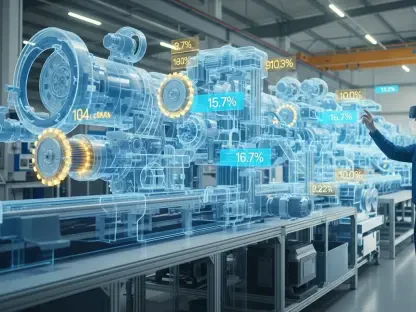
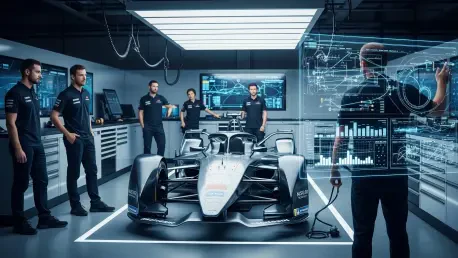
The solution lies in leveraging Google Cloud’s AI to create “digital twins” of its event sites. These highly detailed virtual replicas allow race planners to simulate and optimize every physical aspect of an event, from grandstand placement to the layout of broadcast compounds and team garages. By perfecting the build in a virtual environment, the organization dramatically reduces the need for extensive on-site reconnaissance trips by multiple international teams. This virtual optimization of physical deployment leads to a direct and measurable reduction in the operational carbon footprint, providing a high-value, data-driven approach to sustaining its net zero certification.
Beyond the Finish Line with Tech Partnerships
Modern sports partnerships are evolving far beyond simple brand exposure on a vehicle livery. The collaboration between Formula E and Google Cloud exemplifies a deeper, symbiotic relationship where technology is not just a sponsor but an integral component of the business and sporting strategy. This integration provides Formula E with a distinct competitive advantage, pushing the boundaries of what is possible in motorsport management and sustainability. In return, it offers Google a high-profile platform to showcase the real-world applications of its AI and data analytics technologies under extreme pressure.
This model is setting a new standard for the industry, demonstrating that the future of sport lies in intelligent operations. By embedding generative AI tools into its workforce, Formula E is also enhancing its internal agility. The deployment of Google Workspace, augmented by the Gemini AI model, is streamlining administrative processes and accelerating performance across its distributed global team. This focus on back-office efficiency reflects a wider enterprise trend where AI assistants automate routine tasks, enabling employees to concentrate on more strategic, high-impact activities.
The AI Playbook for Operational Excellence
The partnership’s strategy is built on a comprehensive AI playbook designed to enhance every facet of the organization. One of the primary applications is the optimization of its complex global logistics, a critical factor in both cost efficiency and carbon reduction. By simulating freight and equipment needs with digital twins, Formula E can minimize the amount of heavy hardware transported to each race, a major source of emissions. This predictive capability ensures that precisely what is needed arrives on time, cutting waste and unnecessary transport.
Beyond logistics, the collaboration aims to enrich the fan experience through data-driven storytelling. A tool known as the “Strategy Agent,” integrated into live race broadcasts, is powered by Google Cloud AI. It processes immense streams of real-time data from the track—including driver performance, battery levels, and team communications—to provide viewers with tailored insights and predictive analysis. This tool demystifies complex race dynamics, explaining pit strategies and potential overtakes as they unfold, thereby making the sport more accessible and engaging for its global digital audience.
From Mountain Descents to Monaco Laps
The practical power of this AI collaboration was powerfully demonstrated in the “Mountain Recharge” initiative, a proof-of-concept project that translated complex data into on-track performance. The engineering challenge was to map the most efficient route for the GENBETA car during a mountain descent to maximize the energy regenerated through braking. This task required processing a vast array of variables, including topographical maps, surface friction, and real-time energy metrics.
Engineers utilized Google’s AI Studio and Gemini models to analyze this high-dimensional data. The AI identified the precise braking zones and calculated the optimal regenerative force needed to harvest the maximum amount of energy from the descent. The results were definitive: the energy regenerated was sufficient to power the car for an entire lap of the notoriously demanding Monaco circuit. This successful project served as a compelling use case, showcasing the AI’s capability to solve complex engineering problems and provide a clear, executable plan for physical implementation.
A Blueprint for Sustainable High Performance
The framework established by Formula E and Google Cloud offers a compelling blueprint for other organizations striving to balance high performance with ambitious sustainability goals. The use of AI-driven virtual simulation to optimize physical operations represents a critical and high-value area for future investment across industries. By proving that environmental responsibility and peak operational efficiency are not mutually exclusive, the partnership charts a path forward for complex global enterprises.
This virtual-to-reality model demonstrated how predictive analytics and digital modeling could yield substantial reductions in carbon emissions and logistical costs. The successful integration of AI into everything from race-day strategy to back-office workflows provided a clear validation of the technology’s transformative potential. As global pressure mounts on organizations to achieve both performance and sustainability, the lessons from this collaboration have provided an actionable roadmap, proving that the race toward net zero can be won through innovation and intelligent partnership.