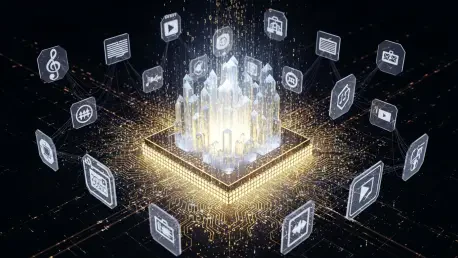

The seamless integration of synthetic intelligence into the daily workflows of millions has effectively erased the boundary between human intent and machine execution in the modern digital landscape. By March 2026, Generative Artificial Intelligence is no longer viewed as a disruptive newcomer but as the essential infrastructure supporting the global creative economy. Whether it is a personalized response to a customer inquiry or a multi-million-dollar marketing campaign, these systems operate with a level of fluidity that makes their presence almost indistinguishable from human effort. This ubiquity has fundamentally altered how society produces and consumes information, turning what was once a specialized technological experiment into the silent heartbeat of communication. Organizations that previously hesitated to adopt these tools now find themselves entirely dependent on their speed and precision to maintain a competitive edge in an increasingly crowded and fast-moving marketplace.
The Evolution of Machine Intelligence
Moving Beyond Data Analysis
The transition from analytical to generative capabilities represents one of the most significant architectural shifts in the history of computation. In the preceding era, artificial intelligence functioned primarily as a sophisticated filing system, capable of sorting through massive datasets to identify patterns or predict user behavior based on historical trends. Today, the focus has moved from identification to synthesis, where the machine is no longer just a filter but an active participant in the creative process. This evolution allows the technology to “author” content from scratch by drawing on a deep understanding of human logic and aesthetic preferences. Instead of simply retrieving an existing image or a string of text, the systems build entirely new outputs pixel by pixel or word by word, ensuring that every result is tailored to the specific context of the user’s request.
This capability is rooted in the way modern models perceive information as a series of interconnected relationships rather than static data points. By training on virtually the entire corpus of human knowledge, these systems have learned to mimic the structural nuances of diverse genres, from technical white papers to avant-garde poetry. When a prompt is entered, the AI does not search a database for the “correct” answer; instead, it calculates the most statistically probable and contextually relevant sequence of tokens to construct a response that feels organic. This shift from “search-and-match” to “predict-and-create” has fundamentally changed the value proposition of AI, moving it from a utility for data scientists to a primary tool for artists, writers, and designers who require a partner in the ideation phase of their work.
Technical Foundations of Modern Creation
At the core of this transformation are advanced neural networks and transformer architectures that have redefined the relationship between machines and language. By breaking down complex information into discrete units known as tokens, these models can analyze the intricate dependencies that exist within large volumes of data. This allows the AI to maintain a high degree of internal consistency even across massive projects, such as generating a full-length novel or a detailed cinematic storyboard. Unlike earlier versions of the technology that often lost the narrative thread after a few paragraphs, the systems of 2026 possess a sophisticated “memory” that ensures every part of the output aligns with the established tone and logic of the whole. This technical reliability is what has finally allowed professional industries to trust AI with mission-critical creative tasks.
Furthermore, the advancement of these models has led to a multi-modal reality where the AI can simultaneously process and generate text, audio, and visual data within a unified framework. This cross-pollination of data types means that a script can be automatically converted into a series of concept art images or a musical score that matches the emotional beats of the written word. The transformer models act as a bridge between different creative disciplines, enabling a level of stylistic harmony that was previously only achievable through months of manual collaboration between multiple human specialists. By treating all forms of media as a series of predictable and manipulatable patterns, the technology has provided a universal language for creation, allowing users to move fluidly between different formats without losing the core essence of their original vision or creative direction.
Reshaping Professional Landscapes
Sector-Specific Transformations
The digital marketing industry has undergone a total structural overhaul, moving away from the manual drudgery of drafting repetitive content. Agencies now leverage AI to solve the perennial “blank page” problem, allowing teams to generate hundreds of variations for social media posts, email newsletters, and ad copy in a fraction of the time it once took. This hasn’t eliminated the need for human copywriters; rather, it has elevated their role to that of a high-level strategist and editor. Professionals now spend their time refining the “big idea” and ensuring that the AI-generated outputs align with the specific voice and values of a brand. The mechanical labor of writing has been replaced by a focus on psychological resonance and market positioning, enabling brands to maintain a constant and coherent presence across dozens of different digital channels simultaneously.
In the realm of visual arts and graphic design, the democratization of high-fidelity tools has changed the economic equation for small businesses and independent creators. Professional-grade branding, which once required significant capital and specialized software skills, is now accessible through the discipline of “prompt engineering.” Designers have transitioned into roles that resemble creative directors, where they manage a suite of AI tools to iterate on visual concepts rapidly. Instead of spending hours manually adjusting lighting or textures, they use natural language to direct the machine toward a specific aesthetic. This shift allows for a much higher volume of experimentation, as the cost and time associated with failure have been virtually eliminated. The focus has moved from technical proficiency with complex software to the ability to articulate a clear and compelling visual vision.
Cinematic and Auditory Innovations
The film and music industries are witnessing a profound shift in how content is produced and localized for a global audience. One of the most impactful developments is AI-driven video synthesis, which allows for the seamless synchronization of an actor’s lip movements with dubbed audio in any language. This eliminates the distracting “uncanny valley” effect of traditional dubbing, making international cinema feel native to viewers regardless of their location. Production houses are also using AI to generate complex background environments and storyboards, drastically reducing the need for expensive location shoots and manual rotoscoping. These tools have streamlined the pipeline from a screenplay to a finished film, allowing independent filmmakers to produce high-budget visuals on a fraction of the traditional cost, thereby diversifying the voices in global cinema.
Similarly, the music industry has integrated AI as a standard component of the modern recording studio, used for everything from procedural scoring in video games to the technical polishing of independent tracks. Artists now use AI to fill the gaps in their own technical abilities, such as generating a realistic orchestral backing or mastering a song to meet broadcast standards. This technology acts as a force multiplier for solo creators, who can now achieve a “full-band” sound from a home setup without hiring a fleet of session musicians or engineers. While there is ongoing debate regarding the nature of originality in AI-assisted music, the practical reality is a surge in high-quality audio production from a broader range of creators. The technology has effectively lowered the barrier to entry, allowing the focus to return to the core elements of songwriting and melody rather than just technical production.
The New Economic and Ethical Reality
Navigating an Era of Abundance
The defining economic characteristic of the current era is the near-zero marginal cost of creation, a phenomenon that has led to an unprecedented state of content abundance. In 2026, businesses no longer face the same constraints regarding how much material they can produce; instead, the challenge lies in capturing and holding the attention of a consumer base that is constantly being flooded with high-quality media. This abundance enables hyper-personalization, where content can be dynamically adjusted in real-time to suit the specific preferences or current mood of an individual user. However, this shift also means that the sheer volume of “synthetic noise” is higher than ever before. Brands must work harder to ensure their message doesn’t get lost in a sea of AI-generated content that looks and sounds just as professional as their own, leading to a new arms race in creative strategy.
This landscape of infinite content has fundamentally changed how audiences interact with the digital world, creating a environment where authenticity is the most valuable currency. As it becomes easier to generate realistic-looking media, the public has become more skeptical of the information they consume. This has led to a resurgence in the importance of trusted sources and verified identities, as users look for “human-in-the-loop” markers to ensure that what they are seeing is grounded in reality. The ability to distinguish between a genuine human experience and a perfectly crafted AI simulation has become a critical skill for the modern consumer. For businesses, this means that transparency about how AI is used is no longer just an ethical choice but a necessary component of maintaining brand loyalty and trust in a marketplace where anything can be fabricated.
Ethical Safeguards and the Centaur Model
The rapid proliferation of generative technology has brought significant ethical challenges to the forefront, particularly concerning intellectual property and the spread of misinformation. With deepfakes becoming more sophisticated and harder to detect, the role of human gatekeepers has never been more essential for maintaining a functional digital society. Regulatory frameworks are struggling to keep pace with the speed of innovation, leading to a complex landscape where creators must navigate new rules regarding copyright and data usage. There is a growing movement toward “watermarking” synthetic content to ensure that users are aware when they are interacting with an AI, but the effectiveness of these measures remains a subject of intense debate. Protecting the rights of the original artists whose work was used to train these models is a primary focus for legal experts.
Despite these challenges, the prevailing industry standard has become the “Centaur Creative” model, a synthesis of human intuition and machine efficiency. This approach recognizes that while AI can replicate styles and handle repetitive tasks with unmatched speed, it lacks the lived experience required to create art that truly resonates on an emotional level. Humans provide the “soul” of the creative process—the nuance, the cultural context, and the capacity for genuine nostalgia that machines cannot simulate. The most successful organizations are those that empower their human staff to use AI as a sophisticated lens through which they can explore new boundaries of storytelling. By combining the vast processing power of the machine with the unique perspective of the human mind, the creative industry is moving toward a future where the only limit is the scale of the artist’s imagination.
Moving forward, the focus must shift from merely adopting these tools to developing a robust framework for their responsible use across all levels of society. Professionals should prioritize the development of “AI literacy,” ensuring that they understand not just how to prompt these systems, but also how to critically evaluate their outputs for bias or inaccuracy. For organizations, the next logical step involves investing in proprietary datasets and fine-tuned models that reflect their unique brand identity rather than relying solely on generic, third-party platforms. By treating AI as a collaborative partner rather than a replacement for human talent, the creative community can ensure that this era of abundance leads to more meaningful and diverse forms of expression. The goal is to build a digital ecosystem where technology serves to amplify the human voice, creating a more vibrant and inclusive global conversation.