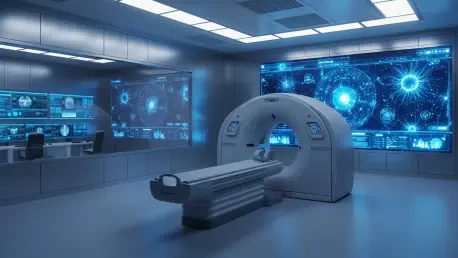

The integration of sophisticated computational algorithms into the heart of diagnostic imaging marks one of the most significant shifts in clinical practice since the discovery of the X-ray itself. For decades, the burden of interpreting complex medical scans fell entirely on the shoulders of radiologists who meticulously reviewed every slice of data to ensure no pathology was overlooked. However, as the volume of diagnostic imaging continues to escalate and the technical complexity of individual scans increases, the limitations of purely human processing have become a critical bottleneck in patient care. In this modern landscape, artificial intelligence has transitioned from an experimental novelty into an indispensable component of daily hospital operations. This technological evolution is not merely about speed; it represents a fundamental change in how medical data is prioritized and interpreted. The current environment is characterized by a seamless fusion of expert clinical judgment and machine-driven analysis, ensuring that patients receive faster and more accurate results than ever before.
Easing the Burden on Medical Specialists
The primary challenge facing contemporary radiology departments is the sheer scale of the information being generated by modern imaging hardware. A standard high-resolution chest CT scan can now produce upwards of six hundred individual images, each requiring careful inspection for subtle abnormalities. When a single specialist is responsible for dozens of these cases during a standard shift, the mental strain—often referred to as the cognitive load—can lead to fatigue and an increased risk of interpretive errors. AI support systems alleviate this pressure by serving as a preliminary layer of review that scans data the moment it enters the hospital network. These algorithms do not just look for obvious lesions; they analyze pixel-level textures that may escape the naked eye during a rapid manual review. By automating the most repetitive aspects of image screening, the technology ensures that the human expert remains sharp and focused on the most difficult diagnostic questions, thereby improving the overall safety of the clinical environment.
One of the most transformative applications of AI within the hospital setting is its role in emergency triage, particularly for time-sensitive neurological conditions. In the case of a suspected stroke, every passing minute results in the loss of millions of neurons, making the speed of diagnosis the single most important factor in determining the patient’s recovery. AI platforms are now deeply integrated into the workflows of over sixteen hundred hospitals, where they automatically scan imaging data for signs of large vessel occlusions. When the algorithm identifies a potential blockage, it triggers an immediate alert to the stroke team, bypassing the traditional queue. This prioritization has been shown to reduce the time between the initial scan and the start of treatment by over an hour on average. For patients, this reduction in wait time can mean the difference between permanent disability and a full return to normal cognitive and motor function, illustrating the direct impact of high-speed AI analysis on survival.
Improving Accuracy and Department Efficiency
In the realm of oncology, the precision offered by artificial intelligence is proving to be a game-changer for early detection and treatment planning. Algorithms trained on massive datasets are capable of identifying the earliest signs of lung and breast cancer with accuracy rates that frequently exceed ninety-five percent. Of particular significance is the ability of AI to detect what are known as interval cancers, which are malignancies that develop or become visible between regularly scheduled screenings. These subtle threats are often difficult to spot using traditional methods, but AI can flag them at a rate nearly fifty percent higher than manual review alone. By identifying these hidden patterns early, clinicians can initiate interventions while the disease is in its most treatable stages. This enhancement in diagnostic sensitivity directly correlates to improved long-term survival statistics and allows for more personalized treatment pathways that are tailored to the specific characteristics of the tumor.
The impact of AI is also felt in the administrative corridors of the radiology department, where it is streamlining the cumbersome process of documentation. Historically, radiologists spent a significant portion of their day dictating notes and manually formatting clinical reports, a process that is both time-consuming and prone to clerical errors. Modern AI tools now facilitate real-time report generation by converting a specialist’s spoken observations into highly structured, standardized documents. These systems are capable of cross-referencing findings with previous scans to ensure consistency and can even suggest relevant clinical codes for billing and research purposes. By automating these administrative tasks, hospitals allow their medical staff to spend more time on complex diagnostic work and direct patient consultation. This shift not only improves the overall efficiency of the department but also reduces the burnout often associated with the heavy documentation requirements found in the modern healthcare system.
Establishing Data Quality and Security Standards
As hospitals become increasingly reliant on digital diagnostic tools, the importance of maintaining rigorous data governance and security has become a central strategic priority. The performance of any AI algorithm is fundamentally tied to the quality and diversity of the data used for its training and ongoing operation. There is a persistent risk known as model drift, where a system that performed exceptionally well in a controlled setting begins to lose accuracy when deployed in a different clinical environment. For example, an algorithm trained on data from a large urban teaching hospital might struggle to interpret scans from a smaller rural facility using older imaging hardware. To mitigate these risks, hospitals are implementing comprehensive auditing processes that monitor the performance of AI tools in real-time. This ensures that the technology remains reliable across different patient demographics and equipment types, maintaining a high level of diagnostic integrity throughout the entire healthcare network.
Protecting patient privacy while fostering innovation requires the use of advanced technological solutions such as federated learning. This specific approach to machine learning allows AI models to be trained on vast amounts of data located at multiple different institutions without the actual patient images ever leaving their original server. By keeping the sensitive data localized, hospitals can comply with strict privacy regulations like HIPAA and GDPR while still contributing to the development of more accurate and unbiased algorithms. This collaborative yet secure framework is essential for ensuring that AI tools are trained on diverse datasets that reflect the true complexity of human biology. Furthermore, establishing clear audit trails and standardized labeling practices ensures that the resulting diagnostic insights are transparent and verifiable. These governance structures provide the necessary trust and security for both clinicians and patients as they navigate the complexities of a technology-driven medical environment.
Implementing Actionable Solutions: The Path Forward
The evolution of hospital radiology through the implementation of artificial intelligence reached a pivotal stage where the technology transitioned into a vital operational necessity. The analysis indicated that the primary benefits of this shift were found in the significant reduction of treatment times for acute conditions and the enhanced detection rates for various forms of cancer. By automating the triage process and streamlining administrative documentation, healthcare facilities successfully alleviated the cognitive burden on their specialists. However, the long-term viability of these advancements required a commitment to robust data governance and the establishment of ethical oversight committees. Hospitals that prioritized the standardization of their imaging data and invested in comprehensive staff training programs saw the most substantial improvements in both efficiency and patient outcomes. These institutions proved that the successful integration of technology depended on a balanced approach that valued both innovation and human expertise.
Actionable strategies for the coming years focused on the adoption of federated learning and the continuous monitoring of algorithmic performance to prevent diagnostic drift. The medical community recognized that maintaining high standards of patient privacy was not a hurdle to innovation but rather a prerequisite for its success. Moving forward, the emphasis shifted toward fostering deep AI literacy among clinicians, ensuring they possessed the skills to critically evaluate machine-generated insights. This strategic focus allowed for a collaborative diagnostic model that maximized the strengths of both human judgment and computational speed. Ultimately, the transformation was not about the technology itself but about how that technology served the ultimate goal of improving human health. By focusing on transparent implementation and rigorous validation, the industry established a framework that allowed radiology to remain at the forefront of modern medical progress while keeping patient safety as the highest priority throughout every clinical interaction.