
The widespread availability of large language models has led millions to seek health advice from general-purpose chatbots, a practice fraught with risk as these systems often provide generic, context-free, or dangerously inaccurate information. Responding to this challenge, the healthcare industry is now pioneering a new class of specialized artificial intelligence designed not to replace clinicians, but to serve as a secure, personalized, and clinically supervised navigator. A prominent example of this evolution is “Dot,” an AI assistant developed by Included Health, which showcases a sophisticated approach that integrates deep personalization with human oversight to safely guide individuals through the often-bewildering landscape of their health benefits and care options. This represents a critical shift from open-ended AI to purpose-built tools that prioritize member safety and efficacy above all else.
The Foundation of Trustworthy Guidance
A specialized health assistant’s true value stems from its deep integration with a member’s specific health information, creating a foundation of trust that generic AI cannot replicate. These advanced systems are meticulously trained on proprietary datasets containing the intricate details of an employer’s or health plan’s unique benefits structure. This gives the AI a comprehensive understanding of what services are covered, what is excluded, the specifics of plan documents, and the full spectrum of available wellness programs. By securely drawing from a member’s claims data, benefits information, and even medical history via an enterprise-grade electronic health record (EHR), the assistant can provide instant and, more importantly, accurate answers to highly personal questions. A member can confidently ask, “How much of my deductible is left for the year?” or “Is physical therapy for my knee injury covered under my current plan?” and receive a precise, context-aware response that eliminates guesswork and reduces administrative burdens, allowing them to focus on their health rather than on deciphering complex insurance documents.
This profound level of personalization extends beyond simple benefits queries to the crucial task of finding the right medical care. The AI engine sifts through a rich variety of data sources that are inaccessible to public chatbots, including proprietary physician-quality models that assess provider performance, systemwide utilization and cost patterns to identify efficient care pathways, and insights related to social determinants of health. This multifaceted analysis allows the system to offer recommendations that are not merely a list of in-network providers but a curated selection of high-quality, cost-effective clinicians suited to a member’s specific medical needs and circumstances. By streamlining this often-frustrating search process, the technology empowers individuals to make more informed decisions, connecting them with the appropriate level of care faster and more reliably than ever before, which is a critical step in improving overall health outcomes.
A Hybrid Approach to Safety and Efficacy
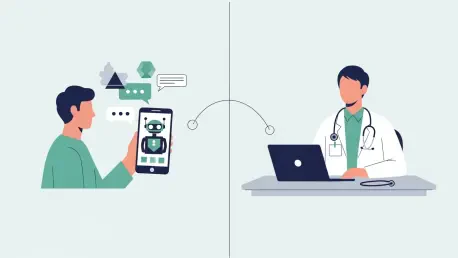
A cornerstone of safely deploying artificial intelligence in healthcare is the unwavering principle that technology should augment, not replace, the irreplaceable value of human expertise. This philosophy is embodied in the “clinician-in-the-loop” model, a framework where the AI functions as an intelligent and ever-present first point of contact for members. It is designed to handle a wide array of navigational and informational queries with speed and accuracy, freeing up human care teams to focus on more complex clinical issues. However, when a member’s needs exceed the AI’s programmed capabilities—whether due to clinical complexity, the need for a formal diagnosis, or a situation requiring genuine empathy—the system is engineered to perform a seamless and immediate escalation. This ensures that a member is never trapped in a frustrating or unproductive automated loop, maintaining a high standard of care and responsiveness at all times.
This hybrid approach creates a fluid and supportive member experience by ensuring that the context from the AI-driven conversation is transferred directly to the human clinician or care advocate who takes over. This critical handoff eliminates the need for the individual to repeat their issue, reducing frustration and making the interaction far more efficient. With a human backstop available 24/7 through a dedicated triage line, urgent needs can be addressed at any time, day or night. This integrated system masterfully combines the speed, scalability, and availability of AI with the emotional intelligence, nuanced understanding, and expert diagnostic skills that only a trained human professional can provide. The result is a healthcare navigation service that is both highly efficient and deeply human-centric, offering the best of both worlds to deliver a superior and safer member journey.
Evolving From a Reactive Tool to a Proactive Partner
While current capabilities are centered on reactively answering member questions and guiding them to appropriate care, the long-term vision for this technology is far more ambitious, aiming to transform the AI into a proactive partner in a member’s health journey. Future iterations are being developed to actively engage individuals in preventive care, a cornerstone of long-term wellness and cost management. For instance, the AI will be able to contact members with timely, personalized reminders for necessary health screenings, such as age-appropriate cancer screenings, or to check if they have received their annual flu shot. For members managing chronic conditions, the assistant will serve as a consistent and supportive touchpoint, helping them adhere to their prescribed care plans, tracking progress, and connecting them to clinical resources when needed, thereby improving health outcomes and preventing costly complications down the line.
This evolution extends beyond individual member interactions to provide valuable insights for population health management. By analyzing aggregated and anonymized data, the AI can identify health trends and care gaps across an entire workforce, enabling employers and health plans to design more effective and targeted benefits programs. Furthermore, the technology is poised to automate a range of administrative tasks that currently create friction in the healthcare experience, such as scheduling appointments with both virtual and in-person providers. This proactive and automated approach is part of a broader strategy to significantly increase clinical engagement across the member population. The ultimate goal is to use intelligent, low-friction outreach to guide individuals toward necessary medical services, fostering a culture of preventative health that improves well-being and reduces the long-term cost of care for everyone involved.
Redefining the Member Experience
The introduction of clinically integrated AI marked a significant turning point in how individuals engaged with their healthcare benefits and providers. It signaled a move away from a fragmented and often confusing system toward a more cohesive and supportive ecosystem. The technology was not merely a new feature but a fundamental rethinking of the member experience, built on the premise that accessing care and understanding benefits should be simple, intuitive, and, above all, safe. This hybrid model, which thoughtfully combined the efficiency of artificial intelligence with the essential empathy and expertise of human clinicians, established a new standard for excellence in the health navigation industry. The focus had successfully shifted from simply providing information to fostering a continuous, proactive, and personalized relationship that empowered members to take control of their health journeys with confidence and clarity.