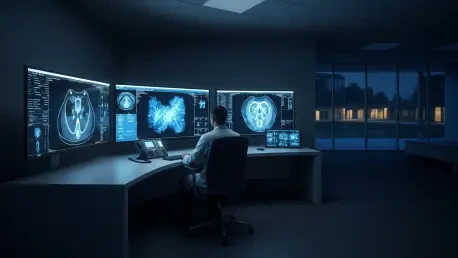

The modern medical landscape often presents a paradox where cutting-edge imaging hardware is readily available, yet the specialized human expertise needed to interpret those scans remains dangerously scarce across much of the globe. This discrepancy creates a “diagnostic gap” that leaves millions of patients in a state of clinical limbo, waiting for results that are critical for life-saving interventions. Rology, an Egyptian healthtech innovator founded in 2017, has emerged as a primary force in addressing this systemic failure through a sophisticated cloud-based, AI-assisted teleradiology platform. By connecting healthcare facilities in underserved or rural areas with a global network of specialized radiologists, the company has effectively decoupled geographic location from the quality of medical care. What began as a localized attempt to solve reporting delays in Cairo has evolved into a globally recognized, FDA-cleared infrastructure that facilitates rapid and high-quality medical interpretations across thirteen different countries.
Addressing the Crisis of Human Capital
The Widening Gap: Technology Versus Expertise
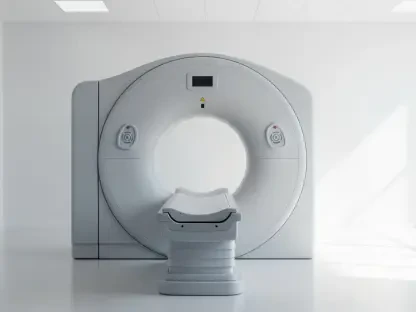
The shortage of qualified radiologists is not merely a regional issue but a global healthcare crisis that has intensified as diagnostic imaging becomes more central to modern medicine. According to data from the World Health Organization, approximately two-thirds of the global population still lacks access to even basic radiological services, a statistic that underscores the severity of the human capital shortage. While many hospitals in developing nations have successfully secured the funding to purchase advanced hardware, such as high-field MRI units and multi-slice CT scanners, they frequently lack the subspecialized physicians required to provide accurate and timely interpretations. This disconnect creates a bottleneck where expensive technology sits idle or produces data that remains unanalyzed for days or even weeks. In the United States, demand for these services exceeds the supply of specialists by roughly ten percent, highlighting that even developed nations are not immune to these systemic pressures.
In the Middle East and Africa, the consequences of this shortage are particularly acute and often result in catastrophic delays for patient outcomes. Before the implementation of decentralized digital solutions, some rural medical centers in Egypt were forced to physically transport physical scans to major metropolitan hubs like Alexandria on a bi-weekly basis just to receive a professional diagnosis. This logistical nightmare not only delayed urgent treatments but also placed an immense financial and emotional burden on patients who had to wait in uncertainty. Rology’s foundational mission was built upon the recognition that the problem was not a lack of machines, but a lack of a functional network to distribute the work to available experts. By creating a digital bridge, the platform allows for the instantaneous transfer of complex data, ensuring that a patient in a remote village receives the same level of diagnostic scrutiny as an individual in a major urban medical center, regardless of the local physician count.
Strategic Foundations: Economic and Operational Accessibility
The emergence of Rology as a leader in the teleradiology space is the result of a multidisciplinary vision shared by its founders, Amr Abodraiaa, Moaaz Hossam, and Mahmoud Eldefrawy. By combining clinical insight with deep technological and business proficiency, they developed a “problem-first” approach that prioritized practical utility over theoretical innovation. They understood that for any diagnostic solution to be successful in resource-constrained environments, it had to be remarkably easy to adopt and financially sustainable for the provider. Consequently, the platform was designed to integrate into existing hospital information systems in under thirty minutes, requiring no significant infrastructure overhauls or expensive hardware upgrades. This ease of implementation has been a critical factor in the rapid adoption of the service, allowing healthcare facilities to scale their diagnostic capabilities almost immediately without the traditional friction of technological transitions.
Furthermore, the operational philosophy of the company revolves around removing the financial barriers that often prevent smaller clinics from accessing elite medical talent. By utilizing a “pay-per-scan” business model, Rology eliminated the need for hospitals to commit to high capital investments or the permanent, costly salaries of on-site subspecialists. This flexible economic structure enables even small, remote imaging centers to provide world-class diagnostic reports on an as-needed basis, effectively democratizing access to specialized medicine. This model has proven particularly resilient in fluctuating economies, as it transforms a fixed overhead cost into a variable expense that scales directly with patient volume. Through this approach, the company has not only solved a clinical problem but has also introduced a sustainable economic framework that encourages healthcare providers to invest in diagnostic services without fearing the financial risks associated with underutilized specialized staff.
The Synergy of Human Intelligence and Automation
Leveraging AI: Intelligent Logistics and Routing
At the core of the Rology platform is a sophisticated artificial intelligence layer that serves as the primary engine for optimizing complex diagnostic workflows. When a hospital or imaging center uploads a scan, ranging from standard digital X-rays to highly complex neuro-imaging, the AI does not attempt to replace the physician but instead manages the intricate logistics of the case. The software acts as an intelligent routing and prioritization engine, analyzing the modality of the scan, the required subspecialty, and the level of clinical urgency in real-time. By cross-referencing this data with the real-time availability and specific credentials of the radiologists within the network, the platform ensures that each case is matched with the most qualified expert. This automated matching process drastically reduces the administrative overhead and human error associated with manual case assignments, ensuring that no time is wasted in the critical diagnostic window.
This technological stack is specifically designed to handle the nuances of various medical emergencies and specialized needs that a generalist might overlook. For example, a complex neurosurgical case is automatically directed to a specialist with documented expertise in brain imaging, while a trauma-related chest scan is flagged for immediate review by an emergency radiologist. This level of precision in routing is virtually impossible to achieve in a traditional hospital setting, where the available staff must handle all incoming cases regardless of their specific area of expertise. By automating the “who and when” of the diagnostic process, the platform allows the human specialists to focus entirely on the “what and why” of the medical findings. The result is a highly efficient, high-throughput system that maintains the personalized attention of a subspecialized consultation, providing a scalable solution to the bottleneck of manual workflow management in busy hospitals.
Clinical Integrity: Augmentation Through Structured Support
The company maintains a strict clinical boundary regarding the use of automation, adhering to a strategy of “augmentation over replacement” to ensure the highest standards of medical accountability. While the AI handles the logistics and provides structured reporting tools to ensure consistency across different radiologists, the final clinical judgment always remains the responsibility of a human professional. This approach recognizes that medical diagnosis often requires a level of nuance, intuition, and ethical responsibility that current algorithmic models cannot fully replicate. The software supports the radiologist by automating repetitive tasks, such as measuring lesion sizes or organizing data into standardized templates, which reduces cognitive fatigue and allows the physician to dedicate more mental energy to interpreting complex pathologies. This synergy has contributed to a reporting accuracy rate of 99.8% across the network.
By prioritizing this balanced relationship between man and machine, the platform has successfully avoided the pitfalls of “black box” diagnostic tools that often face skepticism from the medical community. Instead, the technology acts as a force multiplier, enhancing the physician’s capabilities and ensuring that every report meets a rigorous, standardized quality benchmark. The use of structured reporting is particularly significant, as it ensures that the information delivered back to the referring clinician is clear, actionable, and free from the ambiguities that can sometimes plague handwritten or non-standardized notes. This focus on clinical integrity and professional support has built a high level of trust among healthcare providers, who see the platform not as a threat to their profession, but as a vital tool that enables them to perform at their peak while managing a much higher volume of critical cases than previously possible.
Global Validation and Regional Expansion
Measurable Impact: Regulatory Success and Growth
A significant milestone in the evolution of Rology occurred when the platform received FDA 510(k) clearance, a rigorous regulatory designation that validates the technology as a Class II medical image management system. This clearance was a pivotal moment for the Cairo-based company, as it proved that a platform developed within an emerging market could meet the same stringent quality and safety standards as medical software produced in the United States or Europe. This validation has served as a powerful endorsement of the platform’s technical architecture and clinical reliability, enabling it to compete on a global stage and attract international investment. The designation also provided the necessary regulatory foundation to scale operations rapidly, moving beyond localized pilot programs into a fully realized international diagnostic network that serves hundreds of hospitals and imaging centers across diverse regulatory environments.
The measurable impact of this expansion is reflected in the sheer volume of patients who have benefited from the platform’s capabilities to date. Rology has successfully delivered over 1.5 million radiology reports, supporting the medical care of approximately 1.3 million patients who might otherwise have faced significant diagnostic delays. The network has grown to include over 340 radiologists and 619 radiographers, creating a robust ecosystem of expertise that spans twelve different countries. In markets like Saudi Arabia, the company has seen rapid growth due to the national push toward digital health transformation, while in Kenya, it provides immediate relief for acute shortages of local expertise. These successes demonstrate that the platform is not just a technological curiosity but a vital component of the modern healthcare infrastructure, capable of delivering tangible improvements in patient care and clinical efficiency across multiple continents.
Structural Evolution: Overcoming Legacy Barriers
Despite the clear advantages of teleradiology, the company has faced significant hurdles rooted in the healthcare sector’s historical reliance on legacy systems and traditional delivery models. Many medical providers remain tethered to outdated, hardware-based diagnostic workflows that are inherently difficult to scale and expensive to maintain. Furthermore, there is often an industry-wide bias toward imported Western medical solutions, which can overshadow local innovations that are frequently better adapted to the specific challenges of regional markets. Rology has worked to overcome these barriers by demonstrating the superior efficiency and cost-effectiveness of a cloud-native approach, proving that localized expertise combined with global standards can outperform traditional, siloed hospital systems. This effort involves not just technological implementation, but also a cultural shift in how hospital administrators view the delivery of diagnostic services.
Looking ahead, the goal is to transition from being a service provider to becoming the “borderless diagnostic infrastructure” for the Middle East and Africa. The company sought to create an integrated AI-enabled layer that connects every hospital, clinic, and specialist into a single, cohesive network where information flows without friction. By focusing on public and private sector partnerships, the organization aims to deepen its footprint and ensure that life-saving diagnoses are no longer a privilege of the urban elite but a standard of care for everyone. This long-term vision involves continuous investment in grounded AI tools that can further automate the diagnostic process while maintaining the clinical oversight that is essential for patient safety. Through this commitment to rebuilding the foundational infrastructure of regional healthcare, the platform is setting a new standard for how technology can be used to solve systemic global problems and ensure medical equity across borders.
Future Considerations for Diagnostic Integration
The success of teleradiology platforms has demonstrated that the traditional, localized model of medical reporting was no longer sufficient to meet the demands of a modern, data-driven healthcare environment. By successfully integrating cloud technology and artificial intelligence, the industry managed to bridge the human capital gap and brought specialized diagnostics to the most underserved regions of the world. The shift toward a “pay-per-scan” economic model and the emphasis on physician augmentation over replacement provided a sustainable and ethically sound path forward for healthtech development. These advancements were not merely incremental improvements but represented a fundamental shift in how medical expertise is distributed and utilized. As the sector continued to evolve, the focus moved toward creating truly borderless infrastructure that minimized the impact of physical distance on patient care.
In light of these developments, healthcare administrators and policymakers took decisive steps to integrate these decentralized platforms into national health strategies to ensure long-term resilience. The transition away from legacy, hardware-dependent systems required a commitment to digital-first workflows and a willingness to embrace regional innovations that offered high levels of adaptability. Stakeholders were encouraged to prioritize regulatory harmonization across borders to facilitate the seamless movement of medical data and expertise. By investing in these collaborative, AI-assisted networks, the global medical community ensured that diagnostic bottlenecks were eliminated, and clinical accuracy was standardized. This proactive approach to diagnostic infrastructure ultimately transformed the patient experience, making rapid and specialized medical insights a universal reality rather than a geographic luxury.