
A deepening global shortage of qualified radiologists is placing immense strain on healthcare systems, creating a critical bottleneck in the diagnostic process that can leave patients waiting anxiously for weeks to receive vital results. This deficit directly impacts the ability to diagnose a vast spectrum of conditions in a timely manner, from early-stage cancers to the progression of chronic diseases. In response to this mounting pressure, Scotland is strategically embedding artificial intelligence within its National Health Service (NHS), not as a replacement for its invaluable clinicians, but as a powerful augmenting tool. This nationwide initiative is re-engineering diagnostic workflows from the ground up, aiming to enhance efficiency, reduce the immense workload on specialists, and ultimately accelerate the delivery of care, turning a moment of crisis into a catalyst for technological innovation and improved patient outcomes.
The AI-Powered Transformation of Radiology
Addressing the Core Challenge
The severe and worsening shortage of radiologists has created a genuine crisis, leading to significant delays in interpreting essential medical images like CT scans, MRIs, and X-rays. These diagnostic tools are fundamental pillars of modern medicine, crucial for identifying countless conditions where early and accurate detection can dramatically alter a patient’s prognosis. When a lack of specialist availability extends the time from scan to diagnosis, it is not merely an inconvenience; it can mean missing a critical window for effective intervention, potentially allowing a disease to advance unchecked. This situation has created an urgent and undeniable need to streamline and optimize the entire diagnostic pipeline to manage a continuously growing patient load with a limited pool of human experts. The core objective, as articulated by industry leaders, is to increase the fundamental efficiency of the diagnostic process, systematically reducing both the total time and the human effort required to arrive at a definitive clinical conclusion, thereby freeing specialists to focus on the most complex and critical cases.
This technological evolution begins at the very first step of the diagnostic journey: image acquisition. Canon Medical is at the forefront of this shift with a technology known as Automated Landmark Detection. During a CT scan, this system utilizes an AI algorithm to instantly analyze an initial low-resolution image, automatically identifying key anatomical features and determining which areas require a more detailed, high-resolution scan. This process, called automated scan planning, replaces a manual step that, while brief for a single patient, consumes a significant portion of a radiographer’s day when repeated across hundreds of appointments. By automating this small but frequent task, AI introduces substantial cumulative efficiency gains. Moreover, Canon Medical is addressing the long-standing challenge of balancing image resolution with patient radiation exposure. Historically, generating high-quality 3D models necessitated high radiation doses. Now, by applying advanced AI-powered reconstruction technology to scanners in Scottish hospitals, it is possible to significantly enhance the clarity and quality of images produced from lower-dose scans, thereby improving diagnostic confidence while upholding the paramount principle of patient safety.
Streamlining Diagnosis and Prioritization
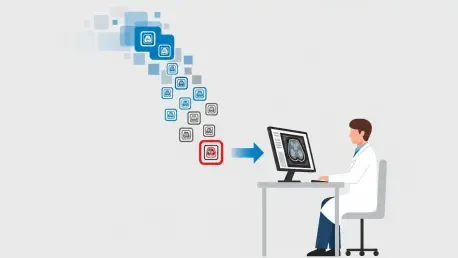
Once a high-quality image has been captured, artificial intelligence transitions into its role as an indispensable support system for the interpreting radiologist. Companies such as Annalise provide sophisticated AI tools that can automatically analyze medical images, meticulously scanning for potential areas of interest or concern and flagging them for the clinician’s review. This technology functions as a powerful second reader, significantly decreasing the time required for a purely manual inspection and helping to prioritize the clinical workload with greater precision. This support system does not make the final diagnosis but instead acts as an expert assistant, guiding the radiologist’s attention to potential pathologies, which can improve both the speed and the accuracy of their interpretation. A primary application of these tools is in the critical process of triage, where the AI can rapidly sift through vast volumes of scans, identifying and elevating cases with potentially life-threatening findings for immediate human review. This ensures that the most urgent patients receive attention first, directly impacting outcomes.
Simultaneously, these intelligent systems can confidently filter out scans that show no significant abnormalities, effectively removing them from the radiologist’s immediate queue and streamlining the entire diagnostic pipeline. This automated clearing of normal cases frees up a substantial amount of specialist time, allowing them to focus on complex diagnoses that require their full expertise. The potential for AI to assist in the final stage of reporting is also being explored, particularly through the use of Large Language Models (LLMs). However, experts offer a crucial note of caution regarding this application. The current generation of LLMs is prone to a phenomenon known as “hallucination,” where the model can state information with perfect confidence and in well-formed prose, even when it is factually incorrect. This “hallucination problem” makes the full, unsupervised use of LLMs in a high-stakes clinical environment a significant challenge. While the potential for AI-assisted reporting is immense, these use cases remain in development and will require extensive and rigorous validation before they can be safely integrated into standard practice.
Real-World Impact and Scotland’s Unique Advantage
Measurable Improvements in Patient Care
The implementation of artificial intelligence in Scottish radiology is yielding tangible, quantifiable benefits that extend directly to patient care. In time-critical medical emergencies such as acute stroke, where every minute counts, specialized AI detection tools can identify subtle signs of large-vessel occlusions within minutes of a scan being completed. A documented case in Germany highlighted how an AI-generated early alert expedited a patient’s escalation to a thrombectomy procedure, resulting in a full clinical recovery that might not have been possible with a longer diagnostic delay. In bustling emergency departments and fracture clinics, AI solutions are being deployed to automatically clear scans that show negative findings, eliminating the need for a radiologist’s review for routine, normal cases. A university hospital in the United Kingdom reported that this practice saved an estimated 400 hours of patient waiting time, significantly easing the immense pressure on its clinical teams. On a larger scale, Blackford Analysis, an Edinburgh-based AI platform provider, showcased a hospital system in Norway where its AI-powered triage solution helped to rapidly clear over 8,500 negative cases. This single intervention resulted in a remarkable cumulative reduction in patient wait times of 250 days, demonstrating the profound system-wide impact of targeted AI deployment.
These real-world examples underscore a consistent trend: the most significant benefits arise from streamlining everyday tasks to improve the overall efficiency of the healthcare system. By automating repetitive and manual processes such as initial triage, the routing of studies to the appropriate specialist, and routine quality assurance checks, AI liberates highly skilled radiology teams from administrative burdens. This allows them to concentrate their expertise on complex cases and the activities of highest clinical value. Furthermore, this automation standardizes workflows across departments and institutions, which helps to reduce the potential for human error and accelerates the entire diagnostic journey for every patient. For individuals navigating the healthcare system, this technological shift translates into concrete benefits, including shorter waiting periods for crucial results, fewer delays in commencing treatment, and a smoother, less stressful overall healthcare experience. These improvements are not merely theoretical but are actively transforming the delivery of care on the ground.
The “Scottish Advantage” in Medical Innovation
Scotland has cultivated a uniquely fertile ground for the development and deployment of medical imaging AI, creating what many consider an “optimum environment” for healthcare innovation. This advantage is not attributed to a single factor but to a powerful confluence of several key elements. The nation hosts a vibrant and deeply interconnected community of leading technology companies, world-class academic institutions with formidable imaging research programs, such as the Imaging Centre of Excellence in Glasgow, and innovative public initiatives like The Data Lab. This close-knit ecosystem fosters a culture of collaboration where new ideas can be rapidly developed, tested, and refined through partnerships that span the public and private sectors. The long-standing collaboration between two Scottish companies, Blackford Analysis and Optos, serves as a prime example of how such partnerships can accelerate the commercialization of new technologies and ensure their effective clinical adoption, ultimately benefiting patients sooner.
A foundational element of this success is Scotland’s publicly funded and integrated National Health Service, which provides a large-scale, unified environment for testing and deploying new technologies directly with clinicians in real-world settings. This integration is supported by a remarkably robust data infrastructure, a significant advantage for developing AI. The use of the Community Health Index (CHI) number provides a unique and consistent patient identifier across the entire health service, from primary care to specialized hospital departments. This enables the secure linking of disparate datasets, creating comprehensive, longitudinal patient records that are invaluable for training and validating the accuracy and safety of AI models. This rich data environment, coupled with a strong pipeline of AI and data science talent emerging from its universities and supportive government policies aimed at fostering digital health innovation, creates a powerful combination. It is this tripartite partnership between academia, industry, and the NHS that truly drives progress, making Scotland a global leader in advancing safe, effective, and clinically impactful medical imaging AI.
A Blueprint for the Future of Diagnostics
Scotland’s journey demonstrated that successfully navigating the radiology crisis required more than just the adoption of novel technology; it necessitated the cultivation of a deeply collaborative ecosystem. The strategic partnership forged between clinicians, technologists, and industry leaders became the cornerstone of this transformation. This model proved that the true potential of AI in medicine was unlocked not by replacing human expertise but by augmenting it, creating a new paradigm where intelligent systems empowered healthcare professionals to perform their work more efficiently and effectively. The nation’s integrated health service and unified data infrastructure provided the ideal testing ground for these innovations, allowing for rapid iteration and validation in real-world clinical environments. This holistic approach, which prioritized clinical needs and patient safety at every stage, has now established a powerful blueprint for other healthcare systems worldwide facing similar workforce pressures. The real achievement was the seamless integration of advanced algorithms with invaluable human experience, a synergy that laid a robust foundation for the future of diagnostic medicine.