
The landscape of artificial intelligence has been dramatically reshaped by the emergence of powerful, general-purpose chatbots, yet their utility in specialized, high-stakes fields has remained a persistent challenge. For anyone who has ever faced a malfunctioning device, the process of sifting through countless forum posts and conflicting online advice can be more frustrating than the repair itself. Addressing this critical gap, iFixit has introduced FixBot, a generative AI assistant engineered specifically for the complex world of hardware repair. This innovative tool represents a significant evolution in applied AI, moving away from broad, internet-trained models to a focused system designed to provide accurate, reliable, and step-by-step guidance. By leveraging a meticulously curated knowledge base, FixBot aims to transform the often-daunting task of diagnosing and fixing electronics into an accessible, conversational experience, empowering users with the confidence to tackle their own technical challenges.
A Foundation of Verified Knowledge
The primary obstacle for using generative AI in practical applications like device repair is the inherent risk of inaccuracy. Generalist AI models, trained on the vast and often unreliable expanse of the internet, are prone to “hallucinations”—generating plausible but incorrect information that could lead to wasted time, unnecessary expense, or even permanent damage to a device. FixBot was engineered as a direct response to this fundamental problem, with its core advantage lying in the quality and exclusivity of its foundational data. Its intelligence is not derived from web scraping but is instead grounded entirely in iFixit’s extensive, proprietary archives, a repository of technical knowledge compiled and verified since 2003. This trusted knowledge base contains a wealth of proven solutions, ensuring that the AI’s suggestions are rooted in successful, real-world repairs rather than algorithmic guesswork, thereby establishing a new standard for reliability in AI-assisted technical support.
This curated approach is what sets the system apart from its general-purpose counterparts. The AI’s training data is comprised of over 125,000 detailed repair guides, each one authored and tested by human experts and seasoned community members. It also draws from a massive collection of community-driven question-and-answer forums, where years of user experiences have created a rich tapestry of troubleshooting scenarios and solutions. Furthermore, the system has access to a substantial cache of PDF product manuals, providing manufacturer-specific details that are crucial for accurate diagnostics. By exclusively utilizing this repository of human-vetted information, FixBot significantly minimizes the risk of providing nonsensical or dangerous advice. This grounding in verified data is designed to instill a much greater level of user confidence, making the prospect of do-it-yourself repair less intimidating and more achievable for a broader audience of users.
The Technology Behind the Accuracy
Delivering consistently reliable answers required iFixit to develop a sophisticated architecture that extends beyond a conventional large language model. The system employs a sophisticated, multi-layered strategy that integrates hand-picked AI models with a custom-built search engine designed to meticulously scour the site’s repair archives. According to the company, every answer generated by FixBot begins with a comprehensive search for relevant guides, parts, and documented repairs that have already proven successful. This methodology, known as retrieval-augmented generation (RAG), ensures that the AI’s output is not just a creative linguistic exercise but a synthesis of factual, pre-existing data. The language model’s role is to then process this retrieved information and present it to the user in a clear, conversational, and easy-to-follow format, effectively acting as an intelligent interpreter of a vast technical library.
To further bolster its reliability, iFixit has implemented a rigorous and continuous testing protocol referred to as an “evaluation harness.” This automated system perpetually fact-checks the AI’s performance by pitting its responses against a massive dataset of thousands of real-world repair questions that were previously answered by human experts. This ongoing process allows for the systematic identification and reduction of false or imprecise answers, effectively training the bot to become more accurate over time. By constantly refining its output against a ground truth established by human expertise, this evaluation harness acts as a crucial quality control mechanism. It ensures that FixBot’s performance is not static but is continuously improving, adapting, and learning to provide more dependable and helpful guidance with every user interaction, steadily closing the gap between artificial intelligence and genuine technical proficiency.
An Intuitive and Practical User Experience
From a user’s perspective, interacting with FixBot is designed to be as natural and intuitive as consulting a human technician. The system utilizes a familiar conversational chatbot interface that delivers responses within seconds, creating a seamless and efficient user experience. The interaction is dynamic; if a user’s initial query is vague or lacks detail, FixBot will proactively ask clarifying questions to help narrow down the potential issues and guide the user toward a more precise diagnosis. Conversely, users can ask follow-up questions at any point in the process to gain more detail on a specific step or to better understand a complex procedure. The AI assistant also adopts an engaging and encouraging tone, a common trait in modern AI design, which helps to demystify the repair process and make it feel less intimidating for novices who may be hesitant to open up their devices.
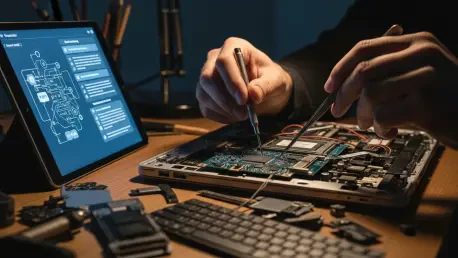
The real-world efficacy of the bot was demonstrated through hands-on testing with two distinct hardware problems. In the first scenario, a complex issue involving a Windows PC that failed to boot due to a dead SSD, the user began with a general description of the symptoms. FixBot adeptly guided the conversation, systematically suggesting logical troubleshooting steps such as using System Repair and the Command Prompt—the very same actions a human expert would likely recommend. By referencing specific, relevant guides from the iFixit database, the bot ultimately led the user to the correct diagnosis: the SSD had been corrupted by a power surge. In a second, more common test case concerning a phone that was randomly restarting, FixBot once again provided an accurate and logical sequence of troubleshooting steps, correctly directing the user to the specific repair guide for that phone model, which detailed the solution.
Acknowledging Limitations and Looking Ahead
Despite its impressive capabilities and promising performance, iFixit has been notably transparent about the technology’s current limitations. The company makes it clear that FixBot, like all AI, is not infallible. A prominent on-screen disclaimer serves as a constant reminder to users that “FixBot is an AI, and AI sometimes gets things wrong.” This sentiment underscores a healthy and necessary caution, and users are strongly advised to verify the bot’s advice with other trusted sources before undertaking any drastic or irreversible repair steps, such as permanently modifying a component. This transparency is crucial for managing user expectations and fostering responsible use of the tool. It acknowledges the “nagging sense that AI makes mistakes” and positions FixBot not as a perfect, all-knowing oracle but as an incredibly powerful assistant that should be used as one part of a broader troubleshooting process.
For a limited introductory period, the tool was made available for free to all users, allowing the community to experience its capabilities firsthand. The long-term strategy involved a tiered subscription model, which was planned to include a perpetually free version with certain usage limitations, alongside paid tiers that would unlock the full suite of features. These premium functionalities were slated to include advanced options such as voice input for hands-free operation and the ability for users to upload their own documents for analysis. Ultimately, the launch of FixBot represented a powerful and highly promising application of generative AI. It demonstrated immense value in distilling vast volumes of complex technical data into accessible, step-by-step guidance, standing as a superior alternative to manually sifting through endless online forums. Its initial fallibility meant it was best used as an intelligent co-pilot, but its debut marked a significant step toward making technical repair more accessible for everyone.