
In a landscape increasingly dominated by algorithm-driven content that often leaves children in a passive stupor, a new device has emerged with the ambitious goal of reclaiming childhood creativity from the clutches of the screen. As parents and educators voice growing alarm over the effects of excessive screen time, from the “glazed-over stare” to compulsive swiping behaviors, the tech industry is facing a call for more responsible innovation. Responding to this demand and recent findings from consumer safety organizations like Fairplay and the U.S. PIRG Education Fund, which have highlighted the risks of exposing children to inappropriate content via connected toys, KID Company has introduced a novel solution. Founded by former LivePerson CEO Robert LoCascio, the company is positioning its new creative AI device, KID®, as a direct answer to the prevalent problems of screen addiction and passive consumption, aiming to offer a safer, healthier alternative for children aged 4 to 12 that prioritizes developmental well-being over simple engagement metrics.
A New Paradigm for Child-Centric Technology
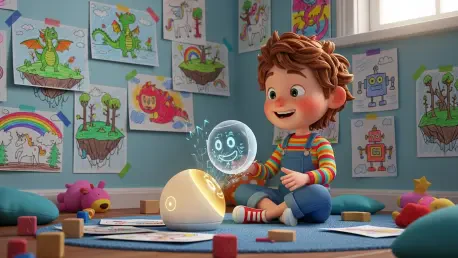
The KID® device is thoughtfully engineered as a completely closed ecosystem, a stark departure from the internet-connected gadgets that currently populate the market. Its design philosophy is built around eliminating the core drivers of digital addiction: there are no advertisements, no web browsing capabilities, and no infinite scrolling feeds. This intentional architecture is meant to foster active, imaginative play rather than the passive content consumption encouraged by tablets and smartphones. The physical form of the device further reinforces this goal. Instead of a standard flat screen, KID® is a rounded, tactile sphere that invites interaction through voice and touch. Children engage with the device by speaking to expressive AI “Buddies,” which serve as creative partners. Through this intuitive interface, a child can co-create unique stories, invent new characters, generate original artwork, and even design and produce physical books, transforming them from a consumer of content into a creator of their own worlds.
This focus on active engagement is supported by a comprehensive system that balances a child’s freedom with a parent’s peace of mind. The ecosystem includes a transparent parent app, which provides visibility into a child’s creative activities and offers a degree of control without resorting to intrusive surveillance. This approach allows parents to be involved and aware of their child’s digital interactions in a supportive capacity. By removing the algorithmic feedback loops that are designed to maximize screen time, the device encourages a different kind of interaction—one based on curiosity and exploration. The technology serves as a tool to spark ideas, not as a source of endless distraction. The entire experience is crafted to be a collaborative journey, where technology assists in bringing a child’s imagination to life, offering a powerful antidote to the isolating and often-detrimental effects of mainstream digital entertainment platforms on a developing mind.
From Personal Experience to a Broader Mission
The foundational “childhood-first” philosophy guiding the company was not born in a boardroom but from a direct, personal observation. LoCascio’s inspiration for the product was solidified after witnessing the profound effect of a prototype on his own four-year-old son. The child, who had been spending hours each day passively watching YouTube videos, was introduced to an early version of the creative tool. The transition was remarkable; he quickly shifted from being a viewer to an active storyteller, using the device to invent and articulate his own narratives. This firsthand experience cemented the product’s core mission: to leverage technology not as a digital babysitter, but as a catalyst for sparking imagination, strengthening cognitive skills, and fostering deeper family connections. It demonstrated that when technology is designed with a child’s developmental needs at the forefront, it can become a powerful force for positive growth rather than a source of distraction and behavioral issues.
This commitment to human-first technology was not an isolated venture but part of a consistent vision that extended beyond children’s products. LoCascio’s other company, Uare.ai, which focuses on developing privacy-safe personal AI for adults, reinforces this overarching dedication to creating technology that serves human interests ethically. The launch of KID® was timed for availability ahead of the 2025 holiday season, and its go-to-market strategy included significant community engagement. The company began hosting weekly AI safety and creativity classes at its store in Los Altos, California, offering families hands-on education in responsible tech use. This holistic approach, blending a thoughtfully designed product with direct community education, signaled a serious effort to cultivate a healthier relationship between families and technology. The introduction of this device represented more than just a new product; it was a deliberate move to address a critical societal need, offering a tangible solution for parents seeking to navigate the complexities of a digital-first world.