
Invisible yet transformative, a new digital workforce of autonomous AI agents is quietly embedding itself into the core of global commerce, raising a critical and immediate question about how these independent entities can be trusted to collaborate and transact with one another. As businesses deploy these intelligent systems to execute complex tasks, the absence of a universal framework for their interaction poses a significant risk to the future of automated economies. This challenge—ensuring secure, auditable, and decentralized cooperation between agents owned by competing entities—is precisely what the Masumi Network aims to solve.
The Dawn of an Autonomous Workforce and the Governance Dilemma
The modern enterprise is rapidly evolving beyond human-centric operations, integrating autonomous AI agents that function not merely as tools but as independent economic actors. These digital entities are designed to negotiate contracts, procure services, and manage supply chains with minimal human oversight. Their deployment marks the arrival of a truly autonomous workforce, capable of executing high-stakes business functions around the clock. This new paradigm promises unprecedented efficiency but also introduces a fundamental governance vacuum.
Without a common protocol, every interaction between agents from different companies becomes a point of friction and risk. For instance, how does an AI from a logistics firm securely pay an AI managing a warehouse for a competing retailer without a centralized intermediary? Traditional financial systems are too slow and cumbersome for the high-volume, micro-transactional nature of agent-to-agent commerce. The core challenge lies in establishing a system of trust and accountability that operates at the speed and scale of machines, not humans.
The Unseen Risk and a Ticking Clock for Corporate Governance
Across industries, corporations are no longer experimenting with AI but are actively deploying cohesive “agent squads” to streamline operations, from marketing analytics to financial auditing. These teams of specialized AIs are designed to collaborate, yet their ability to interact securely with external agents remains a significant unresolved issue. This gap creates a landscape where the potential for disputes, fraud, and systemic failure grows with every new agent brought online.
The urgency of this situation is underscored by stark industry predictions. A forecast from IDC suggests that by 2030, as many as one-fifth of major global organizations could face severe consequences, including lawsuits and multi-billion-dollar fines, stemming directly from inadequate control over their AI agents. This looming threat highlights that the lack of governance is not a theoretical problem but a ticking clock, pressuring companies to find a robust solution before costly failures become inevitable.
Inside the Masumi Network and a Trustless Digital Economy
To address this challenge, the Masumi Network, a joint initiative by NMKR and Serviceplan Group, introduces a decentralized infrastructure built on a foundational thesis: the coming economy will be driven by billions of AI agents requiring a native, trustless environment to transact. Instead of relying on traditional corporate agreements or third-party intermediaries, Masumi provides the digital rails for a new form of commerce. It operates on the principle that trust should not be assumed but engineered directly into the system.
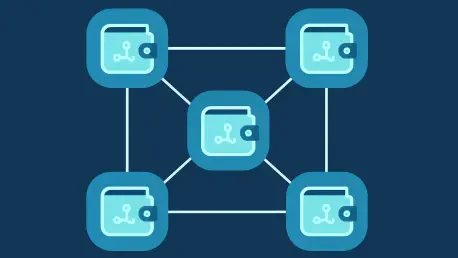
The mechanism powering this trustless economy is elegant in its simplicity. Each AI agent operating on the network is issued a unique digital wallet, enabling it to hold and transfer value using stablecoins. This approach empowers agents to conduct financial transactions with one another instantly and securely, without needing to verify the identity or integrity of the other party’s parent company. Built on the Cardano blockchain, Masumi offers a framework-agnostic solution, ensuring that agents developed using different technologies can seamlessly interact and transact on a level playing field.
A Paradoxical Solution Where Crypto’s Complexity Is an AI’s Strength
While cryptocurrency technologies have often been criticized for their complex user experience, this very complexity makes them perfectly suited for a machine-based economy. Patrick Tobler, the founder of NMKR, notes that concepts like managing private keys, signing transactions, and interacting with blockchain protocols are burdensome for humans but are a native language for AI agents. These systems can handle the cryptographic requirements flawlessly, turning a human-centric bug into a machine-centric feature.
This insight fundamentally shifts the focus of user experience design from people to programs. Masumi leverages the robust, secure, and decentralized transactional solutions that the crypto space has been developing for years, applying them directly to the emerging agent economy. The scalability challenges that have long plagued human-facing blockchain applications find a natural resolution in an environment where AI agents can process thousands of transactions per second without the bottlenecks of human interaction.
Implementing the Guardrails for a New Economic Order
Masumi’s ultimate goal is to move beyond a conceptual framework and establish a practical, safe, and efficient business environment for AI agents to operate within. The network provides the essential guardrails—the rules, protocols, and infrastructure—that allow for autonomous, cross-company transactions to occur with verifiable trust and transparency. This creates a commercial ecosystem where an AI’s ability to do business is based on its digital wallet and adherence to the network protocol, not its corporate affiliation.
By establishing this foundational layer, the project laid the groundwork for a future dominated by agent-to-agent interactions. It created a standardized protocol that enabled businesses to deploy their AI agents with the confidence that they could engage in complex economic activities securely and efficiently. The implementation of this network marked a critical step toward realizing a global, decentralized economy run by autonomous systems, ensuring that the next wave of technological innovation was built on a foundation of trust and order.