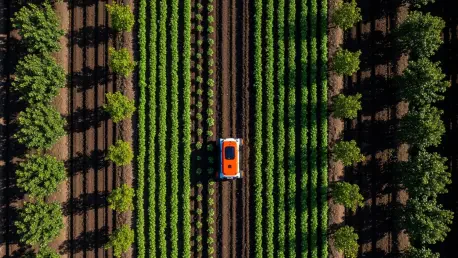

The global agricultural landscape is currently undergoing a profound technological metamorphosis as autonomous systems transition from experimental prototypes to essential operational assets for modern food producers. Nature Robots, a high-tech spin-off from the German Research Center for Artificial Intelligence, recently capitalized on this shift by securing €4 million in a seed financing round led by Climentum Capital and Bayern Kapital. This significant capital injection is specifically earmarked for the acceleration of their modular autonomy software, which serves as an intelligent “brain” for a wide variety of existing agricultural machinery. By focusing on a software-first approach, the company is enabling manufacturers to bypass the traditionally prohibitive costs of internal robotics research and development. The investment also facilitates a strategic geographical expansion, with a new corporate office in Munich designed to attract top-tier engineering talent while complementing their existing operations in Osnabrück.
Revolutionizing Farming through Precision and Sustainability
Precision Technology: Transforming Field Operations
The implementation of “spot farming” represents a departure from the conventional broad-spectrum application of resources, favoring instead a highly targeted approach that treats every individual plant as a unique data point. Nature Robots utilizes advanced AI algorithms to enable millimeter-precise interventions, which are most notably demonstrated in the deployment of autonomous laser weeding systems. By identifying and neutralizing weeds through high-intensity light rather than chemical intervention, this technology offers a viable path toward reducing herbicide usage by as much as 90 percent in certain environments. This transition is not merely about ecological preservation but also about operational efficiency, as it allows farmers to maintain high yields without the rising costs associated with chemical inputs. Furthermore, the modular nature of the software ensures it can be integrated into diverse setups, from traditional row crops to complex vineyards and orchards, providing a level of versatility that was previously unavailable in the commercial robotics market.
The move toward lighter, autonomous agricultural machinery also addresses the chronic issue of soil compaction, a silent crisis that has historically hampered crop productivity and long-term land viability. Traditional heavy tractors exert immense pressure on the earth, crushing the delicate pore structures necessary for water infiltration and root growth, whereas the software developed by Nature Robots is optimized for smaller, agile robotic platforms. These lighter machines can navigate sensitive terrains, such as agri-photovoltaic installations and complex agroforestry systems, without causing the structural damage typical of industrial-scale equipment. By maintaining the integrity of the soil microbiome, these autonomous solutions support the goals of regenerative agriculture, ensuring that fields remain productive for decades to come. This focus on soil health is becoming a critical differentiator for equipment manufacturers who are increasingly under pressure to provide sustainable solutions to a global market that is becoming more sensitive to environmental degradation and long-term land stewardship requirements.
Global Challenges: Solving the Triple Threat
Agricultural sectors across the globe are currently facing a “triple threat” characterized by a shrinking labor force, the urgent need for food security, and the overarching demands of climate change mitigation. With the average age of farmers reaching nearly 60 years in many developed nations, the industry is struggling to find skilled labor to manage traditional operations, making autonomous systems a necessary workforce supplement rather than a mere luxury. Nature Robots addresses this demographic shift by automating labor-intensive tasks, allowing a smaller number of operators to manage larger and more complex farming systems through remote monitoring and mission planning. As the global population continues to climb toward 10 billion, the efficiency gains provided by these AI-driven systems are essential for ensuring that food production keeps pace with demand. The ability of autonomous robots to work continuously and with high precision ensures that every acre of land is utilized to its maximum potential while minimizing the waste of water, fertilizer, and seeds.
Environmental considerations are equally central to the adoption of this technology, as optimized mission planning through AI can lead to a 25 percent reduction in carbon dioxide emissions across farming operations. By streamlining the paths that machines take through a field and reducing the idling time of heavy engines, the software significantly lowers the energy footprint of daily agricultural tasks. This transition is vital given that traditional agriculture is responsible for a significant portion of global greenhouse gas emissions and extensive soil degradation. Nature Robots is positioning its technology as a catalyst for a more sustainable model that replaces resource-intensive monocultures with diverse, resilient ecosystems. The integration of autonomous monitoring tools allows for real-time data collection on soil health and crop status, enabling farmers to make informed decisions that balance productivity with ecological responsibility. This data-centric approach provides the transparency needed for carbon credit verification and other sustainability incentives that are becoming standard in the modern agricultural economy.
Strategic Growth and Industry Recognition
The Agrotech Ecosystem: Accelerating Commercial Viability
Strategic positioning within Germany’s “Agrotech Valley” has provided Nature Robots with unparalleled access to a network of world-class research institutions and industrial leaders. This region, centered around Osnabrück, serves as a premiere hub for agricultural innovation, hosting major original equipment manufacturers such as Claas and Amazone. By building upon over a decade of foundational research conducted at the German Research Center for Artificial Intelligence, the company has successfully transitioned from a specialized academic project into a commercially viable enterprise capable of international scaling. The proximity to industry giants allows for rapid feedback loops during the product development phase, ensuring that the autonomous software meets the rigorous mechanical and operational standards required for field work. This collaborative environment has been instrumental in refining the navigation and perception stacks that allow robots to operate safely in unstructured outdoor environments where traditional GPS signals may be obstructed by dense foliage or varying weather conditions.
The business model adopted by the firm emphasizes a horizontal software-as-a-service approach, which facilitates seamless integration into the existing supply chains of agricultural hardware manufacturers. Instead of attempting to manufacture heavy machinery, Nature Robots provides the sophisticated navigation and monitoring layers that transform standard tractors and specialized tools into autonomous robots. This strategy allows the company to scale much faster than hardware-focused competitors, as they can partner with multiple OEMs simultaneously to deploy their technology across different markets and machine types. This integration is critical for the widespread adoption of robotics, as farmers are more likely to trust established brands that have been upgraded with cutting-edge AI than they are to invest in entirely unproven hardware platforms. By acting as the technological bridge between traditional mechanics and modern artificial intelligence, the company is effectively de-risking the transition to automation for both the manufacturers and the end-users who rely on these machines for their livelihoods.
Market Leadership: Milestones in Deep-Tech Innovation
The rapid ascent of Nature Robots is further evidenced by a series of prestigious accolades and significant financial milestones that have solidified its reputation as a leader in the deep-tech sector. Earlier in 2026, the company secured a substantial grant through the EIC Accelerator program, a feat achieved by only a small fraction of applicants across Europe. This funding, combined with the recent seed round, provides the financial runway necessary to move from the initial design-in phase to full-scale international deployment across diverse agricultural sectors. Recognition as one of the world’s top agricultural AI companies by organizations like THRIVE highlights the global impact of their work and the growing confidence that investors have in modular AI solutions. These milestones are not just trophies but represent the maturity of the technology as it moves out of the laboratory and into the hands of farmers who require reliable, high-performance tools to manage their operations in an increasingly volatile global market.
The successful closure of this funding round indicated that the agricultural industry had reached a turning point where digital infrastructure was viewed as being as important as physical machinery. Stakeholders across the value chain recognized that the future of farming resided in the ability to process vast amounts of environmental data and translate it into precise physical actions. Manufacturers were encouraged to adopt modular software standards to ensure interoperability between different robotic systems, while farmers were advised to begin integrating data-collection tools into their current workflows to prepare for full autonomy. The move toward Munich and the expansion of the technical team signaled an intent to lead the next generation of regenerative agriculture through continuous innovation in computer vision and path planning. Ultimately, the progress made by Nature Robots demonstrated that the synthesis of artificial intelligence and sustainable farming practices was no longer a distant vision but a practical reality that offered tangible solutions to the most pressing challenges of modern food production.