


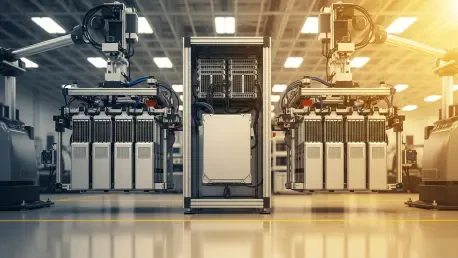

The landscape of global technology manufacturing is currently undergoing a radical transformation as the demand for computational power reaches unprecedented heights. This strategic pivot involves moving away from a purely globalized supply chain toward a robust domestic model centered on the latest Blackwell architecture. By commissioning over one million square feet of new manufacturing space, the goal is to meet the booming global demand for high-performance computing power while ensuring better control over the entire production pipeline. At the core of this initiative is a massive investment in AI infrastructure, encompassing high-performance data center processors, networking systems, and expansive supercomputing clusters. These systems are not merely components but the fundamental engines driving large-scale research and enterprise models across the nation. This “in America, for America” philosophy seeks to produce half a trillion dollars worth of this critical technology on domestic soil.
Strategic Onshoring: The Silicon Backbone
Arizona has emerged as the primary hub for the intricate semiconductor and packaging stages of the manufacturing process. At the heart of this regional ecosystem is the TSMC facility in Phoenix, where Blackwell chips are printed onto silicon wafers with extreme precision. This collaboration signifies a major step in securing the most sensitive parts of the production cycle within domestic borders. To complete the manufacturing cycle, partnerships with specialized companies like Amkor have been established to handle advanced packaging and testing. These processes ensure that each processor can communicate at the extreme speeds required for modern AI workloads before being shipped out for final assembly. By centralizing these operations in Arizona, the logistics of moving fragile silicon are simplified, and quality control is maintained at a level that was previously difficult to achieve across international lines. This regional concentration of expertise creates a formidable foundation.
Building on this foundation, the technical complexity of integrating these silicon components into a working whole cannot be overstated, as the demands of generative AI require seamless data flow. Advanced packaging involves stacking chips and interconnecting them in ways that minimize latency, which is the primary bottleneck in large-scale computing environments today. By performing these tasks in the United States, the manufacturing process benefits from a highly skilled local workforce and direct oversight from design engineers. This proximity between the design and fabrication teams allows for rapid iteration and troubleshooting of new hardware configurations as they emerge. Moreover, the integration of specialized testing facilities ensures that the high standards of reliability required for enterprise-grade hardware are met consistently. This methodical approach to the silicon backbone ensures that the foundational elements of the AI infrastructure are both secure and technologically superior.
Texas Operations: Final System Assembly
While Arizona focuses on the silicon components, Texas is being positioned as the central location for the final assembly of the complete systems. In collaboration with prominent manufacturing partners like Foxconn and Wistron, new large-scale plants are being established in Houston and Dallas to assemble finished AI supercomputers. These massive facilities serve as the integration point where processed chips are combined with complex cooling systems, power supplies, and high-speed networking components. The scale of these operations is designed to accommodate the sheer physical size of modern server racks, which are often taller and heavier than standard industrial equipment. By utilizing the existing logistical infrastructure in Texas, the movement of these finished products to major data centers across the continent is made more efficient. This expansion represents a significant commitment to domestic manufacturing jobs and the revitalization of the American industrial sector.
The assembly process for an AI supercomputing cluster is an intricate dance of hardware engineering and precision logistics. Unlike standard server assembly, these units require specialized networking cabinets that can handle the massive throughput generated by Blackwell-based clusters. Each rack must be meticulously configured to ensure thermal management and power efficiency are optimized for high-intensity workloads. The facilities in Houston and Dallas are equipped with state-of-the-art automation tools that assist human technicians in the assembly of these multi-million-dollar systems. This blend of robotic assistance and expert oversight ensures that every unit leaving the factory floor is ready for immediate deployment in critical research environments. By establishing these assembly hubs, the reliance on overseas integrators is diminished, providing a more direct path from production to the end-user. This streamlined approach allows for greater customization.
Redefining Manufacturing: The AI Factory Model
The Blackwell architecture serves as the technical foundation for this expansion, offering the computational power necessary for generative AI and advanced data science. These new manufacturing facilities are envisioned as “AI Factories,” a concept that represents a fundamental shift from traditional data centers used primarily for storage. In this new paradigm, specialized sites are built where raw data is transformed into refined, actionable intelligence on a massive scale. This industrial approach builds a robust base for a digital economy where AI intelligence is treated as a high-value manufactured product rather than just a software service. The integration of high-bandwidth memory and advanced interconnects allows these factories to process petabytes of information in record time. By treating the creation of AI as a manufacturing process, the industry can apply traditional principles of scale, quality control, and efficiency. This evolution reflects the importance of hardware infrastructure.
Success in this massive endeavor relies on a sophisticated network of strategic partnerships and advanced technology rather than a solo effort. By working with experts in fabrication, packaging, and logistics, operations can scale more rapidly than if every step were managed internally by a single entity. A particularly innovative aspect of this strategy is the use of the Omniverse platform to create “digital twins” of the manufacturing facilities. These virtual models allow engineers to simulate and optimize assembly lines in a virtual environment before a single brick is laid in the physical world. This predictive approach minimizes errors, reduces waste, and speeds up the commissioning of new plants by identifying potential bottlenecks in advance. The use of digital twins also allows for real-time monitoring and adjustment of production processes once the factories are operational. By bridging the gap between virtual and physical worlds, the efficiency of the manufacturing process is significantly elevated.
Strategic Resilience: Market and Supply Chain Distinction
A primary driver behind this domestic expansion is the critical need for supply chain resilience in an increasingly unpredictable global market. By establishing a massive manufacturing presence within the United States, the risks associated with international shipping and geopolitical shifts are significantly reduced. Locating production closer to the largest customers also allows for faster delivery times and tighter cooperation between the hardware manufacturers and software developers. This proximity fosters a collaborative environment where hardware can be tuned to the specific needs of emerging AI algorithms in real-time. Furthermore, a domestic supply chain provides a level of security and oversight that is essential for critical national infrastructure and sensitive government research projects. The ability to track a processor from the initial silicon wafer to the final server rack within a single country enhances the integrity of the technology stack. This move toward resilience is a strategic imperative.
This landmark investment signaled a transition where AI was no longer just a research tool but a foundational utility requiring industrial-scale support. By localizing critical manufacturing and utilizing cutting-edge robotics, the groundwork was laid for a physical world capable of supporting the next generation of computing. The initiative successfully reshaped the global landscape of artificial intelligence by demonstrating that high-performance computing could be manufactured reliably within domestic borders. Moving forward, the focus shifted toward maintaining this infrastructure and ensuring that it evolved alongside the rapid advancements in software. Stakeholders recognized the need for continuous investment in specialized education to provide the workforce required for these high-tech facilities. Organizations were encouraged to integrate these new domestic hardware capabilities into their long-term strategic planning to maximize their competitive edge. The emphasis on sustainability also became a priority.







