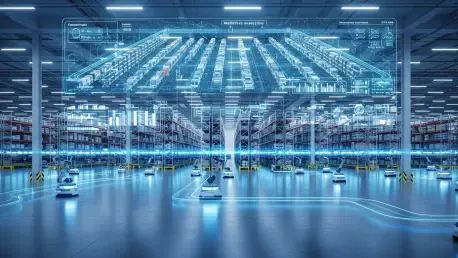

The unassuming aisles of the world’s largest grocer have become an unlikely crucible for a technological revolution that is now commanding Wall Street’s attention in a way that even established Silicon Valley giants cannot. For years, Walmart was synonymous with low prices and sprawling supercenters, a bastion of traditional retail. Today, however, it presents a paradox: a company whose core business is selling groceries and household goods, yet whose market valuation metrics whisper a different story—one of a technology powerhouse in disguise. This shift is not accidental but the result of a deliberate, multi-billion-dollar bet on proprietary artificial intelligence, fundamentally altering its operations from the supply chain to the checkout counter.
The central question this transformation poses is profound. Is Walmart’s evolution a genuine and sustainable pivot into a technology-driven enterprise, or is it a masterful exercise in financial repositioning designed to attract a more favorable class of investor? The answer lies deep within the company’s custom-built data infrastructure and its surgical deployment of AI, a strategy that is now yielding quantifiable results and forcing analysts to reconsider the very definition of a tech company. This journey from retailer to tech innovator represents a high-stakes experiment in corporate identity, with implications not only for the future of commerce but for the modern workforce itself.
Beyond the Bargain Bin A Grocers Unlikely Ascent
A surprising reality has emerged from the ticker tapes of Wall Street: Walmart, the quintessential brick-and-mortar retailer, now boasts a price-to-earnings (P/E) ratio of 40.3x, a figure that eclipses technology behemoths like Amazon and Microsoft. This valuation is typically reserved for companies with high-margin, scalable software products, not for a business rooted in the famously low-margin grocery sector. This financial anomaly has ignited a debate among investors and analysts, forcing them to confront an uncomfortable possibility—that the market sees something more than just a retailer in Walmart’s stock.
This perception was cemented by the company’s symbolic and highly strategic move from the New York Stock Exchange to the tech-centric Nasdaq exchange. Far from being a simple administrative change, this transfer was a public declaration of a new identity. It signaled to the world that Walmart no longer views itself as just a chain of stores but as an integrated, omnichannel enterprise where technology, particularly artificial intelligence, is the primary engine of growth and efficiency. The “Nasdaq gambit” was the culmination of years of quiet, intensive investment in a technological backbone designed to rival those of its Silicon Valley competitors.
The Nasdaq Gambit A Calculated Pivot to a Tech Powerhouse
The decision to join the Nasdaq was articulated by company leadership as a direct reflection of this internal transformation. CFO John David Rainey explicitly framed the move as an alignment of Walmart’s market presence with its operational reality—that of an AI-integrated business. The underlying objective is clear: to command the higher valuation multiples that technology companies traditionally enjoy. By repositioning itself within a cohort of innovators, Walmart aims to persuade the market that its future earnings potential is driven not just by retail volume but by the scalable, high-margin efficiencies unlocked by its technological assets.
This financial strategy is deeply intertwined with the company’s long-term commitment to building its own AI and data infrastructure from the ground up. Instead of relying solely on third-party vendors, Walmart has invested heavily in creating a proprietary ecosystem, giving it unparalleled control over its data and the tools that analyze it. This independence is crucial, as it allows the company to develop solutions precisely tailored to the unique complexities of its massive scale. This matters because it demonstrates that the shift is not merely a marketing ploy but a fundamental change in how the company operates, innovates, and ultimately, creates value.
Deconstructing the Machine Inside Walmarts Purpose Built AI Engine
At the heart of Walmart’s technological strategy is a rejection of generic, one-size-fits-all AI models. The company has instead pioneered what it calls “purpose-built agentic AI,” a philosophy centered on creating highly specialized, independent AI agents designed to perform specific tasks with surgical precision. As articulated by CTO Hari Vasudev, these agents are trained on Walmart’s vast and proprietary datasets to solve discrete problems—from optimizing delivery routes to identifying emerging fashion trends—and their outputs are then combined to automate complex, end-to-end business workflows. This approach allows for greater accuracy, control, and efficiency than could be achieved with a single, monolithic AI.
This philosophy manifests in a suite of powerful, internally developed tools. Chief among them is “Wallaby,” a retail-specific Large Language Model (LLM) trained on decades of Walmart’s exclusive transaction and inventory data. Wallaby powers a range of functions, from sophisticated product comparisons for online shoppers to personalized shopping journeys that anticipate customer needs. Supporting this entire ecosystem is “Element,” Walmart’s custom MLOps (Machine Learning Operations) platform. Built to optimize the use of expensive GPU resources across multiple cloud providers, Element ensures maximum flexibility and, crucially, prevents the company from becoming locked into a single technology vendor, a competitive advantage that provides both speed and cost savings.
These proprietary platforms are already driving tangible innovations across the business. The “Trend-to-Product” system, for example, uses AI to analyze market signals and has slashed fashion production timelines by an incredible 18 weeks. In customer service, an autonomous GenAI Customer Support Assistant now independently routes and resolves a growing number of issues without any human intervention. Even internal operations have been transformed, with proprietary tools that automate the generation of software tests and accelerate error resolution for Walmart’s own developers, creating a virtuous cycle of innovation.
The Proof is in the Profits Quantifying AIs Real World Impact
The most compelling evidence of Walmart’s transformation lies in the hard metrics that demonstrate tangible operational and financial gains. Within its legendary supply chain, AI-driven route optimization has eliminated over 30 million unnecessary delivery miles and prevented 94 million pounds of CO2 emissions. This achievement was so significant that it earned the company the prestigious Franz Edelman Award, and the underlying technology has since been commercialized as a Software-as-a-Service (SaaS) product. In data operations, GenAI has been used to improve the quality of over 850 million product catalogue data points, a task that CEO Doug McMillon estimated would have required 100 times the manual labor to complete.
The impact extends directly into the stores and customer experience. Digital twin technology creates virtual replicas of physical stores, allowing AI to predict refrigeration failures up to two weeks in advance and automatically generate detailed work orders for technicians. At Sam’s Club, a subsidiary of Walmart, AI-powered exit technology has streamlined the checkout process, reducing member wait times by 21% and achieving an impressive adoption rate of over 64% across all locations. For its burgeoning delivery service, dynamic algorithms analyze real-time traffic and order data to provide customers with minute-by-minute delivery time predictions, even enabling ultra-fast 17-minute express deliveries in some test markets.
Despite these impressive results, market opinion remains divided. Bullish analysts, such as Jefferies’ Corey Tarlowe, view Walmart’s technological investments and its Nasdaq listing as clear indicators that it is evolving into more of a technology firm. However, skeptics caution that the company’s revenue remains overwhelmingly derived from low-margin retail sales. They argue that until Walmart can generate significant income from high-margin software or cloud services, it remains fundamentally a retailer—albeit a remarkably efficient one—and its high valuation may be difficult to sustain.
The Human Factor A Blueprint for Workforce Evolution not Elimination
This profound technological shift carries significant implications for Walmart’s 2.1 million employees, a reality the company’s leadership does not downplay. CEO Doug McMillon has been candid in his assessment that AI will fundamentally change every role within the organization, from corporate headquarters to the warehouse floor. However, Walmart’s official strategy is one of workforce transformation, not elimination. The company projects a flat total headcount even as revenue is expected to grow, a forecast that points toward a strategic redeployment of human capital rather than a net reduction in jobs. The most immediate changes are being felt in white-collar roles related to customer service and supply chain tracking, with tasks in stores and distribution centers expected to be increasingly absorbed by autonomous systems over time.
A powerful illustration of this transition comes from the experience of Chance, a distribution center worker whose job has been completely reshaped by technology. He described his former role as “85% physical,” involving manual labor and repetitive tasks. Today, he says his work is “85% mental,” focused on managing automated systems, troubleshooting problems, and making strategic decisions—a clear shift from manual execution to cognitive oversight. This anecdote encapsulates the broader change occurring across the company, where the value of employees is shifting from physical labor to problem-solving and system management.
In response to this impending disruption, Walmart is making significant investments in comprehensive re-skilling and up-skilling programs. The company recognizes that to successfully navigate this transition, it must equip its workforce with the new skills required to thrive in an AI-augmented environment. These initiatives are designed to prepare employees for new, more complex roles that emphasize critical thinking, data analysis, and technology management. This proactive approach to workforce development is a crucial component of Walmart’s strategy, aiming to turn a potential crisis of job displacement into an opportunity for employee growth and organizational advancement.
The journey Walmart undertook was a testament to the power of strategic foresight and deep investment. It demonstrated that a legacy company could not only adopt new technology but could build a proprietary AI ecosystem at a scale few could match. The documented gains in efficiency, from the supply chain to the store floor, confirmed that this was not a superficial rebranding effort but a structural transformation of the business. By confronting the workforce implications head-on with a clear strategy of evolution, Walmart provided a potential blueprint for other large enterprises facing similar technological disruptions. The ultimate lesson from this endeavor was that true transformation required more than just buying software; it demanded a fundamental rethinking of data, operations, and people. It remained to be seen whether this capital-intensive approach would permanently redefine its business model or merely create a more efficient version of its former self, but the company’s bold bet on its technological future had irrevocably changed its course.