
The robotics and artificial intelligence sector has reached a critical inflection point, moving beyond the confines of science fiction and factory floors to become an integral component of the global economy. A powerful convergence of advanced AI, pressing macroeconomic needs, and supportive government policies is accelerating the adoption of intelligent automation at an unprecedented rate. This is not merely an incremental improvement; it is a paradigm shift, creating a new generation of adaptive, intelligent systems that are reshaping industries from manufacturing to healthcare. For investors with a long-term horizon, this secular megatrend presents a compelling opportunity, with projections indicating the global robotics market will surge past the $200 billion mark by the end of the decade. As this revolution unfolds, identifying the key sub-sectors and the leading companies within them is paramount to capitalizing on this next wave of technological and economic transformation.
The Confluence of Catalysts Driving the Robotics Revolution
The Technological Leap AI Integration
The single most transformative force propelling the robotics industry is the deep and increasingly seamless integration of advanced artificial intelligence, particularly generative AI, with sophisticated robotics hardware. This synergy is giving rise to a new class of intelligent machines that possess the ability to perceive their environment, learn from new data, and make autonomous decisions without relying on rigid, pre-programmed instructions. This represents a monumental leap from the previous generation of industrial robots, which were largely confined to performing highly structured, repetitive tasks in controlled settings. The new AI-powered robots are general-purpose productivity enhancers, capable of adapting to dynamic situations and handling variability, which dramatically expands their applicability and economic value. This fusion of digital intelligence with physical capability is unlocking a vast array of new use cases and fundamentally altering the return-on-investment calculation for automation across virtually every sector of the economy.
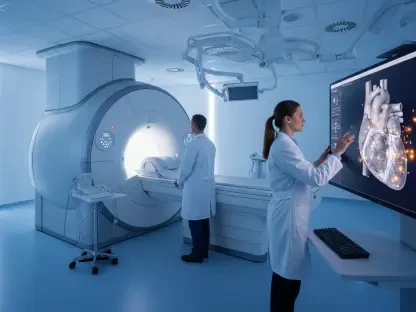
This evolution from single-task tools to multi-purpose platforms is the core of the current inflection point. Where older robots required extensive and costly reprogramming for even minor changes in a task, modern systems can learn and optimize their performance in real time. They can interpret complex sensory inputs from cameras and other sensors, allowing them to work safely alongside humans in unstructured environments like busy warehouses, hospital operating rooms, and complex assembly lines. This leap from explicit programming to dynamic, AI-driven adaptability is the key that unlocks the full potential of automation. It allows robots to tackle challenges that were previously considered exclusively human domains, such as nuanced object manipulation, quality inspection, and even complex surgical procedures. Consequently, the addressable market for robotics is expanding exponentially, moving far beyond its traditional stronghold in heavy manufacturing and into logistics, healthcare, agriculture, and customer service, creating a much broader and more resilient foundation for long-term industry growth.
Macroeconomic Imperatives and Policy Tailwinds
Beyond the technological advancements, a set of powerful macroeconomic imperatives is compelling businesses worldwide to accelerate their investment in automation. Persistent labor shortages across developed economies, coupled with steadily rising wages, are putting immense pressure on corporate operating margins and making the capital outlay for robotic systems increasingly attractive. Companies are no longer just seeking efficiency gains; they are deploying automation as a strategic necessity to maintain operations and ensure business continuity. Furthermore, the global push for greater supply chain resilience, catalyzed by recent geopolitical and economic disruptions, is driving a significant trend of “reshoring”—bringing manufacturing capabilities back to domestic markets. This strategic shift is heavily dependent on automation to offset higher domestic labor costs and maintain quality and consistency, creating a sustained, long-term demand pipeline for robotic systems and integrated automation solutions.
Adding significant momentum to these economic drivers are supportive government policies enacted by major industrial nations. Recognizing the strategic importance of technological leadership and robust domestic manufacturing, governments are implementing a range of initiatives designed to foster the growth of the robotics industry. These policies include direct subsidies for automation investments, tax incentives, tariffs on imported goods to encourage local production, and preferential treatment in government procurement contracts. This combination of government support creates powerful and predictable tailwinds for robotics and automation companies, effectively de-risking private investment and encouraging further innovation. By creating a more certain demand environment, these policies provide a stable foundation for the industry, allowing companies to make the long-term capital investments necessary to scale production, advance research and development, and solidify their competitive positions in the burgeoning global market for intelligent automation.
A Sector by Sector Look at Top Robotics Investments
Industrial Automation and Logistics
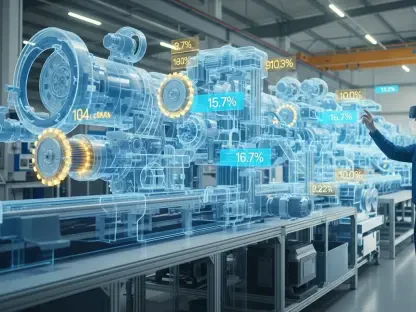
Rockwell Automation (ROK) has firmly established itself as the dominant pure-play leader in industrial automation, providing the foundational hardware and software that form the backbone of the modern smart factory. The company’s comprehensive ecosystem includes everything from programmable logic controllers and motor controls to sophisticated software platforms that orchestrate complex manufacturing processes. This extensive installed base across thousands of facilities worldwide creates a formidable competitive moat, as high switching costs and deep integration into customer operations make it difficult for competitors to displace them. Rockwell is also adeptly navigating the industry’s shift toward intelligent automation through a key strategic partnership with Nvidia. This collaboration is enabling the integration of cutting-edge AI capabilities, such as predictive maintenance and autonomous process optimization, directly at the industrial edge. In this role, Rockwell serves as a critical gateway for manufacturers looking to adopt AI, positioning itself to capture significant value from this next wave of industrial transformation, though its fortunes remain closely tied to the cyclical nature of manufacturing capital expenditure.
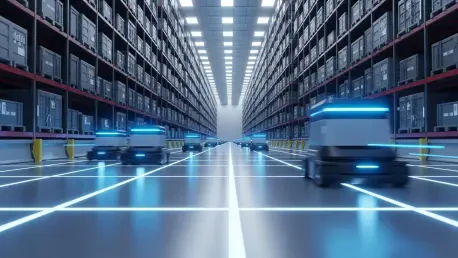
In the rapidly expanding world of e-commerce, Symbotic (SYM) has emerged as a leading innovator in warehouse and logistics automation. Driven by the relentless consumer demand for faster and more accurate order fulfillment, the company provides sophisticated, end-to-end robotic systems powered by an AI software platform. These systems are designed to manage the entire warehouse workflow, from receiving and storage to picking and shipping, promising dramatic efficiency gains for large retailers grappling with soaring labor costs and fulfillment complexity. Symbotic’s landmark partnership with Walmart not only provides crucial revenue visibility and a clear path to profitability but also serves as a powerful validation of its technology, attracting interest from other major retailers. While the company’s strong execution and financial guidance are promising, it represents a higher-risk investment profile. Its significant customer concentration, the capital-intensive nature of its large-scale deployments, and the inherent operational challenges of scaling such complex integrated systems are key factors for investors to consider.
Medical Robotics and Enabling Technologies
The field of medical robotics is arguably the fastest-growing and most transformative segment of the industry, and Intuitive Surgical (ISRG) stands as its undisputed leader. The company’s da Vinci surgical system has revolutionized minimally invasive procedures, and its market dominance is protected by an exceptionally strong competitive moat. This moat is built on a brilliant “razor-and-blades” business model, where an installed base of over 8,000 systems globally generates highly predictable and profitable recurring revenue from the sale of proprietary instruments and services required for each procedure. Furthermore, the extensive training required for surgeons to become proficient with the da Vinci system and the significant capital investment hospitals make create extremely high switching costs. In the more specialized field of orthopedic robotics, Stryker (SYK) leads the way with its Mako platform for knee and hip replacements, which has rapidly become a standard of care. Stryker’s key advantage lies in its integrated ecosystem, which seamlessly pairs its robotic systems with its own portfolio of market-leading implants and surgical instruments, creating a closed loop that is difficult for competitors to replicate.
While companies like Intuitive and Stryker build the robots, Nvidia (NVDA) provides the essential “picks and shovels” that enable the entire AI and robotics revolution. Though not a pure-play robotics company, Nvidia’s technology is the critical infrastructure upon which the future of intelligent automation is being built. Its high-performance Graphics Processing Units (GPUs) are the industry standard for training the complex AI models that give robots their intelligence and perception. At the same time, its Jetson platform provides the powerful and efficient edge computing capabilities necessary for real-time decision-making and autonomous operation directly on the robot itself. Moreover, Nvidia’s Omniverse platform is transforming robotics development by allowing engineers to build and test robots in photorealistic, physics-accurate simulations, drastically reducing the time and cost of development. This full-stack, foundational approach allows Nvidia to capture value from the growth of the entire sector, making it a core holding for any investor looking for broad exposure to the AI and robotics megatrend, irrespective of which specific applications ultimately achieve the most commercial success.
Software Automation and Emerging Disruptors
While physical robots are transforming manufacturing and logistics, a parallel revolution is occurring in the digital realm, led by companies like UiPath (PATH). As a leader in robotic process automation (RPA), UiPath provides software “robots” that automate repetitive, rules-based digital tasks within an enterprise, such as data entry, invoice processing, and customer service inquiries. The company is in the midst of a crucial strategic pivot, evolving from a provider of task-automation tools to a comprehensive, AI-powered business automation platform. This shift aims to orchestrate intelligent workflows across entire organizations, integrating AI to handle more complex, cognitive tasks and delivering a higher return on investment. This evolution is critical for its long-term success, as the competitive landscape is intensifying rapidly. Enterprise software giants like Microsoft and ServiceNow are aggressively integrating similar automation features into their existing platforms, leveraging their vast customer bases. UiPath’s core challenge is to prove that its specialized, AI-centric, and vendor-agnostic approach provides superior value and flexibility compared to the bundled offerings of its larger rivals.
Looking toward the industry’s more speculative but potentially transformative future, several disruptors are capturing investor attention. Tesla’s (TSLA) Optimus project represents the sector’s most ambitious moonshot: the development of a general-purpose humanoid robot designed to perform a wide range of tasks currently done by humans. While a successful humanoid robot could fundamentally reshape global labor markets and create an unprecedented economic impact, the technical challenges are immense, and the timelines for development and deployment remain highly uncertain. On a more grounded but equally disruptive front, Teradyne (TER), through its Universal Robots subsidiary, is the undisputed leader in the collaborative robot, or “cobot,” market. Unlike traditional industrial robots that operate in caged-off areas, cobots are designed to work safely alongside human employees. They are also significantly more affordable and easier to deploy, which is opening up the vast, underserved market of small and medium-sized enterprises that were previously priced out of automation. This democratization of robotics is a powerful growth vector for the industry.
Strategizing for a Dynamic and Evolving Market
The analysis of the robotics and automation sector revealed a landscape rich with opportunity but also laden with specific risks that warranted careful consideration. The cyclical nature of industrial automation, the constant threat of technological disruption from faster-moving innovators, and the premium valuations at which many of these leading companies traded were identified as key challenges. To navigate this dynamic environment, a strategy of diversification was underscored as essential. Constructing a portfolio with exposure across the sector’s key verticals—from industrial automation leaders and medical robotics pioneers to the foundational AI infrastructure providers and emerging software platforms—was presented as a prudent approach. This method was designed not only to capture the broad secular tailwinds but also to mitigate the risks associated with any single company or sub-sector. By balancing established, cash-flow-positive leaders with higher-growth, higher-risk disruptors, investors could strategically position themselves to capitalize on the unfolding revolution in intelligent automation.