
The initial narrative surrounding artificial intelligence in medical imaging, once dominated by the dramatic prospect of replacing human experts, has matured into a far more nuanced and practical discussion about collaboration and enhancement. As healthcare facilities move from speculative interest to active implementation, the key question is no longer if AI will be used, but how it can be integrated effectively to produce tangible improvements in patient care. The development of a successful AI strategy requires a comprehensive framework that extends well beyond the technical evaluation of a single algorithm. It involves a strategic rethinking of workflows, vendor relationships, and performance monitoring, all anchored by an unwavering commitment to the patient. Insights from pioneers in the field reveal that the most effective approaches are holistic, treating AI not as a standalone product but as a dynamic component of a complex clinical ecosystem that demands continuous cultivation and oversight.
Beyond the Algorithm: Forging Strategic Partnerships
The Vendor as a Long-Term Collaborator
A foundational error in AI adoption is treating the procurement of software as a one-time transactional purchase, similar to acquiring a new piece of hardware. The reality is that artificial intelligence tools are not “plug-and-play” solutions; they are sophisticated systems that must be carefully integrated and continuously refined to function optimally within a specific facility’s unique environment. This necessitates a shift in mindset, viewing the relationship with an AI vendor as a long-term, dynamic partnership rather than a simple customer-supplier exchange. When evaluating potential vendors, it is therefore just as critical to assess their willingness and capacity for collaboration as it is to scrutinize the performance metrics of their models. A true partner will work alongside the clinical team to navigate integration challenges, customize workflows, and provide ongoing support. This collaborative spirit is a key indicator of future success, as the AI tool will inevitably need to evolve in response to changing patient demographics, new clinical protocols, and feedback from the radiologists who use it daily.
The Imperative of Continuous Performance Monitoring
Once an AI model is deployed, the implementation process is far from over; in fact, a critical new phase begins. Establishing a continuous monitoring program is essential for ensuring both the efficacy and safety of the technology over the long term. This program serves a dual purpose: it constantly evaluates the adjunctive benefit of the AI while also actively managing the complex human-computer interaction. A key component of such a program involves systematically tracking user agreement and disagreement rates. Significant deviations from the norm can be a crucial signal that something is amiss. For instance, a high rate of radiologists overriding the AI’s suggestions might indicate that the model is not performing well for a specific local patient population, or that its sensitivity thresholds are poorly calibrated for the institution’s needs. Conversely, near-perfect agreement could, in some cases, signal overreliance on the technology. This data provides an objective basis for targeted interventions, whether it involves retraining the AI model, refining its parameters, or providing further education to radiologists on the technology’s supportive and non-definitive role.
Centering the Strategy on Patient-Centric Outcomes
Navigating the Human-Computer Interaction
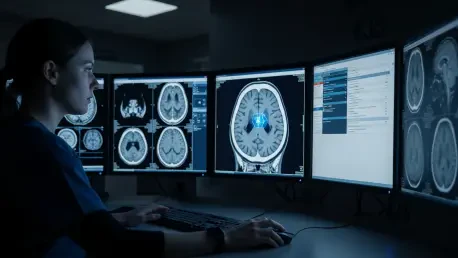
The successful integration of AI is ultimately determined by its ability to enhance, not hinder, the radiologist’s diagnostic process. This hinges on a carefully designed human-computer interaction that minimizes workflow friction and cognitive burden. While challenges such as false positives are an inherent part of current AI technology, their impact can be managed through intelligent workflow design and a clear-eyed focus on the overall clinical benefit. The primary objective is to create a seamless synergy where the AI functions as a reliable co-pilot. For example, the system’s ability to automatically triage critical cases, such as identifying a potential head bleed and moving it to the top of the worklist, provides an immense, life-saving value that often outweighs the minor inconvenience of managing occasional false alarms on less urgent findings. The interface must allow radiologists to quickly and intuitively accept, reject, or amend AI-generated findings without adding undue time or clicks to their interpretation process. Every element of the integration must be measured against its contribution to helping the radiologist deliver safer, more efficient, and more accurate patient care.
Proactively Shaping the Future of Radiological Practice
The advent of AI presents a pivotal opportunity for radiologists to actively design the future of their own profession. Rather than being passive recipients of new technology, they must take a leadership role in guiding its implementation to ensure it serves the best interests of their patients and their practice. This proactive involvement should begin at the earliest stages, with radiologists playing a central part in the vetting and selection of AI tools, ensuring that the chosen solutions address genuine clinical needs. Their expertise is indispensable in defining the key performance indicators that matter most, moving beyond simple accuracy metrics to include measures of workflow efficiency and impact on patient outcomes. The future paradigm is not one where machines replace human experts, but one where radiologists skillfully supervise and leverage a suite of intelligent tools. By embracing this role as the architects of a new operational model, the radiology community can ensure that the integration of AI is driven by clinical wisdom and an unwavering ethical commitment, thereby harnessing its transformative potential responsibly.
A Retrospective on Strategic Implementation
The journey toward meaningful AI adoption in radiology was ultimately defined by a strategic and patient-centered vision. The most successful implementations were those that treated AI not as a product to be purchased, but as a clinical capability to be cultivated over time. These pioneering institutions understood that the foundation was a deeply collaborative partnership with technology vendors, which ensured the tools could be adapted and refined to meet the unique demands of their clinical environment. They established rigorous and continuous monitoring programs that looked beyond raw algorithm performance to assess the real-world impact on workflow, radiologist efficiency, and, most importantly, patient outcomes. It became evident that managing the delicate balance between human expertise and machine-generated insights was paramount. The institutions that succeeded were those that maintained an uncompromising focus on improving patient care, a principle that guided every decision and proved to be the definitive hallmark of a winning strategy.