
For decades, a computer science degree from Stanford University was more than an academic achievement; it was a guaranteed passport to the upper echelons of the technology industry, a golden key unlocking doors to innovation and immense wealth. Graduates were courted by tech giants before they even walked the stage at commencement, entering a world of high salaries and boundless opportunity. That world has fractured. Today, a new and unsettling reality has descended upon Palo Alto, where even the brightest minds from one of the world’s most elite programs are facing a job market that has been profoundly and permanently altered by their primary subject of study: artificial intelligence. This disruption is not merely a cyclical downturn but a fundamental reshaping of the tech landscape, posing an urgent question about the value of a traditional computer science education in an era of automation.
The Devaluation of a Golden Ticket When a Top Tier CS Degree Isnt Enough
The central crisis unfolding for these graduates is the sudden and stark devaluation of their once-unassailable credentials. The core promise of a Stanford CS degree—that it would serve as an automatic qualifier for the most coveted entry-level positions in technology—has been broken. Students who began their academic journeys in a pre-ChatGPT world, where demand for their skills seemed infinite, have emerged into a landscape where their primary competitor for junior developer roles is an AI that never sleeps, demands no salary, and can often produce code more efficiently.
This jarring transition has replaced the campus’s traditional optimism with a pervasive sense of anxiety. The high-demand environment of just a few years ago has evaporated, replaced by intense, widespread competition for a shrinking pool of entry-level jobs. The once-clear path from the classroom to a six-figure starting salary at a major tech firm is now obscured by uncertainty. For the majority of graduates, the golden ticket no longer offers a direct route, forcing them to confront a professional world far more challenging than the one they were promised.
Setting the Scene The Unprecedented Collision of Academia and Automation
Historically, the prestige of a computer science degree from an institution like Stanford provided immense market power. These programs were seen as the premier training grounds for the next generation of technological innovators, and companies aggressively recruited their graduates, confident in their foundational knowledge and problem-solving abilities. This established paradigm created a symbiotic relationship between elite academia and the tech industry, where the university supplied top-tier talent and the industry absorbed it with insatiable demand.
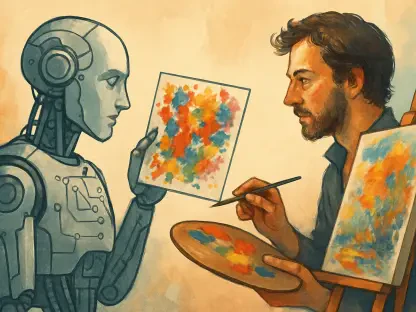
That long-standing equilibrium has been shattered by the arrival of a new and formidable competitor: generative AI. In a remarkably short period, AI has evolved from a rudimentary assistant into a proficient coder capable of handling many tasks once reserved for junior human developers. Companies across the tech sector are integrating these tools to accelerate development, automate routine coding, and reduce their reliance on large teams of entry-level engineers. This unprecedented collision between academia’s traditional output and automation’s new capabilities has fundamentally altered the rules of the entry-level job market.
Anatomy of a Crisis How AI Is Reshaping the Tech Industrys Entry Ranks
The core of the crisis lies in the simple fact that AI has become an exceptionally skilled programmer. Modern AI platforms developed by industry leaders can write functional code faster, operate for longer, and make fewer rudimentary mistakes than the average human junior developer. For businesses focused on efficiency and cost-effectiveness, the choice is becoming increasingly clear. As Amr Awadallah, CEO of the AI startup Vectara, stated bluntly, “We don’t need the junior developers anymore,” because AI can often perform their tasks more effectively.
This shift has not led to a uniform decline in hiring but has instead created a deeply bifurcated market. A small, elite fraction of graduates, often described as “cracked engineers” with extensive pre-existing portfolios of product development or research, are still able to secure the few highly desirable positions available. However, the vast majority of their peers now face what one anonymous Stanford graduate called a “dreary mood on campus,” as they are left to “fight for scraps.” The once-abundant opportunities have been consolidated at the top, leaving a large and anxious cohort of highly qualified graduates with limited prospects.
This phenomenon extends far beyond the manicured lawns of Stanford. The ripple effect is being felt intensely at other top-tier institutions, including UC Berkeley and the University of Southern California, where computer science students are encountering the same hostile hiring environment. The situation becomes even more dire for graduates from less prestigious universities, who now face an even greater challenge in getting noticed. The entire foundation of the tech talent pipeline is being shaken, with the most severe impact felt by those just starting their careers.
Voices from the Trenches Data and Testimonies of a Market in Turmoil
Industry insiders have been candid about this tectonic shift. Dario Amodei, the CEO of AI company Anthropic, revealed that for some of his company’s own products, 70% to 90% of the code is already written by their AI model, Claude. This move toward AI-driven development signals a permanent change in how software is created, reducing the need for large teams of human coders to handle foundational tasks. This sentiment reflects a growing industry consensus that the role of the entry-level programmer is rapidly becoming obsolete.
The shock of this new reality is palpable within academia and among students. Stanford bioengineering professor Jan Liphardt expressed his astonishment, calling it “crazy” that graduates from the university’s esteemed computer science program are now struggling to land jobs. Their plight is personified in stories like that of Eylul Akgul, a computer science graduate from Loyola Marymount University. After applying to countless positions, she was “ghosted” by hundreds of employers and received no offers, forcing her to return to her home country of Turkey to gain experience. Her observation that the industry is becoming “very oversaturated” captures the new reality of competing against both a flood of human graduates and tireless AI.
This anecdotal evidence is firmly supported by hard data. A study from Stanford revealed a staggering drop of nearly 20% in employment for early-career software developers between the ages of 22 and 25 since its peak in late 2022. The research also found a broader trend, with a 13% relative decline in entry-level hiring for all jobs highly exposed to AI competition compared to less-exposed fields. This empirical evidence confirms that the hiring downturn is not just a feeling but a measurable and significant market contraction driven by automation.
Navigating the New Normal Evolving Roles and Adaptive Strategies
The consensus among experts is not that software engineers face extinction, but rather a fundamental and rapid evolution of their role. As AI takes over the more structured and repetitive coding tasks, the human engineer’s job description is shifting from pure coder to AI overseer. Responsibilities are moving toward higher-level functions like managing, verifying, and correcting the output of powerful AI systems. This is critical, as current AI models are often described as “jagged”—capable of solving complex problems one moment and failing at basic logic the next. One study even found that AI tools made experienced developers 19% slower on certain tasks, as they had to dedicate significant time to reviewing and fixing AI-generated code.
In response to this hostile market, recent graduates are being forced to adopt new survival tactics. Many are lowering their sights, abandoning dreams of working for tech giants in favor of roles at smaller companies or in different industries altogether. Others are bypassing the traditional job market entirely by founding their own startups, choosing entrepreneurship over a frustrating and fruitless job search.
A particularly telling trend is the dramatic increase in graduate school enrollment. An anonymous Stanford student noted that enrollment in the university’s “fifth-year master’s” program has “skyrocketed,” with nearly half of their friends choosing to delay their entry into the workforce. This strategy serves a dual purpose: it allows them to gain more specialized skills to become more competitive, and it buys them time, hoping that the hiring market will have improved by the time they re-emerge with an advanced degree. Adaptability has quickly become the most essential skill for this new generation of engineers.
This dramatic reversal from the hiring frenzy of just a few years ago underscored a new and urgent mandate for higher education. The crisis experienced by recent graduates revealed that computer science curricula, once the gold standard, had not kept pace with the realities of an AI-driven industry. The focus could no longer remain solely on teaching students how to write code from scratch. Instead, it became clear that a paradigm shift was necessary. Educational institutions were called upon to fundamentally rethink their programs to prepare students not to compete with AI, but to collaborate with it effectively. The defining skill for the next generation of software engineers was no longer just coding proficiency, but the ability to manage, quality-check, and leverage AI as a powerful but imperfect tool, ensuring that human oversight remained at the center of technological innovation.