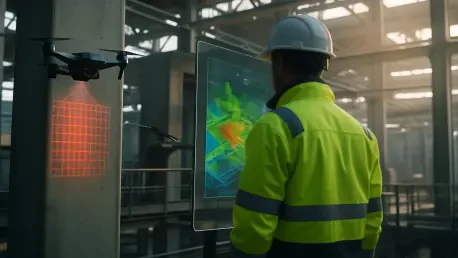

Construction projects across the globe have long struggled with a stubborn reality where nearly nine out of ten large-scale developments exceed their original budgets or miss their completion deadlines by significant margins. To combat this systemic inefficiency, the University of East London recently unveiled a transformative framework that leverages artificial intelligence to synchronize project management with the volatile conditions of a live job site. Published in the journal Frontiers in Built Environment, the research led by Dr. Jawed Qureshi introduces a methodology where digital models and AI algorithms work in tandem to create a self-correcting schedule. This approach represents a departure from traditional, static planning methods by allowing a project’s timeline to essentially rewrite itself in real-time as new risks emerge. By focusing on proactive adaptation rather than reactive damage control, the framework seeks to bridge the gap between high-tech data collection and the physical execution of complex infrastructure.
The Challenge: Addressing the Data Silo Dilemma
Modern construction sites are brimming with sophisticated technology, yet the information these systems generate often exists in isolated pockets that fail to communicate with one another effectively. While site managers frequently employ Building Information Modeling (BIM), IoT-enabled safety sensors, and digital risk registers, these tools rarely feed into a unified, live decision-making engine. For instance, a safety hazard detected by a drone or a material delay logged in a procurement database typically requires manual intervention to be reflected in the master project schedule. This disconnection means that even when the data is available, it is not actionable in a way that prevents the “snowball effect” of minor disruptions. The lack of interoperability between these advanced systems ensures that the theoretical benefits of digitalization are often lost in the friction of manual data entry and fragmented reporting structures.
This reliance on manual updates creates a “rear-view mirror” management culture where adjustments to the project timeline are made only after a delay has already impacted the critical path. Research indicates that while massive volumes of warning data—such as design clashes, contractual disputes, or weather-related risks—are generated throughout the lifecycle of a build, the schedule itself remains a static document until it is too late. This inertia is a primary driver of the productivity gap that has plagued the construction sector for decades, particularly in regions where industrial growth has outpaced management innovation. In the current landscape from 2026 to 2028, the industry is increasingly pressured to find ways to synchronize these disparate data streams. Without a mechanism to translate raw site data into immediate scheduling constraints, project managers remain tethered to outdated workflows that cannot keep pace with the rapid changes of a modern construction environment.
The Translation Engine: Converting Risk into Action
At the heart of the University of East London’s innovation lies the risk-to-constraint translation engine, a conceptual bridge designed to link risk prediction directly with schedule optimization. This engine performs the heavy lifting of converting qualitative risk assessments and quantitative sensor data into machine-readable constraints that an AI can process automatically. Instead of simply alerting a supervisor that a potential hazard exists, the system interprets exactly how that specific risk affects the sequence of individual tasks and the broader project flow. By establishing this direct link, the framework enables the AI to suggest immediate modifications to the plan, such as re-routing equipment or adjusting labor shifts, before a bottleneck occurs. This shift from simple notification to automated interpretation is what distinguishes this new model from previous attempts at digital project management, providing a much-needed layer of intelligence.
The engine relies on a sophisticated synthesis of several AI sub-fields to maintain comprehensive oversight across every phase of the construction process. Computer vision algorithms analyze live video feeds to identify physical obstructions or safety violations, while natural language processing techniques scan legal documents and contractual updates to detect shifting regulatory risks. Simultaneously, predictive analytics monitor supply chain fluctuations to forecast material shortages well before they arrive at the site gates. When a risk is identified, the translation engine determines its potential impact and introduces necessary time buffers or re-sequences work based on available resources. This ensures that the project remains in motion even when certain components are stalled, effectively utilizing data from 2026 to 2030 to build more robust predictive models. The integration of these diverse AI capabilities allows for a holistic view of project health that was previously impossible to achieve.
The Digital Twin: Balancing Automation and Oversight
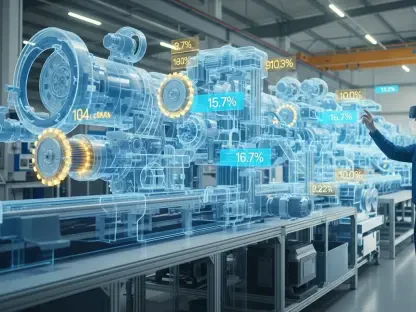
To ensure that automated scheduling changes do not introduce new hazards or compromise structural integrity, the framework utilizes a Digital Twin as a mandatory simulation layer. This virtual replica of the physical project acts as a testing ground where AI-suggested modifications are validated before they are implemented on the actual job site. By running these simulations in a controlled digital environment, project managers can visualize the long-term ripple effects of a scheduling change, such as how shifting a concrete pour might impact the availability of specialized labor three weeks down the line. This phase of the process maintains a critical balance between the speed of machine intelligence and the nuanced judgment of human experts. It provides site leads with a set of pre-validated options, allowing them to make informed decisions based on high-fidelity simulations rather than relying on intuition or incomplete progress reports.
Beyond immediate efficiency gains, this approach fosters a broader industry shift toward a philosophy known as Project Resilience, where infrastructure is built to absorb and adapt to unexpected shocks. The researchers emphasize that the future of the built environment depends on socio-technical integration, where human expertise and technological precision operate as a single, unified system. The goal is to move away from the traditional view of risk management as a separate administrative task and instead treat it as a continuous, lived activity that is woven into the fabric of project planning. By focusing on interoperability and the seamless flow of information between digital models and physical sites, the framework addresses the productivity paradox that has historically limited the impact of new technologies. As the industry moves forward from 2026 toward more complex global infrastructure goals, establishing these resilient systems will be vital for maintaining economic stability.
Strategic Implementation: Moving From Theory to Practice
Transitioning from this conceptual framework to widespread industry adoption will require a significant cultural shift in how construction firms approach data ownership and organizational hierarchy. While the technological components are largely available, the challenge lies in encouraging companies to move away from rigid, top-down scheduling toward a more fluid, data-driven methodology. The study suggests that firms must prioritize the development of internal digital infrastructure that supports real-time data sharing across different departments. This includes investing in standardized data formats that allow AI engines to pull information seamlessly from legal, procurement, and site-safety databases. By breaking down these internal walls, organizations can create a fertile ground for the translation engine to function effectively, ensuring that every piece of information gathered on-site contributes to the overall stability and predictability of the project.
The ultimate success of this AI-driven approach depended on its ability to move beyond academic validation and into rigorous real-world testing. Developers and engineering firms sought to create functional prototypes that integrated these AI sub-fields into existing project management software. These early pilots demonstrated that by treating risks as dynamic constraints rather than static warnings, projects avoided the common pitfalls of budget creep and chronic delays. Industry leaders recognized that the path to increased productivity required a commitment to interoperability and a willingness to trust simulated outcomes. This shift established a new standard for infrastructure delivery, where the focus moved from merely completing a task to maintaining total project resilience. Consequently, the framework provided a blueprint for a more sustainable and predictable construction sector that successfully utilized data to overcome its most persistent historical challenges.