
I’m thrilled to sit down with Laurent Giraid, a trailblazing technologist whose expertise in artificial intelligence, machine learning, and natural language processing is reshaping the world of sports. With a keen focus on ethical AI applications, Laurent has been at the forefront of integrating cutting-edge technology into athletic training, particularly in figure skating. Today, we’ll dive into how his innovative app, powered by AI, is transforming the precision of performance analysis, aiding coaches and commentators, and even pushing the boundaries of fair judging in a sport where every fraction of a point counts. Our conversation will explore the journey of creating this technology, the challenges of adoption in a traditional sport, and the vision for its future impact.
Can you walk us through how your AI technology captures incredibly subtle errors in figure skating, like a quarter-revolution shortfall in a jump, and share a memorable moment from a training session that highlighted its precision?
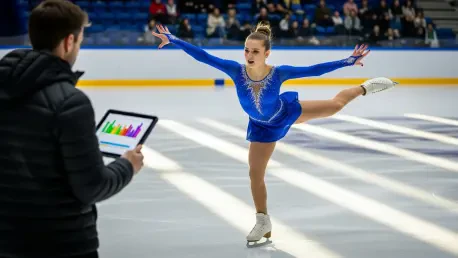
I’m glad you asked about that because it’s really the heart of what we’ve built with this technology. Our app uses computer vision powered by AI to analyze a skater’s movements through a simple phone or tablet camera. It breaks down elements like jump height, rotation speed, airtime, and landing quality frame by frame, comparing them to an idealized version of the jump. This allows us to spot errors as tiny as a quarter-revolution shortfall, which even the best human eyes often miss in real-time. I remember a session at an elite training camp where a skater executed what looked like a flawless quad toe loop. Everyone on the ice thought it was perfect, but when we reviewed the data, the app flagged a slight under-rotation. The skater was stunned at first, but then so excited to have that feedback instantly—it was like a lightbulb went off, knowing exactly what to adjust for the next attempt. Seeing that moment of realization, and how it fueled their determination, was incredibly rewarding for me.
How did your background in technology and perhaps personal experiences in sports influence the development of this AI tool, and can you tell us about an unexpected challenge during its creation that taught you something valuable?
My journey into this space really started with a deep curiosity about how technology could enhance human performance, especially in sports, which I’ve always been passionate about even as an outsider to figure skating. My work in AI and machine learning gave me the tools to analyze complex patterns, and I saw an opportunity to apply that to a sport where precision is everything. Developing this app meant blending tech with the nuanced knowledge of skating, which I had to learn from scratch through collaboration with coaches and athletes. One unexpected challenge came early on when we realized that capturing artistic elements alongside technical ones was far trickier than anticipated. I recall late nights tweaking algorithms to ensure the system didn’t overstep into subjective territory, and during a test run, we got feedback that our initial metrics felt too cold, too detached from the sport’s soul. That taught me the importance of balance—AI can’t replace the human element; it has to complement it. That lesson shaped every update we’ve made since, ensuring the tech feels like a partner, not a dictator, to those on the ice.
I’m intrigued by the potential of AI to assist in official scoring by automating technical calls. Could you explain the process of integrating this technology into judging, and share any feedback from athletes or coaches on this concept?
Integrating AI into official scoring is a multi-step process that starts with perfecting the accuracy of our data capture. We use cameras to record and analyze jumps and spins, overlaying key metrics against standardized benchmarks, so a technical panel could instantly see if a jump meets the criteria for full rotation or correct edge. Then, it’s about building trust with governing bodies by running parallel tests alongside human judges to compare results and refine the system. The final step is creating a seamless interface for real-time use at competitions, ensuring it’s accessible and doesn’t disrupt the flow of an event. I’ve had the privilege of getting feedback from elite skaters and their coaches during testing phases at renowned training hubs. One coach told me after a demo that they were amazed at how consistently the app flagged under-rotations that they’d occasionally miss under pressure. A skater also mentioned feeling reassured by the idea of an impartial tool backing up human calls—it gave them confidence that their hard work wouldn’t be overlooked. Hearing that kind of response fuels our drive to push this forward, though we’re careful to position it as a support tool, not a replacement for the artistry judges bring.
Your technology has also been used to enhance real-time commentary during broadcasts. How does it support commentators, and can you describe a specific moment where it made a tangible impact on their analysis?
Supporting commentators is one of the most exciting applications of our technology because it brings a new layer of insight to fans watching at home. The app provides real-time data on jump metrics—think height, rotation speed, and landing quality—that commentators can weave into their narratives as a skater performs. It’s all about giving them instant, accurate information to explain why a jump wowed the crowd or fell short, enhancing the storytelling without bogging it down with tech jargon. I recall a broadcast where our system flagged a skater’s jump height as significantly lower than their norm during a live event. The commentator picked up on that data point mid-performance, explaining to the audience how fatigue might be creeping in, which added such a compelling dimension to their analysis. You could almost feel the viewers leaning in, connecting more deeply with the skater’s struggle. Moments like that remind me how technology can bridge the gap between the ice and the living room, making the sport more accessible and engaging for everyone.
The ability to compare a skater’s performance against benchmark data or past attempts is fascinating. How do you build and maintain this library of data, and can you share an example of a comparison that had a surprising impact on a skater?
Building our library of benchmark data is a meticulous process that involves collecting and analyzing performances from elite skaters over years, creating a robust dataset of what ‘perfect’ elements look like. We collaborate with skating federations to record jumps and spins during camps and competitions, ensuring we capture a wide range of styles and skill levels, then update it regularly to reflect evolving techniques. The system uses this data to let skaters compare their current attempts against historical performances or even their own past bests, highlighting areas for improvement. I’ll never forget a moment at a training camp when a skater compared their quad toe loop to a benchmark from a top international competitor. The app showed they were close in rotation speed but lacked a bit in airtime, which was a complete surprise to them—they’d been focusing solely on spin. That insight shifted their training focus entirely, and within weeks, they were hitting new personal records. Seeing their face light up with that ‘aha’ moment, knowing our tech sparked that growth, was one of those times I felt the real weight of what we’re doing.
Removing subjectivity from judging elements like jump rotation or height is a game-changer. How do you ensure your app achieves that objectivity, and can you recall a specific instance where this precision left a coach or athlete in awe?
Ensuring objectivity is at the core of our mission with this app. We achieve it by relying on pure data—our AI measures exact metrics like degrees of rotation, jump height in centimeters, and edge positioning through computer vision, unaffected by human bias or viewing angles. We strip away any interpretive layer for technical elements, calibrating the system against universal standards agreed upon by skating experts, so there’s no room for ‘opinion’ in whether a jump was under-rotated by a quarter turn. During a test session at a well-known skating club, I remember a coach watching as the app flagged a subtle edge mistake on a lutz that they’d missed despite years of experience. They stood there, tablet in hand, just staring at the replay breakdown, and finally said, ‘I can’t believe I didn’t catch that.’ The skater was equally floored, laughing in disbelief at how precise the feedback was. That moment of awe wasn’t just about the tech—it was about how it empowered them to refine something they thought was already polished. It’s humbling to see our work create those kinds of breakthroughs.
Making figure skating fairer by consistently catching technical errors sounds revolutionary, but I imagine there are significant hurdles. What are the biggest technical challenges in perfecting this aspect of your app, and can you share a story from testing where AI corrected a human oversight?
You’re absolutely right—while the potential for fairness is huge, the technical challenges are just as significant. One of the biggest hurdles is ensuring our AI can handle the variability of real-world conditions, like different camera angles, lighting, or even skaters’ unique styles, without misinterpreting data. We’re also constantly fine-tuning the algorithms to process data in real-time at the speed of a competition, which demands immense computational efficiency. Another issue is edge cases—think a skater’s blade angle during a landing that’s borderline correct; getting that call right every time is a beast to solve. During a testing phase at an elite camp, I vividly recall a moment where a human technical panel missed a slight under-rotation on a triple jump because of their viewing position. Our app flagged it instantly, showing the exact degree shortfall on the tablet. The panel reviewed the footage, and you could see the surprise on their faces as they nodded in agreement with the AI’s call. That moment stuck with me—the air felt electric with the realization that this tool could be a game-changer for consistency, and it pushed us to double down on refining every detail.
Given the slow pace of tech adoption in sports, how do you plan to navigate the challenges of bringing your AI tool to major events like the Olympics, and what strategies or partnerships are you exploring to make this transition smoother?
The slow pace of tech adoption in sports is definitely a reality we’re facing, especially when you look at how long it took for systems like Hawk-Eye to become standard in tennis. Our approach is to focus on gradual integration, starting with proving the value of our tool as a training and commentary aid before pushing for official judging roles at events like the Olympics. We’re prioritizing transparency by working closely with skating federations and event organizers to run pilot programs, showing side-by-side comparisons of AI and human calls to build trust over time. We’re also exploring partnerships with broadcast networks and data providers to embed our tech into existing frameworks, making adoption feel less like a disruption and more like an enhancement. I’ve been in discussions with key stakeholders about running a demo at a major qualifying event, where our system would provide supplementary data without overriding human judges. The goal is to let people see the benefits firsthand—coaches getting instant feedback, commentators enriching their insights—while respecting the sport’s traditions. It’s a delicate dance, but I’m optimistic that by focusing on collaboration, we can ease this technology into the biggest stages without ruffling too many feathers.
Looking to the future, what is your forecast for the role of AI in figure skating and other Olympic sports over the next decade?
I see AI becoming an indispensable partner in figure skating and other Olympic sports over the next ten years, not as a replacement for human judgment but as a tool that elevates fairness and precision. In skating, I expect we’ll see AI fully integrated into technical scoring at major events, catching every under-rotation or edge error with consistency that humans alone can’t achieve, while still leaving the artistic side to judges’ expertise. Beyond skating, sports like gymnastics or diving could adopt similar computer vision tools to analyze form and execution, potentially reducing controversies over subjective calls. I also envision AI-driven training platforms becoming standard, giving athletes and coaches personalized insights no matter where they are in the world, democratizing access to elite-level feedback. But the key will be maintaining that human touch—ensuring the tech supports the passion and story of sport rather than overshadowing it. I’m excited to see how this balance unfolds, and I hope we’re at the forefront of making it happen with integrity and respect for these incredible athletic traditions.