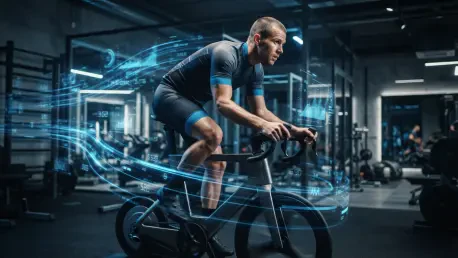

By monitoring heart rate trends and cardiac drift in real time, the study seeks to counteract the brain’s natural tendency to reduce power output during high-intensity efforts. The University of Miami is currently spearheading a pioneering clinical trial that explores the intersection of machine learning, exercise physiology, and sports psychology. Led by Dr. Anna Queiroz, the study—registered under identifier NCT07318233—is designed to investigate whether an artificial intelligence system, capable of delivering perfectly timed motivational messages based on real-time physiological data, can measurably increase a cyclist’s power output during a high-intensity effort. This research marks a significant shift in the application of AI within the fitness industry, moving beyond static data logging or long-term schedule planning and into the realm of active, real-time behavioral intervention. The primary focus is the standard 20-minute time trial, a benchmark used to estimate functional threshold power.
The Mechanics of Intelligent Intervention
Thompson Sampling: The Logic Behind the Prompt
The logic driving this experimental coaching system is rooted in the Thompson Sampling algorithm, a sophisticated machine learning model designed to navigate decision-making in environments characterized by high uncertainty. In the context of a high-intensity 20-minute time trial, the AI must constantly balance the need to explore new intervention strategies with the exploitation of known successful tactics that keep a rider’s effort from flagging. Unlike traditional digital training platforms that provide predetermined prompts at fixed intervals, this AI evaluates the participant’s physiological state every five seconds. This high-frequency monitoring allows the system to analyze several complex performance variables simultaneously, adapting its motivational intensity to the specific fatigue profile of the rider. By choosing the optimal moment to intervene, the algorithm aims to maximize the efficacy of every spoken or displayed message, ensuring the athlete remains focused and driven.
Granular Physiological Monitoring: Beyond Simple Metrics
The system utilizes a multi-tiered power analysis to distinguish between a temporary tactical adjustment and a genuine physical fade caused by muscular exhaustion. It tracks current wattage output against rolling averages across thirty-second, two-minute, and five-minute windows, providing a granular understanding of the rider’s energetic capacity. Beyond simple power metrics, the AI observes cadence stability and heart rate trends to detect early signs of cardiovascular strain. A sudden drop in revolutions per minute often signals a loss of mental focus or the onset of metabolic fatigue, prompting the AI to deliver a corrective nudge. By integrating these diverse data streams, the algorithm creates a predictive model of the rider’s exhaustion threshold. It seeks to sense an impending “wall” and intervene just before the cyclist psychologically surrenders to the physical discomfort of the effort. This proactive approach aims to stabilize performance during the most difficult segments.
Evaluating the Impact of Smart Coaching
Comparative Methodologies: Isolating the Adaptive Variable
To validate the specific impact of AI timing and personalization, the researchers have implemented a randomized, parallel-group design involving 120 recreationally active participants. These individuals are divided into three distinct cohorts to isolate the variables of frequency and content. The first group interacts with the adaptive AI coach, where the Thompson Sampling algorithm determines the messaging schedule. The second group serves as a conventional coaching model, receiving pre-scripted motivational prompts at fixed three-minute intervals regardless of their actual physical performance. Finally, a control group receives only basic time markers to assist with pacing, providing a baseline for unassisted effort. The primary metric of success is the average power output measured in watts, which will reveal if intelligent timing is more effective than the consistent approach currently used in the fitness industry as of 2026.
Targeted Demographics: Why Recreational Riders Benefit Most
The study intentionally excludes professional and elite-level cyclists to focus on recreationally active individuals who train fewer than ten hours per week. This demographic choice is strategic, as professional athletes often possess highly developed internal pacing strategies and an ironclad mental map of their physical limits. Elite riders are typically less susceptible to external psychological influence because their experience allows them to manage discomfort with extreme precision. In contrast, recreational riders represent a much larger segment of the global fitness market and are more likely to benefit from the external guidance provided by an intelligent system. By helping these athletes navigate the psychological barriers of a 20-minute maximal effort, the researchers hope to demonstrate that AI can serve as a valuable tool for those looking to transcend their current plateaus without the constant presence of a human coach.
Psychological Frontiers and Market Evolution
Central Governor Theory: Challenging Mental Limitations
A central theme of this research is the exploration of the “central governor theory,” which posits that the brain limits physical performance to protect the body from potential harm. According to this theory, the feeling of exhaustion is often a psychological construct rather than a hard physical limit. The AI in this trial acts as a counter-influence to these internal safeguards, attempting to bridge the gap between perceived exertion and actual physical capacity. By delivering a motivational prompt at the precise moment a rider begins to waver, the system may be able to extend the duration of peak effort or minimize the significant power drop-off that typically occurs in the final third of a time trial. This intersection of technology and psychology suggests that the most effective way to improve performance is not just through physical training, but through the real-time management of the athlete’s mental state.
Digital Domestiques: Transforming the Virtual Training Landscape
The success of this trial could fundamentally redefine the functionality of major virtual cycling platforms such as Zwift or Peloton. Currently, these services excel at logging data and providing community environments, but their coaching features are often limited to static instructions on a screen. Integrating adaptive AI would transform these platforms into active training partners that act as a “digital domestique.” Instead of following a predetermined blue line on a graph, a rider would experience a system that senses their fatigue and provides the specific nudge required to stay on target. This represents a shift from post-ride analysis to in-situ intervention, where the technology actively influences the outcome of the workout as it happens. By making the training experience more interactive and responsive, companies could offer a level of personalization previously available only to those with private coaches.
Behavioral Outcomes: Analyzing the Evolutionary Results
The researchers concluded that the intelligent management of an athlete’s psychological state represented the next major frontier in sports science and performance optimization. By prioritizing the precise timing of motivational cues over the sheer volume of encouragement, the study demonstrated how machine learning effectively bridged the gap between human perception and physical potential. The data gathered throughout the trial through 2028 suggested that recreational athletes were capable of significantly higher wattage when supported by real-time adaptive systems. This led to the development of new protocols for virtual coaching that moved away from one-size-fits-all training plans. Ultimately, the project proved that the mind was often the primary bottleneck in endurance performance and that technology provided a viable solution for overcoming internal limitations. These findings paved the way for a more integrated approach to fitness technology.