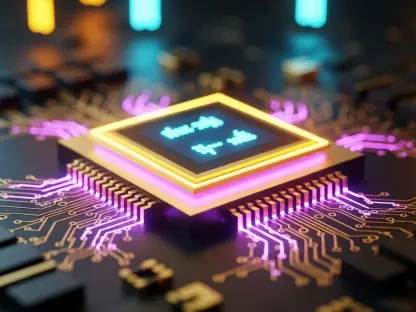

The rapid evolution of localized artificial intelligence has fundamentally altered the standard expectations for desktop computing performance, pushing hardware manufacturers to integrate specialized silicon directly into consumer-grade processors. AMD has officially unveiled the Ryzen AI 400 Series and the Ryzen AI PRO 400 Series, signaling a transition toward a hardware landscape where high-performance computing is synonymous with on-device machine learning capabilities. By prioritizing the local execution of large language models, these chips reduce the dependency on external cloud servers, which often introduce latency and privacy concerns. This launch is specifically tailored for professionals in engineering who require immediate, high-bandwidth processing for complex simulations. The shift toward this architecture reflects a trend where the central processing unit is no longer a standalone workhorse but part of a heterogeneous environment. As enterprises seek to protect data while leveraging AI, internalizing these workloads has become a strategic necessity.
Architectural Innovations and NPU Performance
At the heart of this new silicon generation lies a dedicated neural processing unit designed to handle the mathematical heavy lifting required by modern neural networks. Delivering up to 50 TOPS of performance, this NPU allows the Ryzen AI 400 Series to claim the title of the first desktop processor lineup fully compatible with Microsoft Copilot+ PC experiences. This milestone is not merely a technical benchmark; it represents a fundamental change in how software interacts with hardware. Operating systems can now offload background tasks, such as real-time language translation or video enhancement, to the NPU, leaving the CPU and GPU free to focus on primary creative or analytical duties. Furthermore, the expansion of this technology into the mobile workstation segment enables manufacturers to build laptops that rival desktop power. These systems allow field engineers and on-site architects to run heavy AI-driven applications without the traditional trade-offs in battery life or thermal efficiency that once hindered portable workstations.
Market Dynamics and Strategic Considerations
While technological advancements solidified the reputation of AMD among retail investors, market analysts maintained a cautious stance regarding the broader semiconductor landscape. Although the company positioned itself as a leader in visualization and AI acceleration, some experts observed that alternative stocks offered more competitive risk-to-reward ratios during this period of economic recalibration. These evaluations considered the influence of trade tariffs and the movement toward onshoring manufacturing, which added layers of complexity to global supply chains. For organizations planning infrastructure upgrades, the decision to adopt the Ryzen AI 400 Series required a balanced assessment of immediate performance gains against market volatility. Decision-makers focused on the integration of these processors within software ecosystems to maximize the return on investment. Professionals prioritized the security benefits of local AI execution while remaining vigilant about the shifting costs of silicon procurement in a highly competitive industry.