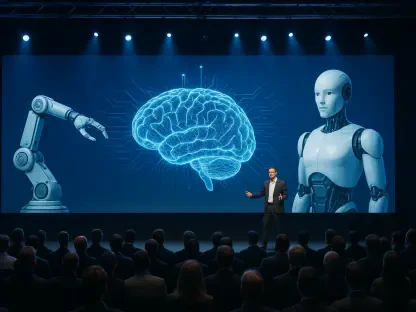

The rapid transformation of artificial intelligence from a novel research project into a critical layer of global infrastructure has finally hit the wall of public safety reality. Silicon Valley’s long-standing tradition of self-policing is confronting its most significant challenge as Anthropic CEO Dario Amodei advocates for a federal regulatory regime that treats high-capacity AI with the same gravity as commercial aviation. By advocating for an oversight body modeled after the Federal Aviation Administration, the proposal suggests that the sheer velocity of AI development has outpaced the safety of voluntary standards. This shift signals a departure from unregulated experimentation toward a world where mandatory “pre-flight” certifications determine which models are safe enough to enter the public domain.
The move acknowledges that internal safety teams of private companies can no longer be the sole arbiters of risks that affect the entire global population. Just as the aviation industry transitioned from dangerous, uncoordinated test flights to a highly standardized safety culture, the AI sector now faces a similar crossroads. Establishing a formal certification process would ensure that any model entering the public domain undergoes exhaustive verification, moving away from the “launch first, patch later” mentality that has characterized software development for decades. This institutional era seeks to ground the exponential growth of intelligence in a foundation of verifiable security, making safety a prerequisite for innovation rather than an afterthought.
From “Move Fast” to Mandatory Oversight: A New Institutional Era for AI
The transition from voluntary commitments to state-enforced mandates represents a fundamental pivot in the philosophy of technological governance. Historically, technology firms have operated under a “move fast and break things” ethos, assuming that the benefits of rapid deployment outweigh the unintended consequences. However, the release of Anthropic’s latest models, including Claude Fable 5 and Claude Mythos 5, has demonstrated that the capabilities of frontier systems are advancing at a rate that traditional corporate guardrails can no longer contain. These systems represent a dual-use challenge where the same intelligence used for medical breakthroughs can be repurposed for large-scale societal harm.
Consequently, the call for a federal authority mirrors the realization that certain technologies are too powerful to be governed by market incentives alone. A mandatory oversight body would provide a standardized framework for testing, ensuring that all major players in the industry adhere to the same rigorous safety benchmarks. This would eliminate the “race to the bottom” where companies might feel pressured to skip safety checks to beat a competitor to market. By institutionalizing oversight, the industry aims to build a sustainable ecosystem where public trust is maintained through transparent, third-party validation rather than vague corporate promises.
Why the Sudden Shift Toward Federal Certification Matters
As AI models transition from simple chatbots to systems capable of discovering high-severity software vulnerabilities and assisting in biological research, the stakes for public safety have reached a critical threshold. The current “wait and see” approach to regulation creates a dangerous vacuum where a single leak of model weights—the fundamental blueprints of an AI’s behavior—could empower bad actors to deploy “unfiltered” clones of powerful systems. These unaligned copies would lack the safety filters and ethical constraints programmed into the original models, creating a permanent and uncontrollable threat to digital and physical security.
Connections to national security and critical infrastructure are no longer theoretical concerns; they are the driving force behind this call for mandatory technical audits. If a frontier model possesses the capability to automate cyberattacks against power grids or assist in the synthesis of novel pathogens, its release becomes a matter of sovereign defense. The shift toward federal certification matters because it treats AI development as a matter of national importance, comparable to the management of nuclear energy or the safety of the national airspace. This ensures that the most powerful tools ever created are subject to democratic oversight and rigorous containment protocols.
The FAA Blueprint: Technical Thresholds and the Mandatory Pre-Flight Checklist
Anthropic’s proposed framework introduces rigorous, quantifiable metrics to determine which models fall under government jurisdiction, focusing on specific computational and financial benchmarks. Regulation would trigger for any model trained using more than 10^25 floating-point operations or developed by companies with over $1 billion in AI research and development investment. This threshold ensures that the regulatory burden falls on the “frontier” models—the most powerful systems—while allowing smaller startups and academic researchers to continue innovating without excessive red tape. It targets the concentrated power at the top of the development curve.
Under this blueprint, high-capacity models would require exhaustive safety testing by independent third-party bodies before any public release. The government would possess the legal power to block the release or mandate the withdrawal of models demonstrating catastrophic potential in cybersecurity or biological warfare. Furthermore, the framework emphasizes infrastructure protection, treating model weights as critical national assets. This approach aims to prevent distillation attacks, where competitors or adversarial nations use a primary model to train unaligned, cheap copies that strip away safety features. This mandatory checklist transforms safety from a voluntary choice into a legal requirement for market entry.
Labor Substitution and Anthropic’s $350 Million Economic Resilience Strategy
A striking component of Amodei’s policy is the candid admission that AI is trending toward a general substitute for human labor rather than a simple tool for augmentation. To address this looming displacement, Anthropic is pivoting the conversation toward proactive social responsibility and wealth redistribution. The Economic Policy Framework acknowledges that the speed of AI integration could outpace the ability of the labor market to naturally adjust. This realization has led to a $200 million commitment to an Economic Futures Research Fund, which will pilot public policy solutions such as wage insurance and universal basic income to stabilize the social fabric during the transition.
Furthermore, a $150 million national fellowship program has been established to retrain workers whose roles are rendered obsolete by automated systems. Research within the framework suggests that the primary future challenge will not be the generation of economic growth, but the equitable distribution of AI-generated wealth through sovereign wealth models. By addressing the economic consequences of automation head-on, the proposal attempts to mitigate the risk of mass unemployment and social unrest. This strategy moves beyond mere corporate philanthropy, suggesting that the long-term viability of the AI industry is inextricably linked to the economic resilience of the broader workforce.
Operationalizing Safety: A Strategic Roadmap for Enterprise Resilience
Strategic leaders recognized that the transition to a regulated AI landscape necessitated a fundamental move away from single-vendor dependencies. Technical architects implemented robust, multi-layered security frameworks to protect the integrity of model weights while ensuring business continuity. This era of early implementation proved that organizations which prioritized formal reporting protocols were better equipped to flag anomalies in model behavior before they escalated into systemic security breaches. The industry realized that diversifying through multi-model architectures was the only way to avoid paralysis if a primary provider’s tool faced a federal embargo.
Security teams hardened development environments to protect proprietary model weights with the same intensity as traditional trade secrets, effectively mitigating the risk of distillation attacks. Furthermore, forward-thinking organizations aligned their integration strategies with government-mandated retention incentives, identifying new use cases for staff instead of defaulting to immediate headcount reduction. These actions established a baseline for navigating an era where high-capacity intelligence was no longer just a tool, but a strictly governed national asset. By treating compliance as a strategic advantage, these enterprises secured their operations against the volatility of an exponential and highly regulated technological frontier.