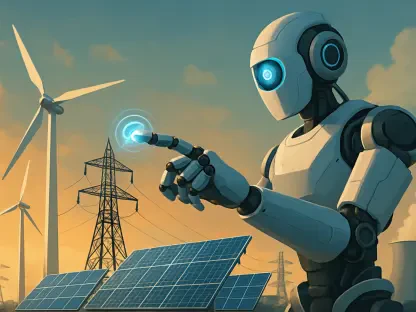

The current artificial intelligence landscape is being shaped by a tidal wave of investment, with trillions of dollars pouring into the development and scaling of Large Language Models, creating an atmosphere of unprecedented technological optimism. This fervent pursuit of language-based AI, however, may represent a monumental misdirection of resources, potentially inflating a speculative bubble while simultaneously overlooking a more promising and fundamentally impactful frontier. A growing contingent of analysts posits that the industry’s immense financial and computational power is being channeled into what are ultimately sophisticated but limited systems. The true path to meaningful breakthroughs, according to this perspective, lies not in achieving a more eloquent mastery of language, but in conquering the complex and unpredictable challenges of the physical world through the development of physically embodied intelligence. This dissenting view challenges the very foundation of the current AI boom, suggesting a necessary pivot toward robotics and real-world interaction as the genuine next chapter in artificial intelligence.
The High Stakes of a Speculative Frenzy
There are mounting concerns that the current AI market exhibits classic signs of a historical tech bubble, where massive capital expenditure on infrastructure significantly outpaces the creation of sustainable business models and tangible market demand. The astronomical trillion-dollar valuations of major AI corporations, coupled with unprecedented spending on specialized data centers and GPU clusters, are increasingly viewed as indicators of speculative excess rather than sound investments in lasting value. This raises a critical question about the future: will this colossal deployment of capital generate proportional returns, or is the industry heading toward a glut of overcapacity, where immensely expensive and powerful infrastructure sits idle? Furthermore, this infrastructure buildout carries significant structural risks that are often understated in the prevailing narrative. The enormous and ever-growing energy requirements for training and operating these models present a severe challenge, undermining profitability with high operational costs and posing a pressing environmental concern that questions the long-term sustainability of the current approach.
Complementing this economic critique is a fundamental re-conceptualization of what today’s Large Language Models truly represent. The core thesis reframes these celebrated systems not as nascent forms of genuine intelligence or steps toward Artificial General Intelligence (AGI), but as highly sophisticated human-computer interfaces. While these models demonstrate impressive capabilities in generating human-like text, their function is rooted in advanced pattern matching and statistical prediction derived from their vast training data. They excel at processing symbols and optimizing for plausibility, but they do so without any genuine comprehension of the meaning behind those symbols. This critical distinction implies that LLMs inherently lack true creativity, understanding, and the ability to innovate or reason beyond the parameters of the data they were fed. This perspective urges a significant recalibration of expectations, positioning LLMs as powerful tools for enhancing human-computer interaction and automating specific linguistic tasks, rather than as pathways to conscious or sentient machines that can solve novel, real-world problems.
Beyond Language and Into the Real World
In stark contrast to the skepticism surrounding language-only AI, a much stronger sense of optimism is directed toward the future of embodied artificial intelligence. This field is centered on creating systems that can perceive, move, and physically act within complex, real-world environments. The central argument is that genuine progress in AI will emerge not from incrementally enlarging language models but from solving the messy and unpredictable challenges of physical interaction. To illustrate this point, a key analytical framework distinguishes between “well-defined” and “not-well-defined” problems. Well-defined problems, which feature clear parameters and predictable inputs, are where traditional computers and automation excel. However, the most significant challenges in the physical world are not well-defined; they involve navigating irregular objects, adapting to constantly changing conditions, and applying judgment rather than pure calculation. The quintessential example is folding laundry: a task that is simple for humans but monumentally difficult for machines due to the infinite variations in fabric, shape, size, and condition of each item. It is in solving such problems that embodied AI will demonstrate a fundamentally different and more advanced form of intelligence.
Building directly on this thesis, humanoid robots are identified as a particularly promising application of embodied intelligence. The logic behind this focus is deeply pragmatic: our environments—from homes and offices to factories and public spaces—have been meticulously designed for human-shaped bodies with specific physical capabilities. By developing humanoid robots, we can create machines that can navigate and operate within these existing spaces without requiring a costly and disruptive wholesale redesign of our infrastructure. This approach unlocks a vast market for practical applications, with household automation frequently cited as a prime example. Tasks like cleaning, organizing, cooking, and general maintenance represent a massive economic opportunity that current language-based AI systems are completely unequipped to address. These activities are inherently physical and fall squarely into the category of not-well-defined problems, requiring the kind of real-world adaptability that only embodied intelligence can provide, making them the true test of progress.
Navigating the Path to Practical AI
Ultimately, the overarching trend that this analysis promotes is a significant shift towards measurable outcomes and pragmatic applications over speculative hype and ambitious marketing narratives. This perspective advocates for grounding all AI discussions in concrete capabilities and demonstrable results rather than anthropomorphic projections about machine consciousness or inflated stock valuations that are detached from profitability. For businesses, this translates into a clear recommendation: focus on the targeted deployment of AI for specific use cases with clearly defined return on investment (ROI) metrics. This means favoring narrow AI tools designed to solve well-understood problems over investing in broad, vague “AI transformation” initiatives that are often driven by a fear of missing out on the next big technological wave. Such a strategic approach ensures that investments are tied to tangible improvements in efficiency, productivity, or service quality, rather than being gambled on unproven, large-scale platforms whose long-term value remains uncertain and speculative.
This critical examination of the industry’s trajectory culminated in a call for a more nuanced and balanced view of artificial intelligence. It required acknowledging the substantial value that current AI technologies delivered in specific applications while simultaneously recognizing their profound limitations and remaining realistic about the long and arduous path toward human-level general intelligence. The platform’s consolidated message was directed at all stakeholders in the AI ecosystem. It encouraged technologists to pivot their development efforts toward the complex challenges of embodied systems and practical robotics. It advised investors to apply greater scrutiny to sky-high valuations and unproven business models. Finally, it guided business leaders to adopt a more strategic, case-by-case approach to AI implementation. This more critical and evidence-based discourse helped to separate genuine technological signals from the overwhelming noise of industry hyperbole.