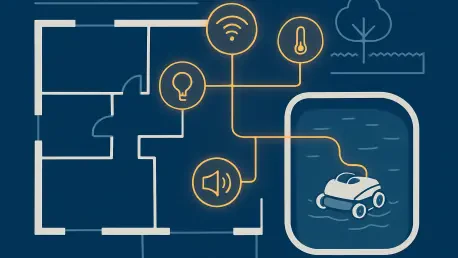

The long-promised convenience of the fully automated home has traditionally stopped abruptly at the back door, leaving outdoor spaces as a lingering reminder of manual labor in an otherwise intelligent living environment. For over a decade, while thermostats learned our habits and security systems predicted our needs, the backyard remained a disconnected, analogue domain requiring constant, hands-on attention. This fundamental gap created a point of friction, undermining the core promise of seamless modern living. Now, a significant evolution is underway as smart home technology breaks through its physical walls. The “autonomous backyard” is emerging as a new, integrated layer of home infrastructure, where sophisticated robotics and AI-driven systems for pools, landscaping, and water management operate intelligently and without human intervention. This transformation is not merely about adding convenience; it is about redefining home infrastructure, enhancing long-term property value, and setting a new standard for what constitutes a fully connected property.
The Technological Leap from Disconnected Tools to Integrated Systems
Bridging the Indoor-Outdoor Divide
For years, the smart home revolution was largely confined within the home’s interior, creating an ecosystem where responsive lighting and intelligent climate control became commonplace. In stark contrast, the backyard remained an exception, a space where maintenance, particularly for pools, relied on manual labor or semi-automated tools that still demanded constant user oversight. This created a fundamental disconnect, a flaw in the vision of a seamlessly intelligent lifestyle. The issue was not a failure of available devices but rather a systemic failure of integration. Outdoor systems operated reactively and in isolation, existing outside the predictive, systematic logic that governed the indoor smart home. This separation meant that while the interior of the home ran with quiet efficiency, the exterior demanded episodic and often burdensome chores, breaking the illusion of a truly automated living experience and treating the yard as an appendage rather than an integral part of the property.
The trend now points toward the dissolution of this artificial boundary, as AI-driven platforms and advanced robotics bring the backyard into the same sophisticated operational framework as the rest of the home. This shift reimagines outdoor upkeep, especially complex tasks like pool care, from a recurring, manual chore into a continuous and predictable “service layer” that runs quietly in the background. Innovators in the field are at the forefront of this movement, framing pool maintenance not as a standalone task but as an integral component of a unified home infrastructure. By doing so, they ensure the backyard functions as a truly integrated part of the property’s intelligent ecosystem. This approach finally allows pools and other backyard systems to become active, intelligent participants within the home’s network, achieving parity with their indoor counterparts and fulfilling the promise of a holistic, automated living environment where every part of the property works in concert.
Intelligence Over Mechanics
A pivotal shift is occurring in how outdoor maintenance technology is evaluated, moving beyond simple mechanical specifications to a focus on system-level performance. At an infrastructure level, operational efficiency and unwavering reliability are paramount. Consequently, a modern robotic pool cleaner is no longer judged solely by traditional metrics like suction power or battery runtime. Instead, its true value lies in its ability to function as a dependable, fully autonomous maintenance system that performs its duties consistently over long periods. The critical technological enabler for this transformation is advanced intelligent mapping. Unlike older devices that merely reacted to obstacles in a haphazard manner, new systems utilize AI-driven navigation to build a comprehensive, three-dimensional understanding of the pool’s unique spatial layout. This allows the robot to execute a systematic and highly efficient cleaning strategy across all surfaces—floor, walls, and waterline—with minimal redundancy or missed spots, ensuring a thorough clean every time.
This heightened level of predictability is essential for any piece of hardware to be considered “infrastructure-grade,” as its performance must remain stable and consistent without requiring user adjustments. The AquaSense 2 Pro serves as a compelling case study, demonstrating how this operational efficiency delivers tangible, superior outcomes. Its remarkable capacity for up to 11 hours of continuous surface-level cleaning allows it to autonomously manage floating debris like leaves and pollen throughout the day, maintaining pristine water clarity without any need for manual skimming. This exceptional endurance, powered by advanced lithium-ion battery systems, enables the technology to operate so effectively that it “fades into the background.” This seamless integration into the home’s daily rhythm, where a complex task is handled without any conscious thought from the homeowner, is the definitive hallmark of mature and successful infrastructure, transforming a high-maintenance feature into a self-sustaining asset.
The New Standard for Home Living Autonomy and Asset Protection
Achieving True Install-and-Forget Autonomy
The ultimate objective of this technological movement is to achieve true, “install-and-forget” autonomy by systematically identifying and eliminating every point of necessary human intervention. In the realm of pool systems, the final and most persistent friction point has traditionally been filter maintenance—the manual, often unpleasant task of removing, rinsing, and clearing debris from the robot’s collection basket. The introduction of the AquaSense X smart robotic pool cleaner, paired with its innovative AstroRinse automatic station, presents a landmark solution to this enduring problem. This powerful combination creates a “zero-contact ecosystem” where the entire post-cleaning maintenance cycle is fully automated. After completing a cleaning session, the robot autonomously navigates back to its station and docks. The station then takes over, automatically rinsing the filters and clearing the collected debris without the homeowner ever needing to touch or even open the device. This capability represents a monumental leap forward in home automation.
This breakthrough elevates the technology to a level of maturity and self-sufficiency previously reserved for essential indoor systems like HVAC units or home networking equipment, which are expected to function flawlessly with minimal user interaction. Once deployed, the system operates as a persistent, background function of the home, running on a pre-set schedule or on-demand without any further input. This fundamentally transforms pool care from an active, recurring chore that demands time and attention into a seamlessly embedded service that is both out of sight and out of mind. The ability to completely offload this final maintenance step marks the culmination of the push toward full autonomy, allowing homeowners to enjoy the benefits of a pristine pool without any of the associated labor, truly fulfilling the promise of a hands-free, automated lifestyle.
Enhancing Property Value and Sustainability
Beyond sheer convenience, the autonomous backyard is now framed as a crucial component of modern property stewardship and long-term asset management. As of 2026, any technology aspiring to be considered smart infrastructure must incorporate principles of sustainability and asset protection. This involves not only cleaning a pool but also actively protecting it as a high-value feature of the home. Technologies such as high-capacity filtration systems, like the iSkim Ultra’s 9L debris basket, contribute directly to this goal. By accommodating a larger volume of debris, these systems reduce the frequency of maintenance cycles in demanding environments, such as areas with heavy foliage, and simultaneously protect the robot’s internal components from overload and premature wear. This proactive approach to maintenance ensures the longevity and optimal performance of both the robotic system and the pool itself.
The cumulative effect of consistent, automated maintenance is a more resilient and valuable property asset. By maintaining superior water clarity and diligently controlling debris, these advanced systems reduce chemical imbalances, which can be costly to correct and damaging to pool surfaces over time. This proactive preservation mitigates the long-term material wear and tear on liners, plaster, and equipment, directly supporting and enhancing long-term property value. Furthermore, the widespread use of energy-efficient lithium-ion battery systems aligns with modern sustainability goals. These power sources minimize energy waste while maximizing operational uptime, ensuring the pool remains a pristine, “mirror-like retreat” around the clock without incurring excessive utility costs. This dual focus on preservation and efficiency establishes a new standard where smart technology not only simplifies life but also responsibly manages a home’s most significant investments.
Redefining Leisure The Fully Autonomous Home
The rise of the autonomous backyard was a reflection of a profound shift in homeowner priorities, which had moved toward reclaiming valuable time and offloading both mental and physical burdens to intelligent systems. By extending smart infrastructure outdoors, the final piece of the connected home puzzle had fallen into place, creating a truly holistic and automated living experience. Pools and other backyard systems were no longer exceptions to automation but had become active, intelligent participants within it. Through the powerful convergence of AI-powered mapping, advanced cordless power systems, and fully automated self-cleaning stations, the backyard finally achieved parity with the smart interior. This final step in the evolution of home infrastructure allowed a property to fully realize its intended purpose: to be a sanctuary of rest and relaxation, not a site of perpetual responsibility.