
The intricate web of global supply chains, long governed by rigid workflows and fixed logic, is confronting a new evolutionary pressure that promises to reshape its very foundation. In an environment where disruptions are the norm and data floods every node of the network, the traditional approach to planning—often a slow, reactive process—is proving inadequate for the demands of modern commerce. Organizations are discovering that their ability to make rapid, data-driven decisions is severely hampered by systems that cannot adapt or learn. Now, the emergence of a new class of context-aware artificial intelligence, known as agentic AI, signals a potential paradigm shift, moving beyond simple automation to create dynamic, intelligent partners for supply chain professionals. This technology aims to dismantle operational barriers, empowering teams to navigate complexity with unprecedented speed and confidence.
The Dawn of Intelligent Automation
From Rigid Rules to Dynamic Decisions
For decades, supply chain management has been dictated by systems built on static, “if-then” rules that struggle to contend with the sheer volume and velocity of modern data. These legacy platforms often force planners into cumbersome, predefined workflows, making it difficult to respond nimbly to unforeseen events like sudden demand spikes or logistical bottlenecks. The introduction of agentic AI directly challenges this outdated model by creating a more fluid and responsive planning environment. One recent advancement in this area comes from John Galt Solutions, whose Atlas Planning Platform now incorporates this next-generation AI. Instead of merely flagging exceptions, the system functions as an intelligent agent, capable of independently analyzing problems, diagnosing root causes, and proposing adaptive solutions. This transition from a rule-based to a goal-oriented system enables supply chain teams to break free from operational constraints, allowing them to focus on strategic outcomes rather than manual firefighting.
The Cognitive Engine Driving Insights
At the heart of this technological evolution is a cognitive decision-making layer that acts as the central intelligence of the planning platform. This “brain,” which the Atlas platform calls Galt Intelligence, is designed to synthesize vast and disparate data sources—from sales forecasts and inventory levels to supplier lead times and market trends. By processing this information in real time, the system can accelerate the entire planning cycle, delivering insights that are not only fast but also explainable. This cognitive engine empowers human operators by providing them with a clear rationale behind every recommendation, ensuring they remain in full control of the decision-making process. The potential business impact is significant, with industry analysts projecting that mature adoption of agentic AI could generate a 5–10% revenue uplift through improved availability and responsiveness, alongside cost savings of 30–50% derived from optimized inventory, logistics, and resource allocation in advanced industries.
A Framework for Practical Implementation
Harnessing a Composite AI Framework
The power of agentic AI lies not in a single algorithm but in a sophisticated composite framework that blends multiple advanced technologies. This approach integrates machine learning for predictive accuracy, anomaly detection to identify unexpected deviations, causal analysis to understand the “why” behind disruptions, and generative AI to formulate creative and context-aware solutions. This multilayered foundation provides planners with a powerful tool that encapsulates decades of embedded supply chain expertise, making sophisticated analytics accessible without requiring a data science background. A primary application of this framework is the delivery of prescriptive recommendations. When a forecast changes or a supply imbalance occurs, the system does not just raise an alert. It proactively writes and executes its own analytical queries to investigate the issue, explores various resolution scenarios, and then generates context-rich recommendations that align with overarching business goals and even account for individual planner preferences learned over time.
Prioritizing Explainability and Governance
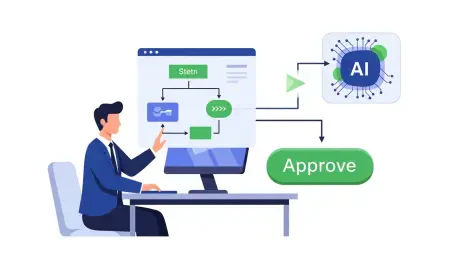
A critical barrier to AI adoption in high-stakes environments like supply chain planning has always been the “black box” problem, where systems provide answers without explaining their reasoning. The latest agentic AI models address this head-on by prioritizing explainability and human-in-the-loop governance. Every recommendation is presented with transparent logic, allowing users to understand the data, assumptions, and context that led to the suggestion. This clarity builds trust and empowers teams to make more informed decisions. As noted by Zac Nemitz, Director of Global Product Strategy at John Galt Solutions, the focus is on making AI practical by delivering tangible, explainable benefits. The framework is designed to ensure that human experts can review, approve, or override the AI’s actions at any point, positioning the technology as a powerful amplifier of human skill rather than a replacement. This responsible approach sets a foundation for organizations to progressively scale their automation capabilities effectively and with full confidence.
A New Era of Strategic Partnership
The integration of agentic AI into supply chain platforms marks a significant step toward transforming planners from reactive problem-solvers into strategic decision-makers. By automating complex diagnostics and generating adaptive recommendations, the technology frees up valuable human capital to focus on higher-value activities like strategic sourcing, risk mitigation, and long-range network design. The emphasis on an explainable, human-in-the-loop framework ensures that this transition is not a leap of faith but a carefully managed evolution. Organizations that embrace this model find themselves better equipped to navigate volatility, optimize resources, and align their operations more closely with strategic business objectives, ultimately building more resilient and intelligent supply chains.