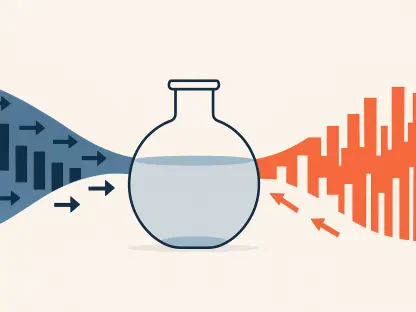

The sheer velocity of data production in contemporary laboratories and global observation networks has pushed human cognitive capacity to its absolute limit, necessitating a new paradigm for discovery. The launch of the EOSC AIssistant on September 1, 2026, marks a critical strategic pivot toward integrating autonomous reasoning agents into Europe’s scientific infrastructure. This three-year initiative, operating under the Horizon Europe banner and coordinated by the TIB – Leibniz Information Centre for Science and Technology, assembles a consortium of twelve distinct partners across seven nations to redefine research interaction. The project aims to move beyond static digital repositories by creating an environment where artificial intelligence acts as a proactive participant. By embedding these sophisticated capabilities directly into the European Open Science Cloud, the project ensures that the next generation of researchers can leverage a shared, intelligent infrastructure designed specifically to maintain the rigorous standards of the European scientific community.
Shifting Toward Autonomous Research Collaboration
The fundamental innovation of this new system lies in its shift from basic conversational models to fully realized agentic autonomy. Conventional generative artificial intelligence often functions as a simple interface for summarizing text or answering queries based on historical data. In contrast, the agents developed within this framework are engineered to utilize specialized digital tools and navigate complex scientific workflows without constant human intervention. These systems are not merely passive responders; they are capable of high-level reasoning and decision-making processes that allow them to understand the intent behind a researcher’s inquiry. By interpreting high-level objectives, the AI can independently determine which datasets are required, which software tools must be invoked, and how to structure the resulting information for maximum utility. This evolution represents a departure from the tool-use phase of technology into a collaborative era where AI serves as an extension of the scientist’s own analytical capabilities.
Integrating Agents Within Federated Research Environments
Integrating these autonomous agents into a federated research environment presents unique technical challenges that the project is specifically designed to address. The European research landscape is characterized by a vast, decentralized collection of data repositories and computational resources, often operating under different protocols. The AIssistant functions as a connective tissue, capable of searching across these diverse silos to find relevant information that might otherwise remain hidden from traditional search engines. Because the system is built on an agentic architecture, it can interact with various APIs and data services as a registered member of the network, performing tasks such as data cleaning, format conversion, and initial analysis. This level of integration ensures that the technology is not an isolated application but a core component of the scientific ecosystem. By participating in the federation, the agents can provide a consistent experience for researchers, regardless of the specific discipline or geographic location of the underlying data.
Enhancing Knowledge Discovery and Workflow Orchestration
The management of digital science has become increasingly burdensome as the complexity of interdisciplinary studies grows, leading to a demand for advanced resource discovery. One of the primary objectives of the current consortium is to deploy the AIssistant to bridge the gaps between disparate scientific fields by synthesizing knowledge from vast and varied repositories. The system is engineered to identify hidden correlations between datasets that may have been collected for entirely different purposes. For instance, an environmental researcher looking for climate impact data might benefit from soil chemistry insights found in an agricultural database; the AI is trained to recognize these potential synergies and present them as coherent research pathways. This capability reduces the time spent on manual literature reviews and data hunting, allowing human experts to focus on interpreting results rather than navigating digital bureaucracy. The orchestration of these resources is handled through a sophisticated understanding of the scientific context.
Maintaining Transparency Through Human-Centered Logic
While commercial artificial intelligence often operates as a black box with little insight into its internal logic, the European approach prioritizes absolute transparency and reproducibility. The project is built on the philosophy that scientific conclusions must be auditable at every stage to maintain public trust and academic rigor. To achieve this, the AIssistant incorporates mechanisms that allow human researchers to inspect the reasoning behind every suggestion or action the system takes. If the AI identifies a specific dataset as relevant, it must also provide the logical justification and the provenance of that data. This human-centered design ensures that the scientist remains the ultimate decision-maker, while the machine handles the logistical and computational heavy lifting. By maintaining this clear line of accountability, the initiative avoids the pitfalls of hallucination or biased output that plague less controlled systems. This focus on verifiable logic is what distinguishes a research-grade assistant from a generic large language model.
Validating Scientific Impact and Future Scalability
The initial deployment of the system established a clear precedent for how digital sovereignty can be maintained while advancing the frontiers of science. Stakeholders recognized that the integration of autonomous agents into the European Open Science Cloud was not just a technical upgrade but a necessary evolution for the research community. To build on this momentum, institutions should now prioritize the training of researchers in AI-agent interaction, ensuring that the human element remains central to the discovery process. Future efforts must focus on expanding the library of specialized tools that these agents can access, allowing for even more complex cross-disciplinary collaborations. Policymakers and funding agencies are encouraged to support the development of open-source reasoning models that align with the transparency standards set by this initiative. By standardizing the way AI interact with FAIR digital objects, Europe took a decisive step toward a future where scientific breakthroughs are limited only by human imagination.