
The intricate web of connections defining everything from neural pathways to global supply chains has long posed a formidable challenge for artificial intelligence, with conventional models often failing to grasp the full complexity of these systems. Higher-Order Graph Networks represent a significant advancement in the field of artificial intelligence and graph representation learning. This review will explore the evolution from traditional graph neural networks to higher-order models, focusing on the key innovations of the Hodge-Laplacian Heterogeneous Graph Attention Network (HL-HGAT), its performance, and its transformative impact on various applications. The purpose of this review is to provide a thorough understanding of this new architecture, its current capabilities, and its potential for future development.
From Pairwise Connections to Complex Systems: The Rise of Higher-Order Networks
Conventional Graph Neural Networks (GNNs) have proven adept at modeling simple, pairwise relationships, effectively capturing direct links between two entities in a network. This capability has driven progress in areas like social network analysis and recommendation systems, where understanding one-to-one connections is paramount. However, this foundational strength is also their primary limitation. Real-world systems are rarely defined by such simple binaries; instead, they are characterized by multifaceted interactions involving groups of entities.
The need for more sophisticated models arises from this gap between a GNN’s pairwise perspective and the complex reality it seeks to model. Interactions within a biological cell, a financial market, or a neural circuit are not merely sums of individual links but emergent properties of group dynamics. Recognizing this, the field has moved toward developing architectures that can inherently comprehend and process these multi-entity relationships. This imperative set the stage for the emergence of higher-order networks like the Hodge-Laplacian Heterogeneous Graph Attention Network (HL-HGAT), which is designed from the ground up to interpret the complex systems that traditional GNNs cannot.
Dissecting the HL-HGAT Architecture
The advanced capabilities of the HL-HGAT model stem from a novel architecture that redefines how graph data is structured and processed. It moves beyond the flat, two-dimensional world of nodes and edges into a multi-level framework, powered by sophisticated mathematical operators and a design that accommodates temporal evolution. This section delves into the core technical components that enable the model to capture the true complexity of interconnected data.
Simplicial Complexes: A New Paradigm for Graph Representation
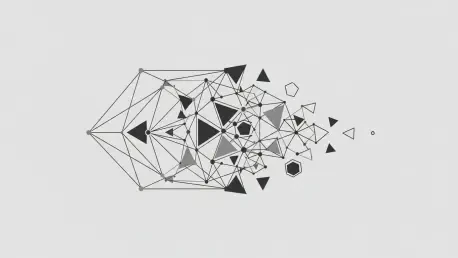
At the heart of HL-HGAT’s innovation is its reinterpretation of graph data through the lens of simplicial complexes. This mathematical framework provides a richer, more expressive way to represent network structures by going beyond simple nodes and edges. In this paradigm, nodes are treated as 0-simplices and edges as 1-simplices, which is standard for GNNs. The critical leap, however, is the model’s ability to represent and analyze higher-order groupings, such as triangles (2-simplices) or even larger cliques, as fundamental computational units.
By treating a graph as a simplicial complex, HL-HGAT can natively model group interactions that are invisible to traditional GNNs. A triangle, for instance, is no longer just three separate edges but a cohesive tripartite relationship. This allows the network to process information flowing not just between individual nodes but also through and between these higher-order structures. The result is a more holistic understanding of the data, where the network can analyze the interplay between individual components and the collective groups they form.
The Hodge-Laplacian Operator: The Mathematical Engine for Multi-Level Analysis
The engine driving this multi-level analysis is the Hodge-Laplacian (HL) operator. This powerful mathematical tool is the key to propagating signals and learning patterns across the different dimensions of a simplicial complex. Unlike traditional graph Laplacians, which are limited to capturing information flow along edges, the HL operator is designed to work across simplices of varying orders—from nodes to edges to triangles and beyond.
This operator provides a robust and principled foundation for modeling how information is shared and transformed within these complex, multi-level structures. It enables HL-HGAT to analyze not just how nodes influence each other directly but also how group dynamics (e.g., within a 2-simplex) affect individual components and vice versa. By moving beyond the constraints of pairwise information flow, the HL operator empowers the model to construct far more precise and sophisticated representations of the intricate systems found in real-world data.
Modeling Dynamic Graphs: Capturing Time-Varying Interactions
A significant advancement of the HL-HGAT model is its capacity to extend these higher-order topological representations into the temporal domain. Real-world networks are rarely static; their structures and interactions evolve over time. The model addresses this by integrating its core components with mechanisms designed to track these changes, enabling the analysis of dynamic graphs.
The synergy of efficient Hodge-Laplacian filtering, adaptive attention mechanisms, and heterogeneous signal decomposition allows the model to identify and analyze complex, time-varying motifs. This means HL-HGAT can detect not just the existence of a group interaction but also how that interaction strengthens, weakens, or changes its composition over time. This capability is invaluable for applications like neuroscience, where tracking evolving neural circuits is crucial, and finance, where market dynamics are in constant flux.
A Unified Framework for Diverse Machine Learning Tasks
One of the most compelling attributes of the HL-HGAT model is its versatility. Rather than being a specialized tool for a single problem, its architecture serves as a unified framework adaptable to a wide spectrum of machine learning tasks. The model’s inherent ability to learn rich, multi-level representations from complex graph data makes it a powerful foundation for solving problems across different domains without requiring significant structural modifications.
This adaptability has been demonstrated in tasks ranging from optimization and classification to regression and multimodal learning. Whether the goal is to find the most efficient route in a logistics network, classify an image based on its structural patterns, or predict a molecule’s properties, HL-HGAT’s core mechanisms remain the same. The model learns the relevant higher-order patterns from the data, providing a robust feature set that can be effectively utilized for the specific downstream task. This flexibility positions it as a general-purpose tool for tackling complex, structured data problems.
Demonstrated Efficacy Across Diverse Domains
The theoretical advancements of the HL-HGAT model are substantiated by its validated performance in real-world applications. By applying its unique architecture to challenges in various industries, the model has consistently demonstrated capabilities superior to those of conventional approaches. These concrete examples highlight its potential to drive tangible progress and solve previously intractable problems.
Logistics and Supply Chain Optimization
In the domain of logistics, HL-HGAT was applied to the classic Traveling Salesman Problem, a notorious optimization challenge. Traditional algorithms often struggle with the nuanced relationships between different locations in a delivery network. By providing a more sophisticated understanding of these location-based interdependencies, the model successfully planned shorter and more efficient delivery routes. This offers a clear path for logistics companies to achieve significant savings in operational costs, fuel consumption, and time.
Advancements in Computer Vision
The model’s success extends to computer vision, where it was tested on the CIFAR-10 image classification benchmark. By converting images into complex graph structures, HL-HGAT demonstrated an enhanced ability to capture fine-grained details and contextual relationships that other methods often miss. For example, it can better interpret the spatial arrangement of objects and textures by analyzing them as interconnected higher-order patterns. This deeper understanding of visual information led to performance that outperformed traditional GNN-based approaches.
Accelerating Chemistry and Drug Discovery
In chemistry and molecular analysis, HL-HGAT has shown superior accuracy in predicting the properties of molecules. The structure of a molecule is inherently a graph of atoms and bonds, but its properties are often determined by the interactions of small functional groups. The model’s ability to analyze these higher-order structures directly translates into more precise predictions of a compound’s efficacy, toxicity, or reactivity. This enhanced predictive power stands to significantly accelerate the drug discovery process by more effectively identifying and screening promising candidate compounds.
Neuroscience and Medical Diagnostics
Perhaps the most profound impact has been observed in neuroscience, where the model’s ability to analyze complex brain data has unlocked new insights. When applied to fMRI scans, HL-HGAT has accurately predicted individual intelligence and brain age. Critically, it also uncovered subtle neuropathological signatures often missed by conventional methods, such as identifying abnormal “tripartite synapses” in the brain networks of patients with depression. Furthermore, the model has proven capable of detecting early indicators of Alzheimer’s disease, like cortical thinning and disrupted neural connectivity, paving the way for more timely diagnosis and intervention.
Challenges and Current Limitations
Despite its groundbreaking capabilities, the broader adoption of higher-order graph networks like HL-HGAT faces several practical challenges. The primary hurdle is the increased computational complexity associated with modeling simplicial complexes. Representing and processing relationships beyond simple pairs of nodes demands significantly more memory and processing power, which can make scaling these models to massive datasets a considerable engineering feat.
Furthermore, implementing such sophisticated models effectively requires specialized expertise in both topology and machine learning, a combination that is not yet widespread in the industry. As the technology matures, there is an ongoing need for research to refine the scalability and interpretability of these networks. Making the “black box” of a higher-order model more transparent is crucial for its application in high-stakes fields like medicine, where understanding the reasoning behind a prediction is as important as the prediction itself.
The Future of Graph Representation Learning
The development of HL-HGAT marks a pivotal moment in the trajectory of graph representation learning, pointing toward a future where AI can comprehend complexity at a much deeper level. The next wave of breakthroughs will likely involve integrating these higher-order networks with other advanced AI techniques, such as large language models and reinforcement learning. This could enable systems that can reason about complex physical or social systems and interact with them intelligently.
In the long term, the impact of these models is poised to be transformative. In scientific discovery, they could help unravel the mysteries of the human brain or map the intricate interactions within ecosystems. For industrial automation, they could optimize global supply chains with unprecedented efficiency or design novel materials with desired properties from the molecular level up. Ultimately, these advanced networks may fundamentally enhance our ability to understand and engineer the complex systems that govern our world.
Conclusion: A Paradigm Shift in Understanding Complex Data
The introduction of the Hodge-Laplacian Heterogeneous Graph Attention Network represents a landmark achievement that fundamentally shifts the paradigm of graph-based learning. It moves the field beyond the limitations of simple pairwise connections, offering a holistic, multi-level framework for understanding complex data through the powerful mathematics of simplicial complexes and the Hodge-Laplacian operator. Its demonstrated success across logistics, computer vision, drug discovery, and neuroscience validates its potential as a transformative technology. While challenges related to computational complexity and interpretability remain, HL-HGAT stands as a powerful new tool for science and industry. It marks a significant evolutionary step for artificial intelligence, equipping researchers and engineers with the means to solve intricate problems and unlock a deeper understanding of the interconnected world.