
Laurent Giraid is a visionary technologist and researcher whose work at the intersection of neuroscience and artificial intelligence is reshaping how we understand the human brain. With a background rooted in the development of sophisticated machine learning models, he has dedicated his career to translating complex neurological data into actionable medical insights. By focusing on the brain as a dynamic electric organ rather than a static image, Giraid’s efforts have been central to the shift from restrictive clinical environments to scalable, at-home monitoring. This interview explores the transition of clinical-grade EEG technology into the domestic sphere, the creation of a massive “foundation model” of the brain, and how longitudinal sleep data can predict neurodegenerative diseases like Alzheimer’s years before the first physical symptoms appear.
Moving clinical-grade EEG from labs to the home environment changes data scalability. How do you maintain data integrity compared to facility-based tests, and what specific steps ensure patients use the lightweight headbands correctly during their normal routines?
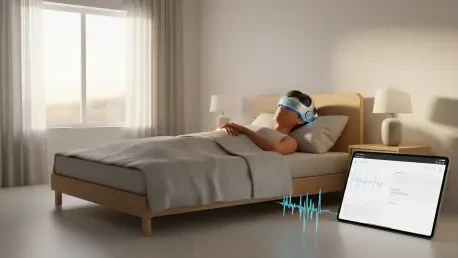
The shift from a sterile, high-pressure sleep lab to the comfort of a bedroom is a monumental leap for data quality, even if it seems counterintuitive at first. In a traditional facility, a patient is often “wired up” with dozens of sensors in an unfamiliar bed, which inherently distorts their natural sleep architecture. Our approach uses a lightweight, FDA 510(k)-cleared headband that allows users to move naturally and experience their normal routines, which is essential for capturing authentic neurological signals. To ensure data integrity, the hardware is designed to be virtually foolproof, utilizing high-fidelity sensors that maintain a consistent connection even as a person tosses and turns during the night. We bridge the gap between home and lab by collecting data over multiple sequential nights, which provides a far more robust and representative dataset than a single night in a clinic. This redundancy allows us to filter out the “noise” of daily life while capturing the high-quality, clinical-grade EEG signals necessary for rigorous pharmaceutical research.
Traditional brain assessments often rely on static imaging, yet the brain is a dynamic electric organ. How do machine learning algorithms translate raw sleep data into insights for drug development, and what metrics determine the success of creating a comprehensive foundation model of the brain?
We view the brain through the lens of synaptic plasticity, recognizing that it is a constantly evolving electric circuit rather than a fixed picture. Our machine learning algorithms are trained to parse through massive amounts of raw EEG data to identify structured “languages” of neural activity that occur with an order of magnitude more intensity during sleep. By characterizing the heterogeneity of disease progression, these algorithms can detect subtle shifts in how a drug affects the brain’s electrical state or how a pathology begins to disrupt sleep cycles. The success of our foundation model is measured by its ability to map these changes across thousands of individuals to discover novel subgroups of diseases that were previously invisible to static imaging. Ultimately, we are building a dataset that has never existed before, using dynamic insights to transform brain health from a reactive field into a predictive, data-driven discipline.
Sleep architecture changes often emerge years before clinical symptoms of Alzheimer’s appear. What specific features of rapid-eye-movement or slow-wave sleep are most predictive of cognitive decline, and how does longitudinal tracking improve the process of selecting patient cohorts for global clinical trials?
The most compelling predictive signals often hide within the nuances of slow-wave sleep and the structure of rapid-eye-movement (REM) cycles, where even microscopic deviations can signal the early stages of neurodegeneration. We analyze features like the density of slow-wave oscillations and the frequency of micro-awakenings throughout the night, which often serve as the “canary in the coal mine” for conditions like Alzheimer’s or Parkinson’s. By tracking these metrics longitudinally, we can see the slow erosion of sleep quality long before a patient experiences memory loss or motor issues, allowing us to move the window of detection significantly earlier. This is incredibly powerful for global clinical trials because it allows us to select patient cohorts who are in the earliest, most treatable stages of a disease based on their specific neuro-biomarkers. Having participated in over 40 clinical trials worldwide, we’ve seen how this precision reduces the “noise” in trial data, ensuring that the right patients receive the right experimental therapies at the right time.
Precision medicine has revolutionized oncology, but neurology often relies on iterative treatments. How are neuro-biomarkers currently being used to personalize treatments for schizophrenia or major depressive disorder, and what are the trade-offs when monitoring brain function at scale compared to traditional facility-based testing?
In oncology, we use genomic sequencing to target specific mutations, and we are finally bringing that same level of rigor to neuropsychiatric disorders like schizophrenia and major depressive disorder. Instead of the “trial and error” approach that has dominated psychiatry for decades, we use neuro-biomarkers to monitor how a patient’s brain function responds in real-time to a specific intervention. This allows for a more personalized adjustment of treatment plans, as we can objectively see if a medication is normalizing neural activity or improving sleep architecture. The primary trade-off when moving to scale is the loss of the direct physical supervision found in a lab, but we compensate for this by reaching a vastly larger and more diverse population. Monitoring brain function at scale allows us to identify patterns across thousands of patients that would be impossible to see in a small, facility-based study, effectively turning every bedroom into a data-gathering node for precision medicine.
Scaling at-home testing to over 100,000 patients annually requires significant infrastructure. If a patient is screened for sleep apnea today, what is the protocol for utilizing that data as a prognostic biomarker for future diseases, and how do these long-term records shift the window for medical intervention?
The infrastructure required to support 100,000 patients a year is substantial, but it creates an unprecedented longitudinal record of human brain health. When a patient is screened for sleep apnea, we aren’t just looking for breathing interruptions; we are capturing a baseline of their neurological health that can be referenced for years to come. If that same patient begins to show signs of a neurodegenerative disorder five or ten years down the line, we can look back at their earlier data to find the exact moment their brain function began to shift. This historical context turns a routine diagnostic test into a powerful prognostic tool, shifting the window for medical intervention from the point of symptomatic crisis to years earlier. With the $97 million in funding we recently secured, we are accelerating this expansion to ensure that this longitudinal “safety net” is available to as many people as possible, fundamentally changing the timeline of brain disease management.
What is your forecast for brain health?
I believe we are entering an era where brain health will be monitored as routinely and longitudinally as heart health is today. Within the next decade, the “foundation model” of the brain will allow us to move away from late-stage diagnosis and toward a proactive model where we can intervene before symptoms even begin. We will see a shift where neurological and psychiatric care is no longer based on subjective observations but on precise, electrical biomarkers captured in the home. This will unlock a new generation of treatments for millions of people, turning the once-mysterious organ of the brain into a clearly mapped territory that we can protect and preserve throughout a person’s entire life.