
The familiar blinking cursor of a chat interface, once the vanguard of the digital revolution, is quickly becoming a relic as software evolves from a conversational partner into an autonomous agent capable of finishing tasks without human intervention. This fundamental transition marks the end of the “generative” era, where humans were required to act as the bridge between an AI’s suggestion and the final execution of a task. Today, the focus has shifted toward agentic systems that do not just provide instructions but actually navigate the digital and physical infrastructure of the modern economy.
This shift represents a significant departure from the early days of large language models, which primarily served as sophisticated sounding boards or research assistants. The emergence of agentic AI is redefining the economic value of software by allowing it to transition from a productivity tool to an active participant in the workforce. As these systems gain the ability to manage end-to-end workflows, the distinction between “software” and “labor” continues to blur, creating a new paradigm for how work is completed in a hyper-connected world.
The End of the Chatbox: Why the Future of AI Is Active Execution
The era of artificial intelligence serving as a mere sounding board is coming to an abrupt end as systems move from passive generation to autonomous action. While early large language models were celebrated for their ability to summarize and suggest, the current shift toward agentic AI represents a fundamental change in software behavior. Instead of providing a list of steps for a human to follow, these agents are now capable of navigating interfaces, managing workflows, and interacting with the digital world to complete tasks from start to finish.
This evolution is driven by the demand for efficiency that goes beyond simple text generation. In the past, a user might have asked an AI to draft an email or plan a trip, but the human still had to log into the email client or the booking site to finalize the details. Modern agents remove these friction points by assuming control of the mouse and keyboard, effectively acting as digital surrogates. This transition signifies that the true power of intelligence lies not in the words it produces, but in the outcomes it secures.
The Acceleration of Autonomy: Analyzing the Rapid Surge in Corporate AI Adoption
The transition to agentic systems is not a distant theoretical possibility but a present-day business reality that is reshaping industry standards. Recent data from a study conducted late last year by the MIT Sloan School of Management and Boston Consulting Group indicates that 35 percent of businesses have already integrated AI agents into their operations, with nearly half of all remaining firms preparing for implementation. This massive shift is driven by the realization that while talking AI improves individual output, doing AI fundamentally transforms the economic value of the entire organization.
Corporations are increasingly viewing these agents as a way to scale operations without a proportional increase in human overhead. By deploying agents that can autonomously handle customer service tickets, manage complex supply chain logistics, or update internal databases, firms are turning software into a tireless worker. This trend suggests that the competitive advantage in the coming years will not belong to those who use AI to think faster, but to those who use it to execute more reliably across a vast array of digital environments.
The Architecture of Action: Foundation Models, Specialized Wrappers, and Data Bottlenecks
To understand how AI moves beyond text, one must look at the specific technical wrappers and feedback loops that transform a static model into a dynamic agent. Current agents use core intelligence like GPT or Claude as a reasoning engine, which is then equipped with tools such as calculators, web browsers, and long-term memory. This “brain plus tools” architecture allows the AI to recognize when it needs to look up a fact or perform a calculation, rather than relying on the probabilistic and often flawed predictions of a base model.
However, a significant hurdle remains in the form of a data gap. Unlike generative AI, which learns from the broad internet, agentic AI requires actionable data, such as granular logs of mouse movements and button clicks, which are notoriously scarce. Consequently, developers are turning to trial-and-error learning in live environments to teach agents how to recover from errors and navigate complex, ever-changing interfaces. This approach mimics human learning, where success is achieved through repeated interaction and refinement rather than just passive observation of static text.
Software development has become the gold standard for this architecture because code provides a clear, objective metric for success. An agent can write a script, attempt to run it, identify the specific errors generated by the system, and iterate until the task is complete. This self-verifying loop represents the most robust use case for autonomy today, proving that when a system can check its own work against a set of logical parameters, it can achieve a level of reliability that surpasses traditional generative outputs.
Expert Perspectives on the Hazards of Automation: Addressing ‘Vibe Coding’ and Human De-skilling
As the technology advances, experts like MIT’s Phillip Isola caution against a future where total automation leads to a dangerous erosion of human expertise and oversight. One major concern is the trap of vibe coding, a growing trend where users rely on AI agents to generate complex systems based on a general feeling of correctness without performing rigorous verification. This can lead to hidden bugs and security vulnerabilities that remain undetected until they cause a systemic failure, as the person overseeing the process may no longer understand the underlying logic.
There is also a profound concern regarding professional de-skilling. As humans delegate foundational tasks—ranging from mathematics to professional writing—to agents, they risk losing the ability to perform these tasks manually when the AI inevitably encounters a scenario it cannot handle. This creates a high-stakes boundary where the consensus among researchers suggests that while agents can handle routine workflows, high-stakes fields like medicine and security must maintain AI as an informative assistant rather than a primary decision-maker to prevent catastrophic errors.
From Logic to Labor: A Strategic Framework for Deploying Agentic Systems
For organizations and individuals looking to bridge the gap between AI advice and AI action, a structured approach to implementation is essential for safety and efficiency. This process begins with tool-augmented reasoning, where foundation models are given access to limited, high-value tools such as specific database access or internal financial calculators. By narrowing the scope of what an agent can do initially, developers can ensure that the AI remains within a controlled environment while it learns to interact with proprietary data.
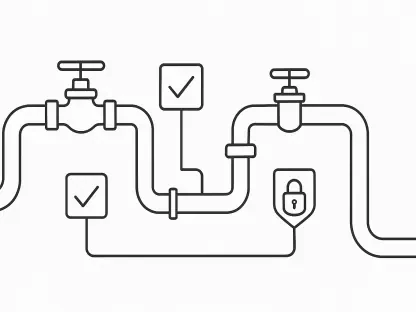
The next phase of deployment involves transitioning to multimodal inputs and established human-in-the-loop safeguards. By training agents on video, time-series data, and physical sensors, organizations can allow for a more nuanced understanding of complex environments. Furthermore, establishing checkpoint protocols ensures that an agent can perform the majority of a task but requires human authorization for final, high-risk actions like financial transactions. This balanced framework allows for the speed of automation without sacrificing the accountability required for professional operations.
The transition toward agentic AI ultimately required more than just better code; it demanded a transformation in how humans perceived their relationship with software. Those who successfully navigated this shift found that the most effective systems were those that balanced autonomous execution with rigorous human oversight. By the time these agents became standard in the workforce, the focus had already moved from teaching machines to speak toward ensuring they could be trusted to act responsibly in an increasingly automated world.