
The intricate web of modern business operations presents an unprecedented challenge for human capital management, where ensuring payroll accuracy, navigating regulatory compliance, and fostering employee engagement requires constant vigilance. In this complex environment, artificial intelligence is rapidly evolving from a peripheral tool for simple task automation into a central, proactive force that is fundamentally reshaping how organizations manage their workforce. Companies are now harnessing immense, proprietary datasets to fuel a new generation of AI-powered frameworks designed not just to follow commands but to anticipate needs, provide actionable insights, and act as a collaborative partner. This strategic pivot promises to democratize access to sophisticated technologies, empowering businesses of all sizes to optimize their most critical asset—their people—with an intelligence and efficiency previously unimaginable.
The Dawn of an AI-First Approach in HCM
Harnessing Data as the Engine for Innovation
The efficacy of any artificial intelligence system is inextricably linked to the quality and sheer scale of the data it is trained on, a principle that has become the cornerstone of modern AI strategy in workforce management. A profound competitive advantage emerges for entities that can draw upon vast and diverse datasets. For instance, an HCM provider serving nearly 800,000 clients and processing payroll for one out of every eleven private sector employees in the United States possesses a uniquely rich repository of information. This data, encompassing countless variations in industry, company size, and geographic location, serves as the essential fuel for developing highly sophisticated and nuanced AI models. By training algorithms on this extensive foundation, these systems can achieve a superior level of performance, delivering insights that are not only more accurate but also contextually relevant to the specific challenges a business faces, transforming raw data into a powerful strategic asset.
A primary outcome of this data-centric strategy is the democratization of enterprise-grade AI technologies, making powerful tools accessible to a much broader market. In the past, advanced analytics and intelligent automation were often exclusive to large corporations with the substantial financial and technical resources needed to build and maintain them. The current shift involves embedding these sophisticated capabilities directly into core HCM platforms, effectively leveling the playing field for small and mid-sized businesses. This approach allows smaller organizations to leverage the same high-caliber, data-driven insights that were once out of reach. By providing universal access to tools that can optimize scheduling, ensure compliance, and identify workforce trends, this model empowers all businesses to enhance operational efficiency and make more informed strategic decisions about their human capital.
Shifting from Reactive Tools to Proactive Teammates
The fundamental role of technology within human resources is undergoing a significant paradigm shift, moving away from a user-directed model toward a proactive, AI-powered framework. Traditionally, HCM software functioned as a reactive tool, executing specific commands initiated by a human user, such as generating a report or processing a payroll run. The emerging model reimagines AI as an integral and collaborative “teammate” that works alongside human professionals. This AI partner is designed to anticipate organizational needs, proactively identify potential issues before they escalate, and automate complex workflows with minimal human intervention. For example, it might independently flag a potential overtime compliance risk based on scheduling data or recommend process improvements by analyzing historical inefficiencies, thereby transforming the user experience from one of simple instruction to dynamic collaboration.
This evolution of AI as a proactive partner is designed to augment human capabilities rather than replace them, addressing common concerns about job displacement. By automating routine, transactional duties, these intelligent systems liberate HR professionals, managers, and service teams from time-consuming administrative burdens. This reallocation of effort allows them to dedicate their focus to higher-value, strategic initiatives that require uniquely human skills like critical thinking, emotional intelligence, and complex problem-solving. Freed from the minutiae of data entry and report generation, employees can concentrate on fostering stronger workplace culture, developing talent pipelines, and providing strategic counsel to business leaders. In this symbiotic relationship, AI manages the operational details, empowering the human workforce to drive meaningful organizational growth and innovation.
Groundbreaking AI-Driven Innovations
Automating Core Processes with Agentic AI
A significant leap forward in workforce management automation comes from the deployment of agentic AI, which is capable of understanding complex requests and executing multi-step tasks autonomously. A prime application of this technology is the automated processing of client payrolls submitted through unstructured formats like voice messages and emails. An agentic AI system can parse these requests, extract the relevant data, validate it against existing records, and execute the payroll with near-perfect accuracy. This capability dramatically accelerates resolution times for one of the most critical and time-sensitive business functions. By minimizing the potential for human error and ensuring employees are paid accurately and on time, this innovation not only enhances operational efficiency but also reinforces the foundational trust between an employer and its workforce, which is essential for morale and retention.
The broader strategic impact of implementing agentic AI extends far beyond mere speed and accuracy; it fundamentally redefines the role of human service teams. When teams are relieved of the repetitive, transactional duties associated with manual data entry and payroll processing, their capacity is freed for more impactful work. They can transition from a reactive support function, which primarily answers queries and fixes problems, to a proactive advisory role. This shift enables them to spend more time engaging with clients on a strategic level, offering expert guidance on complex HR challenges, helping businesses optimize their workforce strategies, and providing value-added consulting that fosters deeper, more resilient client relationships. This evolution transforms the service department from a cost center into a strategic partner that actively contributes to client success and satisfaction.
Unlocking Insights from Unstructured Data
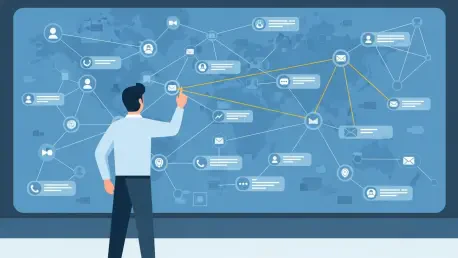
A persistent challenge for many organizations has been the wealth of valuable intelligence trapped within unstructured data sources such as phone call transcripts, customer emails, and internal chat logs. A patent-pending, AI-powered knowledge mesh system has been developed to address this issue by systematically transforming this chaotic information into actionable intelligence. This technology works by breaking down the traditional data silos that have long isolated information within specific departments or systems. It ingests, analyzes, and, most importantly, connects disparate pieces of information, organizing them into a unified, searchable network. This process creates a holistic and multi-dimensional view of business operations and client interactions, making previously inaccessible insights readily available for analysis and strategic decision-making.
The creation of this interconnected data network enables an unprecedented level of personalization and proactive service. With a complete and organized history of all client interactions at its disposal, an AI system can deliver highly relevant, data-driven insights that enhance the overall customer experience. For instance, the system can analyze patterns in past service calls to accurately anticipate a client’s future needs, allowing support teams to offer solutions before a problem is even articulated. It can also identify recurring themes or issues across the entire client base, signaling opportunities for systemic improvements in products or services. This ability to leverage the full spectrum of client data ensures that every interaction is informed and context-aware, leading to more effective decision-making and a stronger competitive edge in the market.
Empowering Teams with Generative AI Platforms
The application of generative AI is proving to be a transformative force in highly specialized and complex domains, particularly in the realm of employment law and regulatory compliance. HR experts and business owners face the daunting task of navigating thousands of intricate, ever-changing employment laws at the federal, state, and local levels. A new generative AI-powered compliance platform functions as an expert assistant in this area, helping users to interpret complex legal jargon, create compliant documents such as employee handbooks and policies, and remain continuously informed about critical regulatory updates. This tool significantly mitigates compliance risks, a major source of potential liability for businesses, while simultaneously empowering HR teams to act with greater confidence and precision, thereby saving immense resources previously spent on manual legal research and consultation.
To further enhance operational effectiveness across different departments, a unified sales and service platform has been introduced, leveraging a central generative AI agent to support diverse teams. For sales personnel, this AI provides real-time, tailored assistance during client interactions by generating customized sales scripts, suggesting relevant talking points, and offering effective strategies for handling objections based on the client’s specific profile and history. Concurrently, the same AI agent supports service teams by analyzing past client communications to anticipate future needs and provide proactive support solutions. This unified approach ensures a consistent and high-quality experience for clients while equipping employees in both sales and service roles with the intelligent tools needed to perform their jobs more efficiently and effectively, ultimately driving both revenue growth and client retention.
A New Era of Intelligent Workforce Collaboration
The strategic pivot to an AI-first approach has fundamentally reshaped the landscape of human capital management. The integration of intelligent technologies across core platforms was not merely an upgrade but a redefinition of the relationship between businesses and their workforce data. Companies that successfully leveraged vast proprietary datasets as a force multiplier developed and deployed advanced AI solutions that automated mission-critical tasks, delivered deeply personalized user experiences, and uncovered previously hidden business insights. This movement made powerful, data-driven workforce management tools accessible to organizations of all sizes, establishing a new industry benchmark for efficiency and strategic insight. The focus shifted from simply processing transactions to fostering an environment of intelligent collaboration between human expertise and machine intelligence, which has ultimately paved the way for a more agile, compliant, and people-centric future of work.