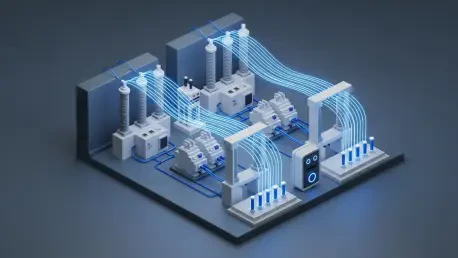

A massive power grid failure often begins with a single, unnoticed hairline fracture in a ceramic insulator or a slight overheating of a transformer coil deep within a remote substation. Traditionally, utility companies relied on manual inspections and periodic maintenance schedules that frequently missed these subtle indicators of impending disaster, leading to costly downtime and emergency repairs. However, the integration of artificial intelligence into the power sector has fundamentally altered this landscape by shifting the focus from reactive responses to proactive management. By processing astronomical volumes of data from smart meters and SCADA systems, AI models can now detect anomalies that are virtually invisible to the human eye. This technological leap ensures that maintenance crews are dispatched not when a calendar says so, but when the equipment actually requires attention, thereby optimizing resource allocation across vast geographical areas and improving grid stability.
Evolution: From Predictive Maintenance to Prescriptive Action
The shift toward predictive maintenance represents a sophisticated evolution in how utilities manage aging infrastructure while balancing the demands of modern energy consumption. Advanced machine learning algorithms now analyze historical performance data alongside real-time environmental factors such as humidity, temperature, and localized wind speeds to forecast the remaining useful life of critical assets. For instance, utilities like NextEra Energy have successfully deployed neural networks that identify the precise moment a wind turbine gearbox is likely to fail, allowing for replacement during low-wind periods. This precision prevents the catastrophic failures that previously resulted in months of lost generation and millions of dollars in repair costs. Furthermore, these systems provide a level of granularity that was previously impossible, distinguishing between routine wear and tear and genuine mechanical defects with high accuracy.
Beyond simple failure prediction, the current trend involves moving into prescriptive analytics, where AI not only identifies a problem but also recommends the most efficient solution. This approach utilizes digital twins, which are highly accurate virtual replicas of physical power plants and distribution networks, to simulate various repair scenarios before any physical work begins. Engineers can test how a specific intervention might affect the rest of the grid, ensuring that a fix in one area does not inadvertently cause a surge or instability in another. By leveraging these simulations, companies like Siemens Energy have reduced maintenance-related downtime by nearly thirty percent, showcasing the practical benefits of virtual modeling. This integration of real-world data with virtual testing environments allows for a more resilient power grid that can adapt to changing conditions in real time, effectively neutralizing risks.
Operational Excellence: Autonomous Monitoring and Future Readiness
Manual inspections of high-voltage transmission lines and remote solar farms were once considered some of the most dangerous and time-consuming tasks in the energy industry. Now, autonomous drones equipped with high-resolution thermal imaging and LiDAR sensors perform these duties with much greater speed and safety. These aerial vehicles use on-board AI to navigate complex terrains and identify structural weaknesses or vegetation encroachment that could pose fire risks. When a drone identifies a hot spot on a line, it automatically tags the location with precise GPS coordinates and uploads the imagery to a central cloud server for immediate verification. This automated workflow eliminates the need for technicians to climb towers or trek through hazardous environments just to conduct a visual check. Consequently, utilities can cover thousands of miles of line in a fraction of the time it once took, significantly reducing the operational overhead and risk profile.
The successful deployment of artificial intelligence in the power sector proved that data-driven decision-making was the only viable path forward for modern energy providers. Organizations that prioritized the harmonization of legacy equipment with new digital interfaces found themselves better prepared for the fluctuations of renewable energy integration. It became clear that the true value of AI lay not just in the software itself, but in the organizational culture that embraced continuous learning and technological adaptation. To capitalize on these advancements, utilities needed to invest heavily in specialized cybersecurity frameworks to protect these increasingly digitized assets from external threats. Future strategies were adjusted to prioritize cross-industry collaboration and the establishment of universal data standards. These actions ensured that the grid remained resilient against unpredictable climatic events, effectively securing the energy supply.