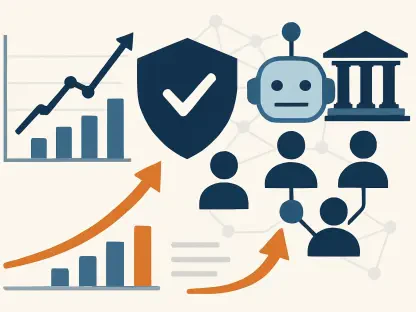

The modern enterprise no longer suffers from a lack of raw information but rather from an inability to activate that information without moving it across fragile, high-latency pipelines that compromise security and integrity. As organizations strive to transition from passive data storage to active, intelligent ecosystems, the emergence of agentic AI represents a fundamental shift in how business logic interacts with underlying databases. By integrating autonomous reasoning capabilities directly into the data layer, companies are finally able to bypass the traditional complexities of data engineering that have long hindered the deployment of real-time, context-aware applications. This evolution signifies a move toward a model where the data itself possesses the inherent ability to trigger actions, reason through complex queries, and provide immediate insights without the need for constant human intervention or external processing clusters. Consequently, the focus has shifted toward building a unified architecture that treats artificial intelligence not as a bolt-on feature, but as a core component of the data management lifecycle.
Transforming Enterprise Intelligence Through Agentic Architectures
The Evolution: Why In-Place Generative Intelligence Matters
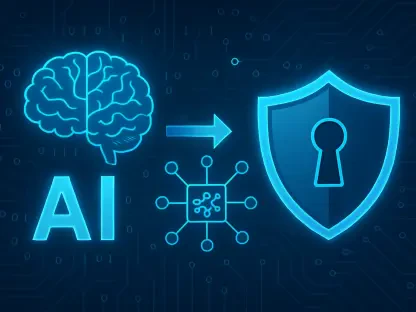
The primary innovation driving current enterprise strategies involves the concept of in-place AI, a method where intelligence is brought directly to the data source to ensure maximum security and minimal latency. By utilizing the Oracle Autonomous AI Vector Database, developers can now build sophisticated, vector-powered applications through a streamlined interface that eliminates the necessity for expensive and cumbersome external data pipelines. This approach is particularly effective for maintaining the strict data sovereignty requirements that modern industries face, as it prevents the exposure of sensitive information during the transfer process between disparate cloud environments. Furthermore, the integration of vector search capabilities within the standard database framework allows for the seamless blending of structured operational data and unstructured content, such as documents or images. This hybrid processing ensures that AI agents have access to a comprehensive context, enabling them to produce more accurate and relevant outputs while reducing the risks associated with data hallucination or outdated information retrieval.
Building on this foundational shift, the move toward internalizing AI logic within the database core facilitates a more resilient infrastructure for mission-critical tasks. When an AI agent operates within the same environment where the data resides, it benefits from the high-availability and disaster-recovery features already built into the enterprise database management system. This level of reliability is difficult to achieve when relying on third-party AI services that require constant synchronization across wide-area networks. Moreover, the reduction in architectural complexity translates to lower operational costs, as there are fewer moving parts to maintain and monitor. For technical teams, this means shifting focus from managing complex extract, transform, and load processes toward refining the actual logic and behavior of the agents. By simplifying the stack, organizations can accelerate their deployment cycles, moving from a proof-of-concept phase to full production in a fraction of the time previously required, thereby staying ahead of the competitive curve in a rapidly changing market.
Democratization: No-Code Solutions and the Private Agent Factory
The democratization of advanced technology is a cornerstone of recent advancements, specifically through tools like the Private Agent Factory which allow business analysts to create complex workflows without deep coding expertise. This environment provides a secure, private container where AI agents can be developed and tested using a no-code approach, ensuring that even smaller organizations can participate in the AI revolution without hiring a massive team of data scientists. By leveraging pre-built templates and intuitive interfaces, non-technical users are able to define the rules, goals, and data access points for their specific business needs, such as automating customer service responses or optimizing supply chain logistics. This shift effectively removes the bottleneck of the specialized IT department, empowering those closest to the business problems to design the solutions. Consequently, the speed of innovation increases as the distance between a business requirement and its technological implementation is drastically shortened through these accessible frameworks.
Beyond simple accessibility, these no-code frameworks maintain a high standard of data privacy by keeping all agent interactions within a controlled, enterprise-grade environment. This is a critical consideration for industries like healthcare or finance, where the use of public AI tools would pose an unacceptable risk to client confidentiality and regulatory compliance. The Private Agent Factory ensures that any learning or optimization performed by the agent remains the exclusive property of the organization, preventing proprietary knowledge from leaking into shared public models. Additionally, the ability to rapidly iterate on agent designs allows businesses to experiment with different strategies and refine their automated processes in real-time. As these agents become more sophisticated, they can handle increasingly complex multi-step tasks, such as cross-referencing global inventory levels with local sales forecasts to suggest optimal restocking schedules. This level of autonomy, once reserved for the largest tech conglomerates, is now within reach for any enterprise willing to adopt a unified data and AI strategy.
Overcoming Structural Barriers to Automated Decision-Making
Integration: Unified Data Management and the Memory Core
The challenge of maintaining a consistent context across various data types has been addressed by the introduction of the Oracle Unified Memory Core, which centralizes the storage and retrieval of diverse datasets. In the past, organizations were forced to use separate specialized databases for text, relational data, and vectors, leading to a fragmented view of the business and high synchronization overhead. The unified approach eliminates these silos by allowing all data types to coexist in a single location, which is vital for agentic AI that needs to reason across multiple domains simultaneously. For instance, an agent analyzing a customer’s history might need to look at structured transaction logs while also parsing unstructured feedback from recent support emails. Having this information in a unified memory core allows the agent to maintain the “state” of the conversation or transaction more effectively, leading to more coherent and logical outcomes. This structural coherence is essential for building agents that are truly reliable in a dynamic environment.
Furthermore, this unified architecture significantly reduces the technical debt associated with maintaining multiple database systems, each with its own security protocols and update cycles. By consolidating data management into a single, high-performance core, IT departments can apply a uniform set of security policies across the entire data estate, ensuring that the AI agents always operate within the boundaries of established governance rules. This consolidation also enhances performance, as the proximity of different data types allows for more efficient query execution and reduced computational overhead. The result is a more responsive system capable of supporting thousands of simultaneous AI interactions without a degradation in service quality. As the volume of data generated by modern business processes continues to grow, the ability to manage that growth within a single, scalable framework becomes a competitive necessity. Organizations that adopt this unified model are better positioned to leverage their data assets for strategic advantage, turning historical information into a proactive tool for future growth.
Implementation: Navigating Potential Hurdles and Future Readiness
While the move toward agentic AI offers immense potential, the transition was not without its challenges, as companies had to navigate initial technology investments and the learning curve associated with new deployment models. Organizations found that the most successful implementations occurred when they established a solid data foundation before attempting to layer on complex autonomous agents. This required a strategic review of existing data quality and the elimination of redundant systems that could lead to operational fragmentation. Leaders who prioritized training for their staff discovered that the human element remained crucial, as employees needed to understand how to guide and oversee the AI agents to ensure alignment with corporate values and objectives. By focusing on a gradual integration process, these firms avoided the pitfalls of over-automation and ensured that their AI initiatives were both sustainable and scalable. This measured approach allowed for the identification of specific high-value use cases where AI could provide the most immediate return on investment.
Ultimately, the advancements in database-driven AI represented a significant step toward making high-level machine learning and automated analytics accessible to a much broader range of market participants. Businesses that successfully integrated these tools saw marked improvements in operational efficiency and decision-making speed, effectively transforming sectors from customer service to supply chain management. Moving forward, the emphasis should remain on refining the ethical frameworks and governance structures that manage these autonomous systems to prevent unintended consequences. It is recommended that organizations continue to invest in unified data architectures to maintain a competitive edge, as the ability to process and act on information in real-time will define market leadership in the coming years. By staying informed about the evolving capabilities of agentic systems, enterprises can ensure they are not merely reacting to technological changes but are actively shaping their own digital futures. The journey toward a fully autonomous enterprise was paved by these critical shifts in data management, proving that the most effective intelligence is that which remains closest to its source.