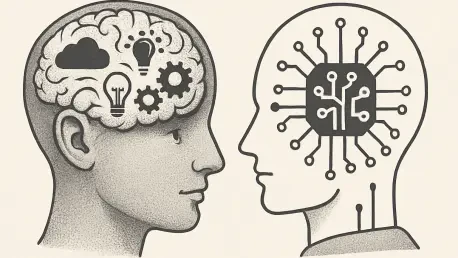

As artificial intelligence masters the art of generating convincingly human-like language, a deeper and more profound question emerges: Does it actually comprehend words with the same depth and nuance as the human mind? While Large Language Models (LLMs) can produce text that is often indistinguishable from human writing, their internal cognitive processes remain a subject of intense scientific inquiry. This analysis delves into the core of this debate, exploring the similarities and stark differences between how humans and advanced AI systems process the meaning of language.
Foundational Concepts: Defining Human and LLM Word Impression
The central inquiry into whether LLMs understand words with humanlike depth is framed by a pivotal study from The University of Osaka, published in Behavior Research Methods. This research provides a structured framework for comparing two fundamentally different modes of cognition. On one side is human cognition, an intuitive and experiential form of understanding shaped by sensory input, emotion, and physical interaction with the world. On the other is an LLM’s “impression,” a sophisticated understanding derived not from experience but from analyzing statistical patterns across vast datasets of human-generated text.
To scientifically measure the alignment between these two cognitive styles, the researchers established a direct comparative test. The study utilized a curated set of 695 English words, chosen because they are typically acquired early in life. Various LLMs were tasked with rating these words across 21 distinct psychological attributes, such as “Concreteness,” “Socialness,” and “Arousal.” These AI-generated ratings were then quantitatively compared against established human norms, providing a direct metric to assess how closely an LLM’s statistical interpretation of a word’s meaning mirrors genuine human intuition.
A Head-to-Head on Conceptual Understanding
Mirroring Human Intuition: Where LLMs and Humans Align
In several key areas, the study revealed a remarkable convergence between human intuition and LLM-generated ratings. For attributes such as “Concreteness,” “Imageability,” and “Body-Object Interaction,” the models demonstrated a strong ability to replicate human conceptual understanding. For instance, both humans and LLMs consistently rated words referring to perceptible, tangible entities as highly concrete. This alignment suggests that even without direct sensory experience, LLMs can develop a form of embedded knowledge.
This parallel is largely attributed to the models’ capacity for vicarious learning. The immense volumes of text used to train these systems are rich with encoded human experiences—descriptions of physical sensations, social interactions, and emotional states. By processing these patterns, LLMs learn to associate words with the contextual cues that reflect real-world properties. In essence, they learn what it means for a word to be “concrete” or “imageable” by observing how humans use language to describe their own embodied experiences.
The Experiential Gap: Where LLM Understanding Falters
Despite these impressive correlations, the research also uncovered significant cognitive gaps where the LLM’s understanding falters. The alignment was not uniform across all 21 psychological attributes, with one feature in particular highlighting a profound divergence: “Iconicity.” This attribute measures the intrinsic link between a word’s sound and its meaning, a connection that is intuitive to humans in words like “buzz” or “splash.”
The study, co-authored by Kazuki Miyazawa, found a notable lack of correlation between human and LLM ratings for iconicity. This finding points to a critical limitation of current AI. Without an embodied existence—without ears to hear sounds or a body to experience physical actions—LLMs cannot intuitively grasp the phonetic-semantic relationship that humans perceive naturally. This demonstrates that their “understanding” is fundamentally disembodied, derived from abstract textual relationships rather than a holistic, sensory-integrated cognitive framework.
Grammar vs. Nuance: The Function Word Discrepancy
A further systematic difference emerged in the perception of function words—the grammatical connectors of language like “in,” “on,” and “but.” While there was high overall agreement on the “Concreteness” attribute, the analysis of this specific word category revealed a major disparity. Humans assign varied and often nuanced concreteness ratings to these words, reflecting a fluid, context-dependent interpretation.
In stark contrast, the LLMs assigned uniformly low concreteness values to all function words. This pattern suggests that the models process these words primarily based on their abstract grammatical role within a sentence, failing to capture the subtle, context-driven meanings that humans infer. This discrepancy underscores a core difference in processing: LLMs excel at identifying structural patterns, whereas human cognition allows for a more flexible and ambiguous understanding that adapts to specific situations.
Core Limitations and Cognitive Biases
The research extended its comparison by examining how well both human and LLM attribute ratings could predict the age at which children acquire words. This analysis uncovered systemic biases within the AI models. While both sets of data confirmed that more concrete words are typically learned earlier in life, the study revealed that some LLMs tended to overestimate the strength of this correlation.
This finding, noted by lead author Hiromichi Hagihara, provides practical insight into the cognitive limitations of current AI. The models’ tendency to exaggerate the relationship between word features and acquisition age suggests a more rigid and oversimplified cognitive model compared to the complex reality of human language development. Human learning is a nuanced process influenced by a multitude of factors, whereas the LLMs appear to rely on a more deterministic, pattern-driven framework that can miss the subtleties of developmental psychology.
Synthesis and Future Directions
In summary, the comparative analysis reveals a dual reality. LLMs demonstrate an impressive and scientifically measurable ability to replicate human intuition for concepts grounded in concrete, imageable, and interactive experiences. However, their “understanding” is not identical to human cognition. Profound and systematic differences appear in their perception of attributes rooted in embodied experience, like iconicity, and in their processing of abstract grammatical units like function words.
The primary takeaway is that current LLMs lack the experiential framework that underpins human language comprehension. Their knowledge is derived, not lived. These findings are crucial for guiding the future of artificial intelligence. They can inform the development of next-generation models that either more closely approximate the multifaceted nature of human cognition or, alternatively, serve as powerful complementary tools for psychological research, offering novel insights into the intricate processes of how language is learned, processed, and truly understood.