
Laurent Giraid stands at the forefront of the next industrial revolution, where the lines between digital intelligence and physical machinery blur. As an expert in machine learning and the ethics of automation, he has closely followed the evolution of “Physical AI”—the integration of artificial intelligence into systems that move and respond within the real world. With a deep understanding of how these technologies reshape labor and infrastructure, Giraid provides a unique perspective on the transition from traditional vehicle manufacturing to the creation of collaborative robotic ecosystems.
The discussion explores the strategic shift toward software-driven manufacturing, the massive capital investments fueling regional production, and the specific milestones required to scale humanoid robotics. Giraid also delves into the critical role of hydrogen energy in supporting AI infrastructure and the long-term impact of these systems on global logistics and consumer experiences.
The integration of physical AI into industrial settings is shifting the relationship between labor and automation. How do you distinguish between tasks meant for humanoid robots and those reserved for human oversight, and what specific steps are necessary to ensure these two groups collaborate effectively on the factory floor?
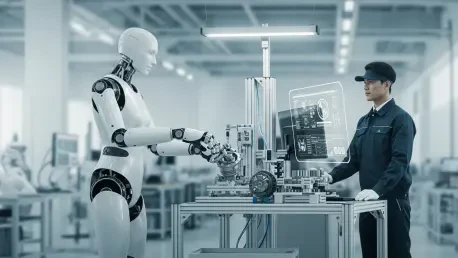
In our current framework, we view robots not as replacements, but as sophisticated partners designed to handle the “three Ds”: tasks that are dull, dirty, or dangerous. Humanoid robots, such as those being refined by Boston Dynamics, are being groomed to take over highly repetitive or physically demanding roles that often lead to worker fatigue or injury. Meanwhile, we reserve the high-level cognitive functions—oversight, complex problem-solving, and creative coordination—for our human workforce. To make this collaboration seamless, we are developing shared workspaces where machines use Physical AI to sense and respond to human movement in real-time. This ensures that the robot is constantly aware of its human counterpart, creating a safe, fluid environment where the machine adapts to the person rather than the other way around.
Large-scale investments in regional infrastructure, such as the $26 billion earmarked for U.S. operations through 2028, signal a massive shift in production strategy. What are the primary logistical challenges of moving from vehicle assembly to building complex robotic systems, and how will this capital be allocated to meet those goals?
Moving from assembling a car to building a humanoid robot requires a fundamental reimagining of our supply chains and precision engineering capabilities. The $26 billion investment is a massive leap from the $20.5 billion spent over the previous four decades, and it is specifically targeted at integrating AI-driven systems into a single, cohesive approach. A major logistical hurdle is the transition to software-driven manufacturing, which requires us to build factories that are as much about data processing as they are about mechanical assembly. This capital is being used to localize production, allowing us to meet regional regulatory demands while ensuring that our sixteen global facilities can produce these complex systems with the same level of consistency.
Humanoid robots are projected to reach a production scale of 30,000 units annually by 2030. What milestones must be reached by 2028 to transition these machines from experimental prototypes to functional industrial tools, and how will they handle the unpredictable nature of shared physical workspaces?
By 2028, we expect the first major deployment of these machines within manufacturing environments to prove they are ready for the rigors of daily industrial use. The key milestone is moving beyond controlled lab settings to “wild” factory floors where variables change by the second. To handle this unpredictability, the robots rely on Physical AI, which processes real-time data to adjust their grip, gait, and speed instantly. We are currently in the testing phase to ensure that by the time we scale to 30,000 units in 2030, these robots can operate with a level of reliability that matches our vehicle production standards. It’s about building a machine that doesn’t just follow a script but actually understands the physical context of the task it is performing.
As AI infrastructure and data centers place higher demands on power grids, hydrogen energy is emerging as a critical resource. How do hydrogen production and storage systems complement traditional electric power for physical AI, and what makes this energy source particularly viable for large-scale industrial mobility?
We see hydrogen and electricity not as competitors, but as complementary pillars of a sustainable energy strategy. As AI infrastructure and massive data centers put an unprecedented strain on traditional grids, our HTWO brand is focusing on hydrogen as a high-density energy carrier that can fill the gaps. Hydrogen is particularly viable for large-scale industrial mobility because it offers faster refueling times and better power-to-weight ratios for heavy machinery compared to current battery technology. By controlling the entire lifecycle—production, storage, and utilization—we can provide different energy choices depending on whether a system is a stationary AI hub or a mobile robotic fleet.
Maintaining consistency across sixteen global production facilities requires a sophisticated approach to software-driven manufacturing. How does real-time data allow machines to adjust their actions autonomously, and what specific improvements in product quality or efficiency can be expected as these software systems become more deeply integrated?
The shift to software-defined manufacturing means that our factories are becoming living organisms fueled by data. Instead of a robot performing a fixed motion millions of times, Physical AI allows the machine to analyze incoming parts and adjust its actions on the fly based on subtle variations. This level of autonomy leads to a significant reduction in defects and a noticeable boost in overall efficiency, as the system can self-correct without human intervention. As we integrate these systems more deeply across our global footprint, we expect a standardization of quality that was previously impossible, ensuring a vehicle or robot built in the U.S. meets the exact same specifications as one built in any of our other regions.
Beyond the factory floor, physical AI is expected to influence logistics and shared mobility services. How will the combination of autonomous vehicles and robotic systems change the way goods are delivered to end users, and what role will data-driven infrastructure play in making these services more responsive?
The synergy between autonomous vehicles and robotics will revolutionize the “last mile” of delivery, moving us from simple transportation to a comprehensive delivery ecosystem. Imagine a self-driving vehicle that arrives at a destination, and a humanoid robot steps out to carry the package directly to a doorstep—this is the future of shared mobility. This entire process relies on a data-driven infrastructure that predicts demand and optimizes routes in real-time, making services far more responsive to consumer needs. While the average person might not own a humanoid robot soon, they will certainly feel the impact through faster shipping times and more flexible, on-demand mobility services that adapt to their lifestyle.
What is your forecast for physical AI?
I believe we are entering an era where AI will no longer be confined to screens and servers, but will become an active, physical participant in our daily environments. By 2030, the transition from standalone products to integrated physical systems will be complete, with 30,000 humanoid robots rolling off production lines annually to support human workers. We will see a world where manufacturing is entirely software-driven, hydrogen-powered fleets handle our logistics, and the “intelligence” of a machine is measured by how safely and effectively it can navigate the physical world alongside us. It is a slow, methodical transition, but the shift from building machines to building autonomous systems is an irreversible evolution that will redefine global industry.