
The creation of sophisticated, autonomous AI agents has rapidly shifted from a distant theoretical goal to a practical necessity for modern software development, presenting a new frontier of challenges and opportunities. The introduction of the GitHub Copilot Software Development Kit (SDK) marks a pivotal moment in this evolution, providing developers with a structured framework to move beyond simple AI-powered code completion. It offers a tangible pathway to embedding the advanced reasoning capabilities of GitHub Copilot directly into custom applications, effectively transforming a beloved coding assistant into a versatile platform for building and orchestrating a new generation of intelligent software agents. This toolkit is not merely an extension of existing features; it represents a fundamental rethinking of how developers can interact with and leverage AI, providing the essential building blocks to construct highly specialized, automated solutions without the need to engineer complex AI infrastructure from the ground up.
From Assistant to Agent Host
At its core, the Copilot SDK signifies a profound transformation of the GitHub Copilot Command Line Interface (CLI) from a convenient terminal-based utility into a powerful, headless agent host designed for integration. This addresses one of the most significant hurdles in AI development: the inherent complexity of creating and managing a robust agent command-and-control loop. Instead of forcing developers to build this intricate orchestration logic from scratch, the SDK allows them to treat an installed Copilot CLI as a background server process. This architecture enables an application to communicate directly with the CLI’s advanced orchestration features and GitHub’s Model Context Protocol (MCP) registry, effectively offloading the most difficult aspects of agent management. This design empowers developers to focus on crafting unique application experiences while relying on the proven, stable infrastructure of the Copilot ecosystem to handle the underlying mechanics of AI interaction and execution, democratizing access to sophisticated agent development.
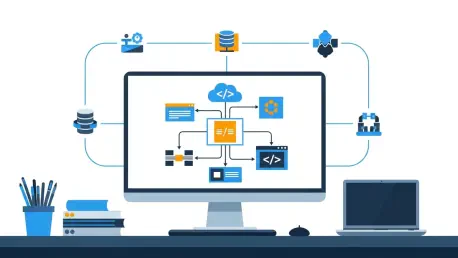
The operational model is elegantly simple, built upon a client-server architecture where the developer’s application serves as the client and the Copilot CLI functions as the dedicated server. This separation offers distinct advantages, chief among them being the ability for the CLI to run invisibly as a background process. As a result, all interactions between the application and the AI agents it commands are handled programmatically, allowing for a seamless integration into graphical user interfaces or backend services without ever exposing a terminal window to the end-user. The SDK abstracts away the formidable task of managing models and MCP servers, presenting a simplified API for sending prompts and receiving responses. Meanwhile, the CLI server diligently performs the heavy lifting of agent execution, session management, and communication with the AI models. This setup provides significant flexibility, as the server can run locally on the end-user’s machine or on a centralized remote server, though users will always require a valid GitHub Copilot license to power the experience.
The Technology Powering the SDK
A critical component enabling this entire ecosystem is the Model Context Protocol (MCP), a standardized system that functions as a dynamic service directory for AI agents. The Copilot SDK provides developers with direct access to GitHub’s extensive MCP registry, which dramatically simplifies the process of discovering, installing, and integrating new capabilities and data sources into an application. This protocol-driven approach makes AI agents inherently extensible, allowing them to quickly acquire new skills by connecting to different MCP servers. For instance, an agent could be enhanced with the ability to query a project’s codebase, access build server logs, or pull data from an external API, all through standardized connections. This framework supports both remote connections over HTTP and local connections via stdio, offering developers the flexibility to choose the most appropriate deployment strategy for their specific needs, whether building a distributed enterprise system or a standalone desktop application with localized AI capabilities.
To foster widespread adoption and ensure accessibility across diverse development environments, the Copilot SDK offers official dialects for today’s most prevalent programming ecosystems. It is readily available for JavaScript/TypeScript developers via the npm registry, for the .NET community through the NuGet package manager, for Python programmers on the Python Package Index (pip), and for Go developers directly from its GitHub repository. This multi-language support is complemented by a growing number of community-driven SDKs for languages like Java, Rust, and C++, demonstrating the platform’s broad appeal and extensibility. The implementation process is intentionally straightforward, designed to lower the barrier to entry. A typical workflow involves creating a client instance, establishing a session with a specified AI model, sending an asynchronous prompt, and processing the generated response. This simple interaction model belies the complex orchestration occurring in the background, making it remarkably easy for developers to begin integrating powerful AI-driven features into their projects almost immediately.
Building Sophisticated and Context-Aware Agents
Beyond basic request-response interactions, the SDK is equipped with a suite of advanced features designed for creating truly dynamic and contextually intelligent agents. It offers robust support for streaming responses, a crucial capability for building interactive user experiences. By default, an application would wait for the entire response from the large language model, which can introduce noticeable latency. However, the streaming directive allows the application to receive and display data as it is generated, providing the immediate feedback that users expect in modern applications like chatbots and live coding assistants. This enhances perceived performance and creates a more fluid, conversational feel. Furthermore, the SDK enables deep session customization. Developers can define a base prompt for a session, which provides consistent context for all subsequent interactions. This helps maintain the agent’s persona and focus, preventing the kind of logical drift that can occur over long conversations and ensuring more reliable and predictable behavior from the AI.
One of the SDK’s most transformative features is its native support for tool integration, a cornerstone of modern agent frameworks that allows an AI to interact with external systems. Developers can define “tools” as handlers that connect to local code or remote APIs, empowering the agent to perform actions in the real world. For example, a tool could be created to fetch real-time financial data from a stock market API or query an internal corporate database. This grounds the LLM in factual, up-to-the-minute information, dramatically enhancing its accuracy and utility while also mitigating the risk of token exhaustion by offloading data-retrieval tasks. This capability extends to connecting with external MCP servers, which can bridge the gap between software development and broader business context. An agent connected to Microsoft 365’s Work IQ, for instance, could access and process information from emails and documents, ensuring that feature requests discussed outside of formal channels are not overlooked and creating a truly holistic project awareness.
A Piece of a Larger AI Ecosystem
The GitHub Copilot SDK was not developed in isolation; it was designed as an integral component of the broader Microsoft Agent Framework. This strategic integration allows developers to orchestrate agents built with the Copilot SDK alongside those created with other powerful tools in the Microsoft ecosystem, such as Microsoft Fabric or Azure OpenAI. This interoperability fosters a unified environment for constructing complex, multi-agent applications where different specialized agents can collaborate to achieve a common goal. Developers are not locked into a single large language model or platform; they can design sophisticated workflows where one agent powered by OpenAI’s GPT models works in tandem with another driven by Anthropic’s Claude, each contributing its unique strengths to the task at hand. This vision of a cooperative, multi-agent future is central to the SDK’s design and positions it as a key enabler of next-generation intelligent automation that spans the entire application lifecycle.