
At the Consumer Electronics Show, Intel stepped into the spotlight with a presentation that felt less like a product launch and more like a high-stakes declaration of its resurgence after a period of significant manufacturing challenges and intense competitive pressure. The company’s central objective was clear: to project a compelling narrative of renewed momentum and technological prowess, with the official launch of its Panther Lake platform serving as the primary evidence. This next-generation client processor lineup, which forms the foundation for the new Intel Core Ultra Series 3, was strategically positioned to address the market’s most pressing concerns. The event was meticulously designed to provide tangible proof that Intel’s ambitious 18A manufacturing process is not only on schedule but has achieved production-level quality. Furthermore, it aimed to demonstrate that the resulting silicon is a highly competitive platform capable of anchoring the company’s position in the critically important and rapidly evolving markets for personal computers and edge-based Artificial Intelligence. The overarching themes were on-time execution, deep architectural innovation for the AI PC era, and a strategic expansion into new and growing market segments.
A Manufacturing Redemption on Schedule
A dominant theme throughout the presentation was the validation of Intel’s manufacturing roadmap, with the 18A process node positioned as the ultimate proof point of its recovery. Company leadership, beginning with the CEO, framed the launch of Panther Lake as the fulfillment of a critical promise made to the industry and investors. This was not just another product debut; it was presented as a landmark achievement confirming Intel’s ability to execute on its aggressive timeline and finally begin transitioning its client processor portfolio away from a reliance on external foundries. This message was a direct and deliberate effort to reassure a market that had been closely scrutinizing yield reports and cost structures following a period marked by significant delays and setbacks. The successful ramp-up of 18A was positioned as the cornerstone of Intel’s future, signaling a return to the predictable, clockwork-like execution that once defined the company’s manufacturing dominance.
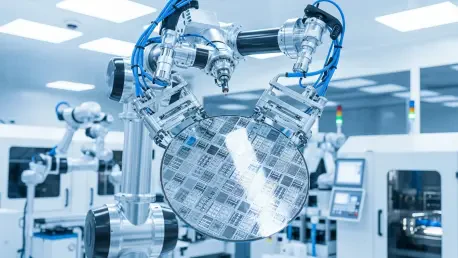
To substantiate these claims, senior executives provided a detailed technical overview of the advancements within the 18A process. A significant portion of the discussion focused on two key enabling technologies: “RibbonFET,” Intel’s implementation of a gate-all-around transistor architecture, and “PowerVia,” its innovative backside power delivery network. These were not presented as abstract concepts but as tangible engineering feats with quantifiable benefits. The company claimed that the combination of these technologies delivers an approximate 30% improvement in chip density and a 15% gain in performance per watt compared to previous nodes. These process-level advancements were cast as the essential enablers for the substantial architectural changes found in Panther Lake, allowing engineers to design more complex functional units, achieve higher current density for improved performance, and more flexibly integrate different chiplets onto a single, cohesive package, thereby unlocking new levels of performance and efficiency.
An Architecture Reimagined for the AI Era
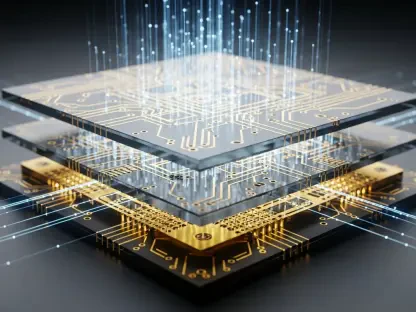
With Panther Lake, Intel detailed a significant architectural overhaul that moves far beyond incremental updates to a design fundamentally re-engineered for AI-centric workloads and improved power efficiency. The platform is built on a modular, chiplet-based design, a strategic choice that allows for greater scalability and functional separation. The central processing unit has been redesigned with a more balanced and heterogeneous mix of core types to optimize for a wide variety of tasks. The flagship Core Ultra X9 388H, for example, features a total of 16 cores composed of four high-performance “P-cores,” eight efficiency-focused “E-cores,” and four new low-power “LPE cores” designed specifically for handling background tasks with minimal energy consumption. While acknowledging that this flagship has fewer P-cores than its direct predecessor, the company argued that deep architectural improvements deliver superior real-world results, citing substantial gains in gaming performance and stronger multithreaded output, signaling a clear strategic pivot from prioritizing raw core counts to focusing on improved work-per-clock metrics and more intelligent task scheduling.
The most profound generational leap, however, is found in the integrated graphics processor (iGPU), now branded the Arc B390. In a major architectural shift, the GPU has been moved to its own dedicated chiplet and is built on the new Xe3 “Battlemage” architecture, aligning it for the first time with Intel’s discrete desktop GPU technology. The top configuration features 12 Xe cores, a threefold increase over the prior generation, a move that promises a massive uplift in graphics performance. This unification of the iGPU and discrete GPU architectures is strategically crucial, as it simplifies driver development and creates a cohesive software ecosystem for developers. The Arc B390 is also heavily infused with AI capabilities, most prominently through XeSS 3, an advanced scaling and frame-generation technology. Intel claimed this will be the first integrated GPU to ship with AI multi-frame generation, a feature capable of producing up to four times the frame rate by generating three AI frames for every one traditionally rendered frame, potentially revolutionizing gaming on thin-and-light laptops.
The “AI PC” concept was central to Intel’s messaging, and the Panther Lake platform incorporates a 5th-generation Neural Processing Unit (NPU) designed to deliver up to 50 TOPS (Trillions of Operations Per Second) of dedicated AI performance for supported workloads. However, Intel’s broader AI strategy relies on a synergistic approach that combines the capabilities of all onboard compute engines. The company stated that by coordinating workloads across the NPU 5 and the powerful Xe3 iGPU, the platform can achieve a total of up to 170 TOPS of AI compute. This hybrid model positions the CPU, GPU, and NPU not as isolated components but as complementary accelerators that can collectively handle a wide range of tasks, from on-device large language model inference and generative AI content creation to sophisticated system-level AI features. This comprehensive strategy reinforces the idea of a complete AI platform, capable of intelligently distributing tasks to the most efficient processing unit, thereby maximizing both performance and battery life.
Expanding the Battlefield Beyond the PC
Intel outlined a clear and multifaceted go-to-market strategy designed to leverage Panther Lake’s flexible architecture across a wide spectrum of devices and price points. The Core Ultra Series 3 family is meticulously structured into distinct tiers to meet the needs of different system designs. The “X-branded” variants are explicitly tailored for high-end, thin-and-light systems that rely on integrated graphics for both gaming and creative tasks, as these chips include the largest and most powerful Xe3 IGP configurations. In contrast, the non-X Ultra 9 and Ultra 7 models feature fewer Xe cores but offer more PCIe 5.0 lanes, making them the optimal choice for enthusiast-grade laptops that will be paired with a powerful discrete GPU from Intel or a third-party vendor. This tiered approach extends down to the mainstream Ultra 5 class, which includes both 12-core and 8-core variants with reduced graphics capabilities to effectively serve more budget-oriented market segments without compromising the platform’s core architectural advantages.
In a move signaling its ambition to grow beyond its traditional strongholds, Intel announced a significant strategic expansion for its client platform. For the first time, the Core Ultra Series 3 carries certifications for demanding edge and industrial environments, including automation, robotics, smart infrastructure, and healthcare devices. The company attributed this expansion to the platform’s unified architecture, extended operating temperature tolerances, and predictable real-time performance capabilities, which are critical for these specialized applications. Furthermore, Intel launched a dedicated initiative to enter the burgeoning handheld gaming device market. Executives highlighted the growing consumer interest in this category and noted that the unique combination of Panther Lake’s efficient CPU cores and its exceptionally powerful Xe3 iGPU makes it an ideal solution for such form factors, potentially disrupting a market currently dominated by competitors. This two-pronged expansion strategy demonstrates a clear intent to leverage Panther Lake’s versatility to capture new revenue streams and establish a foothold in high-growth adjacent markets.
A Verdict Awaiting the Market
The Panther Lake launch at CES was positioned as a pivotal moment, a well-executed attempt to steer the company’s narrative back toward innovation and manufacturing leadership. The claim of over 200 laptop designs from partners ready to ship was a strong indicator of initial OEM confidence, suggesting that the industry believed in the 18A process and the competitiveness of the Core Ultra Series 3 platform. However, the unveiling did not occur in a vacuum. The competitive landscape remained intensely challenging, with sustained pressure from AMD’s own AI-focused roadmaps, Qualcomm’s aggressive entry into the PC space with its power-efficient Arm-based solutions, and Nvidia’s continued dominance in the lucrative discrete AI compute market. The ultimate success of Panther Lake became a critical test of Intel’s ability to not only deliver on its manufacturing promises but also to compete effectively in a market increasingly defined by AI capabilities. The final verdict would not be written by press releases or presentations, but by market adoption, benchmark results, and, most importantly, the company’s financial performance in the coming quarters.