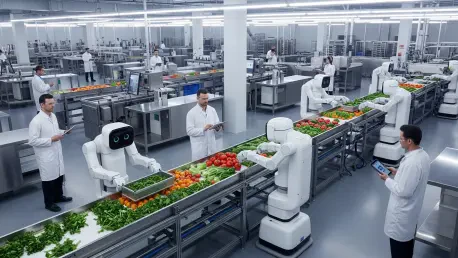

In the global race for technological supremacy, Japan is shifting its focus from digital chatbots to the tangible world of physical automation. To understand the implications of the government’s recent announcement to deploy 10 million AI-powered robots, I’m joined by Laurent Giraid, a technologist with deep expertise in machine learning and the ethics of artificial intelligence. Giraid offers a unique perspective on how Japan intends to merge its industrial hardware heritage with cutting-edge multimodal foundation models to solve a looming demographic crisis. Throughout our discussion, we explore the collaborative efforts of major industrial players, the strategic funding models used by the state, and the technical hurdles of creating machines that can truly interpret their surroundings.
How will the collaboration between companies like SoftBank, Sony, and Honda facilitate the development of a unified physical AI model?
This consortium represents a strategic “All-Japan” approach that leverages the specific hardware and software strengths of each participant. SoftBank contributes significant engineering talent, while Honda brings its legacy in robotics and mobility, and Sony provides the world-class imaging sensors necessary for high-fidelity perception. By having these giants work alongside researchers from Preferred Networks and the national lab AIST, they can ensure the AI model is built specifically for the hardware it will inhabit. This is a crucial departure from chasing general-purpose chatbots; instead, they are focusing on a model that can be integrated across 18 different industries, from medical care to food manufacturing. This deep integration is what allows a robot to translate digital intelligence into physical utility, essentially giving the “brain” the perfect “body” to work with.
The financial scale of this project is immense, but the funding comes with specific conditions; how does this stage-gate process influence the project’s trajectory?
The government has committed to a massive trillion-yen ceiling, which is roughly US$6.1 billion over five years, but it has been very careful not to provide a blank check. For the current fiscal year, the commission is worth approximately US$2.3 billion, funded specifically through GX Economy Transition Bonds, yet the funding is only guaranteed for the first two years. This stage-gate process means that Noetra must hit concrete milestones and release usable upgrades annually, or the industry ministry can walk away from the project entirely. This structure creates a sense of urgency that is often missing in public-sector initiatives, forcing the consortium to prioritize practical, social implementation over theoretical research. It ensures that the public’s investment is tied to measurable progress in solving the nation’s labor crisis.
Moving beyond pre-programmed motions, what distinguishes a “physical AI” model from the robotics we have seen in manufacturing over the last few decades?
The primary differentiator here is the shift to a multimodal foundation model that can process language, video, images, and sensor data simultaneously. Traditional industrial robots operate on rigid, pre-programmed scripts that fail the moment an object is out of place or a human enters their path. This new physical AI is designed to actually interpret a room, allowing a robot to understand the difference between a cluttered restaurant table and a medical tray. By using data volunteered by manufacturers and participating firms, the model learns to adapt its movements in real-time based on sensory feedback rather than just following a set of coordinates. This evolution is what makes it possible for these machines to function in dynamic, unpredictable human environments like hospitals or kitchens.
Japan is framing this as a solution to its labor shortage; how realistic is the goal of deploying 10 million robots across 18 industries by 2040?
The target of 10 million robots is incredibly ambitious, but it is born out of a demographic necessity that Japan can no longer ignore. With an aging population and a historically tight migration policy, the country is facing a labor market that is simply running out of people to staff essential services. Japan isn’t starting from zero; they are building on years of highly specialized robotics expertise gained from elder care and the complex cleanup at Fukushima Daiichi. By targeting 18 specific sectors, including restaurants and medical care, they are attempting to turn a domestic survival strategy into an exportable technology suite. While the 2040 deadline is far off, the real test will be whether these robots can perform enough varied tasks to actually offset the millions of workers the economy is projected to lose.
As South Korea and other nations announce similar initiatives, what does this shift toward physical AI signify for the broader global technology market?
We are witnessing a pivot where the front lines of AI competition are moving from cloud-based contracts and text-generation models to the physical world of labor. When South Korea announced their own robotics push within twenty-four hours of Japan’s confirmation, it signaled that the world’s major manufacturers are now competing to see who can first bridge the gap between AI and physical labor. Japan is clearly trying to reclaim its status as a technological leader by focusing on “physical AI,” an area where its history in high-end manufacturing gives it a natural advantage over software-heavy firms in the West. This signifies a new era of industrial policy where national security and economic stability are tied directly to how many tasks a robot can perform without human oversight.
What is your forecast for the success of this national strategy given the high stakes involved?
My forecast is that the success of this plan will be decided within the next 24 months, based on whether Noetra can deliver its first usable model this fiscal year. If the initial version proves that a multimodal model can significantly reduce the need for manual programming in a restaurant or factory setting, private investment from firms like Fujitsu and Rakuten will likely flood in. However, if they fail to meet the first stage-gate review, the government’s trillion-yen ceiling will remain a theoretical figure, and the project may stall. Ultimately, I believe Japan’s unique pressure of a shrinking workforce will force a level of innovation that we haven’t seen in robotics since the first industrial arms hit factory floors decades ago.