
The recent launch of the Meta Muse Spark has effectively signaled a dramatic reconfiguration of how global tech giants approach the tension between public innovation and corporate profitability. This new system is not just an update but a fundamental departure from the Llama lineage that previously defined Meta’s role in the artificial intelligence ecosystem. By moving away from the open-weight philosophy that dominated its earlier strategy, Meta has positioned this proprietary model as the cornerstone of its newly established Superintelligence Labs. This transition reflects a strategic pivot toward a closed, vertically integrated framework designed to prioritize monetization and efficiency over community-driven experimentation.
The emergence of Muse Spark comes at a time when the industry is questioning the sustainability of massive, generalized models. Meta’s new approach emphasizes a specialized, proprietary framework that allows for deeper integration across its hardware and software platforms. This shift suggests that the company is no longer content with being the infrastructure provider for the world’s developers; instead, it seeks to own the entire value chain of the user experience. This evolution represents a calculated gamble that the benefits of a controlled, high-performance ecosystem will outweigh the potential loss of the external developer contributions that fueled the success of previous iterations.
The Evolution of Meta’s AI Strategy: From Llama to Muse Spark
The trajectory of Meta’s intelligence strategy has undergone a radical transformation, moving from the democratic accessibility of the Llama ecosystem to the highly guarded Superintelligence Labs framework. Earlier models like Llama 3 and 4 were instrumental in establishing Meta as a leader in the open-source community, providing high-quality weights that allowed developers to build a vast array of niche applications. However, as the competitive pressure from rivals like Google and OpenAI intensified, Meta recognized that maintaining a competitive edge required a model that could be more tightly optimized for its specific commercial goals.
The introduction of Muse Spark marks the definitive end of the “open weights” era for Meta’s frontier models. This pivot is driven by the need to capture more direct value from its massive investments in compute and data. By transitioning to a proprietary model, Meta can now implement more aggressive optimization techniques and data-handling practices that were not feasible in an open environment. This move aligns Meta more closely with the business models of its primary competitors, signaling a maturation of the AI market where proprietary advantages are becoming the primary currency for enterprise growth.
Core Technical Architecture and Feature Set
Natively Multimodal Reasoning and Visual Chain of Thought
The architectural foundation of Muse Spark relies on a unified processing engine that treats visual and textual inputs as a singular stream of information. Unlike earlier models that required disparate sub-systems to interpret images and text, this native multimodality allows for a “visual chain of thought” where the model explains its reasoning as it deciphers complex imagery. This capability is particularly unique because it permits the system to solve spatial problems or interpret subtle visual nuances with the same logical rigor typically reserved for complex mathematical equations or coding tasks.
This integrated approach means that the model does not just describe an image but actually understands the functional relationships within it. For example, if presented with a complex mechanical diagram, Muse Spark can reason through the assembly steps while simultaneously generating a text-based instruction manual. This simultaneous processing reduces the errors often found in older systems where the text-generation layer would lose sync with the visual-interpretation layer. The result is a more cohesive and reliable interaction that feels far more intuitive for the end user.
Triadic Interaction Modes and Multi-Agent Orchestration
Users interact with this intelligence through three distinct operational tiers: Instant, Thinking, and Contemplating modes. The Instant mode serves the high-velocity needs of basic queries, while the Thinking mode utilizes specialized sub-agents to decompose multifaceted problems into manageable steps. The most advanced tier, Contemplating, engages a massive orchestration of agents that cross-reference data in parallel to ensure the highest accuracy. This multi-agent coordination allows the model to act as a digital architect, managing several specialized functions simultaneously to deliver a cohesive and highly refined output.
This triadic structure allows the system to allocate compute resources more intelligently based on the complexity of the task at hand. By using a multi-agent orchestration layer, the Muse Spark can delegate specific sub-tasks—such as fact-checking, creative writing, or data analysis—to specialized internal agents. This specialization ensures that the final response is the product of several expert perspectives rather than a single, generalized guess. It is this orchestration that gives the model its “thinking” quality, as it can be seen iterating and refining its own logic before presenting a final answer.
Efficiency and Infrastructure: The $14.3 Billion Overhaul
Behind this capability lies a massive $14.3 billion infrastructure overhaul that Meta refers to as a “scorched earth” reconstruction of its technical stack. This investment was necessitated by the realization that massive scale for three billion users cannot be sustained on the bloated compute requirements of traditional frontier models. By rebuilding the system from the ground up, Meta achieved a high-tier reasoning capability that operates with a fraction of the hardware resources previously required. This move represents an economic masterstroke, allowing the company to offer high-end AI across its entire application suite without the prohibitive costs that have crippled smaller competitors.
This overhaul involved not only new hardware but also a complete rewriting of the training algorithms to prioritize data efficiency. The “scorched earth” policy meant that any legacy code that hindered performance was discarded, regardless of its previous importance. The resulting architecture is leaner and more responsive, which is critical for real-time applications in mobile environments. This focus on operational efficiency ensures that Meta can maintain high performance during peak traffic hours, providing a consistent user experience that is often lacking in more resource-heavy models.
Real-World Applications and Sector Dominance
Specialized Healthcare Integration and HealthBench Performance
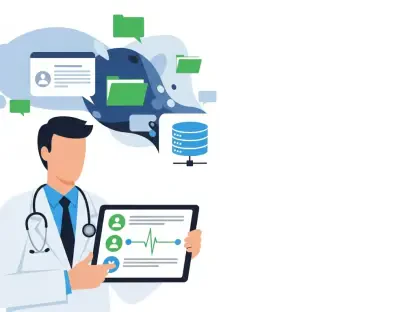
One of the most striking successes of this model is its dominance in the healthcare sector, specifically through its performance on the HealthBench evaluation. By training on datasets curated by over a thousand medical professionals, Muse Spark has demonstrated a superior ability to navigate medical reasoning compared to more generalized models like Gemini or GPT. This specialized focus transforms the AI from a simple assistant into a credible health advisor, capable of parsing complex physiological data to offer insights that feel remarkably human-centric and clinically informed.
The integration of medical expertise directly into the training pipeline ensures that Muse Spark understands the nuances of clinical terminology and patient care. On the HealthBench assessments, the model consistently outperformed its peers by identifying rare diagnostic patterns that generalized models often missed. This performance suggests that Meta is positioning Muse Spark not just as a chatbot, but as a foundational tool for the future of digital medicine. The ability to provide high-level medical reasoning at scale could revolutionize how individuals manage their personal health data.
Ambient Computing and Wearable Integration
Furthermore, the model’s integration into ambient computing hardware, such as the Ray-Ban Meta AI glasses, signals the end of the smartphone-centric era of interaction. By embedding Muse Spark into everyday wearables, Meta is making artificial intelligence a constant, invisible companion that reacts to the wearer’s environment in real-time. This deployment across WhatsApp, Instagram, and Messenger ensures that the model is not merely a destination for users but a pervasive layer of the digital experience that enhances social connectivity and information retrieval seamlessly.
The success of this ambient integration relies on the model’s ability to process visual data from the wearable’s cameras instantly. Whether it is translating a sign in a foreign city or identifying a plant in a park, Muse Spark provides contextually relevant information without the user ever having to look at a screen. This move toward “invisible” AI represents a shift in how humans interact with technology, moving away from active searching toward a more passive, observational flow of information that enriches the physical world.
Challenges to Adoption: Privacy and the Open-Source Retreat
However, this shift has not been without significant friction, particularly regarding the retreat from open-source transparency. The developer community, once the bedrock of Meta’s AI growth, now faces a walled garden where access is restricted and data remains within Meta’s proprietary silos. This closed-source approach raises valid concerns about the security of personal health data, especially given the strict requirement for Meta account integration. Critics argue that the benefits of efficiency come at the cost of public accountability and the collaborative spirit that once defined the industry.
The requirement for deep integration with a Meta account creates a significant barrier for users who are wary of the company’s history with data privacy. Because Muse Spark is designed to learn from personal interactions to become a “personal superintelligence,” the volume of sensitive data it collects is unprecedented. Navigating the regulatory landscape for such a tool is complex, and the proprietary nature of the model makes it difficult for third-party auditors to verify Meta’s privacy claims. This lack of transparency could hinder adoption among more privacy-conscious demographics.
Future Outlook: The Path Toward Personal Superintelligence
Looking forward, the trajectory of this technology points toward the realization of a personal superintelligence that learns from individual user patterns to provide hyper-contextualized support. While the current version remains proprietary, there is persistent speculation that Meta may eventually release optimized open-source variants once it has secured its market lead. The long-term impact of such ambient AI will likely be a permanent change in how humans process information, as the threshold for accessing high-end reasoning continues to drop through operational breakthroughs.
As the system evolves, it will likely move beyond simple question-and-answer interactions toward proactive assistance. Future versions of Muse Spark may be able to anticipate user needs by analyzing environmental cues and past behaviors, effectively acting as an external cognitive layer. The democratizing power of such technology could be immense, providing every user with access to high-level reasoning and specialized knowledge that was once the exclusive domain of experts. This path suggests a future where AI is not an external tool but an integrated part of the human cognitive experience.
Final Assessment of Meta Muse Spark
The Muse Spark represented a decisive moment where Meta prioritized commercial viability and distribution over its legacy as an open-source pioneer. While the loss of developer goodwill was a significant trade-off, the resulting efficiency and sector-specific performance in healthcare gave Meta a distinct edge over its primary rivals. The $14.3 billion infrastructure overhaul proved that high-level reasoning could be delivered at a massive scale without the unsustainable compute costs that characterized earlier frontier models. Ultimately, the system succeeded in bridging the gap between raw power and daily utility, establishing a new benchmark for how integrated AI should function within a global social ecosystem. The transition toward a proprietary model appeared to be a necessary step for Meta to secure its position in an increasingly competitive landscape. Moving forward, the true test for the company will be whether it can maintain the trust of its users while managing the vast amounts of personal data required to fuel its vision of a personal superintelligence.