
The messy scrawl of a student’s long-division problem, complete with a misplaced decimal and a small arithmetic error, represents one of the final frontiers for artificial intelligence in the classroom. For years, educators have spent countless hours deciphering such work, a task that is both a critical part of teaching and a significant administrative burden. Now, a groundbreaking AI system named VEHME, developed by a collaborative research team from the UNIST Graduate School of Artificial Intelligence and POSTECH, is poised to change this dynamic entirely. This new model does more than just check for a correct answer; it understands the entire problem-solving process, offering feedback with a nuance previously reserved for human teachers.
This development addresses a critical need within the education sector. The goal is not to replace educators but to provide them with a powerful assistant that can handle the repetitive, time-consuming aspects of grading open-ended math problems. By automating this process with high accuracy, VEHME (Vision-Language Model for Evaluating Handwritten Mathematics Expressions) frees up valuable teacher time for more impactful activities like lesson planning, one-on-one student support, and fostering a deeper conceptual understanding of mathematics. As detailed in research led by Professor Taehwan Kim and Professor Sungahn Ko, the system represents a significant leap toward practical, intelligent tools that can be integrated directly into the modern classroom.
The Unsolvable Equation Why Grading Handwritten Math Stumped AI
The immense challenge of grading handwritten mathematics has long been a major bottleneck for educators and a formidable barrier for automation. For teachers, the process is incredibly labor-intensive, consuming hours that could otherwise be dedicated to instruction and student engagement. This manual effort is not just about checking a final number; it involves carefully following each step of a student’s logic, a process that requires patience, expertise, and a significant time commitment, especially in large classes. Consequently, this has been a persistent pain point in education, limiting the frequency of detailed feedback students can receive.
This task has historically stumped AI due to two core complexities: the diversity of submission formats and the infinite variability of human handwriting. Unlike standardized multiple-choice questions, handwritten math solutions are inherently unstructured. A single page can contain a mix of multi-line equations, complex graphs, geometric diagrams, and written notes. An effective AI must not only read these elements but also understand their spatial and logical relationships to one another. Previous attempts at automation often failed because they could not parse this complex visual language, struggling to differentiate between a fraction bar and a minus sign or to follow the flow of a multi-step calculus problem.
Furthermore, the sheer unpredictability of handwriting presents a monumental obstacle. Every student’s script is unique, ranging from perfectly neat print to hurried, chaotic cursive. Characters can be slanted, rotated, or poorly formed, creating ambiguity that even a human eye can struggle to interpret. For an algorithm, this variability makes the initial step of optical character recognition (OCR) exceptionally difficult. Traditional OCR systems, trained on clean, typed text, are simply not equipped to handle the nuances of a student’s pencil-and-paper calculations, making the accurate transcription of mathematical expressions a long-standing “unsolvable equation” for AI developers.
Inside the Mind of a Digital Teacher
VEHME succeeds where others have faltered by adopting a cognitive approach that mirrors how a human teacher evaluates work. Instead of a superficial check of the final answer, the model performs a deep, contextual analysis of the student’s entire solution from start to finish. It meticulously follows the step-by-step reasoning, enabling it to pinpoint the precise location and nature of an error. Whether it is a simple arithmetic slip-up, a misapplied formula, or a fundamental conceptual misunderstanding, VEHME can identify the exact point where the student’s logic diverged, a critical capability for providing constructive feedback.
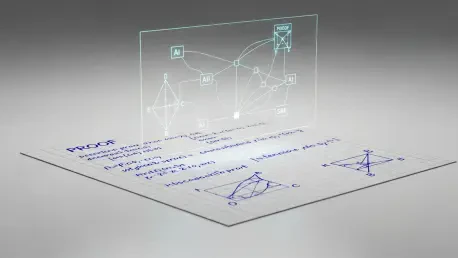
The technological heart of this system is the Expression-aware Visual Prompting Module (EVPM). This innovative component allows the AI to “see” a handwritten page much like a person does. It functions by identifying and isolating distinct mathematical expressions, virtually enclosing them in “boxes” to understand their structure and spatial relationships. This is crucial for interpreting complex notations like multi-line fractions, matrices, or systems of equations, where the positioning of elements is key to their meaning. The EVPM ensures that the model maintains a coherent understanding of the problem’s layout, preventing the misinterpretations that plague other systems.
To achieve this level of sophistication, VEHME underwent a unique two-stage training regimen. In the first stage, it focused on the fundamentals: mastering the accurate recognition and transcription of a vast array of handwritten mathematical symbols and expressions. Once this foundation was established, the second stage trained the model to think like an educator. Here, it learned not only to differentiate between correct and incorrect work but also to generate clear, human-like explanations for the errors it identified. To overcome the scarcity of suitable training data, the researchers ingeniously used a large language model to generate a massive synthetic dataset of math problems, solutions, and detailed error annotations, providing VEHME with the rich learning environment it needed to refine its evaluative skills.
Lean Machine with a Heavyweight Punch
In a series of comprehensive head-to-head comparisons, VEHME demonstrated performance that places it in the top tier of AI models. When tested against industry giants like GPT-4o and Gemini 2.0 Flash across a wide spectrum of mathematical subjects, from elementary arithmetic to advanced calculus, the model achieved comparable levels of accuracy. This proves that a specialized, purpose-built AI can compete with general-purpose, large-scale models in a specific, complex domain, validating the researchers’ targeted approach.
Where VEHME truly distinguishes itself, however, is in its robustness under challenging, real-world conditions. The model showed superior performance in grading answers that were heavily rotated or written in exceptionally poor handwriting—scenarios that often cause larger, more generalized systems to fail. This resilience is critical for practical classroom application, where student submissions are rarely as pristine as clean training data. Its ability to reliably interpret messy and unconventional work makes it a far more dependable tool for everyday educational use.
Remarkably, this heavyweight performance comes from a lean machine. While leading commercial models are built on architectures with hundreds of billions of parameters, VEHME operates with an efficient 7 billion parameters. This significant difference highlights a growing trend toward smaller, specialized AI that can deliver state-of-the-art results without the enormous computational and energy costs of their larger counterparts. This efficiency makes the technology more accessible, affordable, and sustainable for schools and educational institutions to deploy.
From Open Source to Open Minds The Future of AI in Education
Perhaps the most significant aspect of VEHME’s introduction is its open-source release. By making the model and its underlying technology freely available, the research team has dramatically lowered the barrier to entry for schools, ed-tech companies, and other developers. This move empowers a global community to adopt, customize, and build upon the system, fostering an environment of collaboration and innovation. Educational institutions can now integrate advanced AI grading tools without being locked into expensive proprietary software, democratizing access to cutting-edge technology.
This accessibility transforms VEHME from a simple grading machine into a powerful pedagogical tool. The focus shifts from merely checking answers for correctness to providing students with immediate, actionable, and explanatory feedback. When a student can see not only that their answer was wrong but also precisely where their reasoning faltered, the grading process becomes a valuable learning opportunity. This instant feedback loop has the potential to deepen conceptual understanding and help students master difficult topics more effectively.
The core EVPM technology also holds immense promise for applications far beyond the classroom. Its sophisticated ability to interpret complex spatial layouts in handwritten documents could be adapted for a variety of fields. Potential uses include the automated processing of engineering schematics, the analysis of technical drawings, and the digital archiving and transcription of historical handwritten records. As Professor Kim noted, VEHME’s ability to bridge the gap between complex visual and linguistic information brings the goal of practical, automated assistance closer to reality. The development of VEHME marked a significant milestone, demonstrating how a targeted, efficient, and open-source AI could provide a truly sophisticated solution to a complex, real-world problem. The project provided a powerful blueprint for the future of specialized intelligence, one where technology serves not just to automate tasks but to augment human capability and unlock new potential in education and beyond.