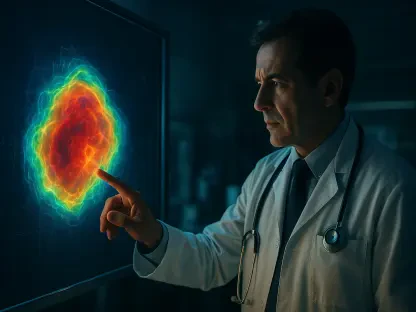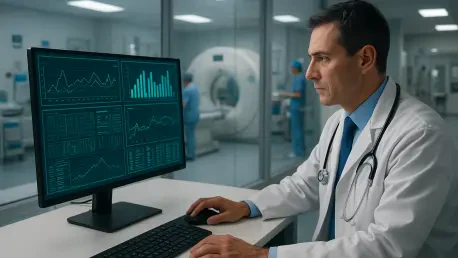

Ensuring that medical resources are allocated only to patients with the most critical diagnostic needs is essential for maintaining hospital efficiency during peak hours. In the chaotic environment of a modern emergency department, physicians must make split-second decisions that significantly impact patient outcomes and institutional budgets. A research team at Taipei Medical University, directed by Professor Yung-Chun Chang, has recently introduced a specialized artificial intelligence system designed to refine these clinical workflows. This predictive model serves as an intelligent assistant, helping doctors determine in real-time whether a computed tomography scan is truly necessary. By leveraging advanced machine learning and language processing, the system addresses the common issue of diagnostic overuse. This innovation aims to reserve high-cost imaging tools for patients who genuinely require them, thereby optimizing the distribution of limited hospital resources.
Balancing Diagnostic Precision and Resource Management
While computed tomography imaging remains a cornerstone of modern diagnostics for identifying life-threatening injuries, its frequent application has inadvertently created a new set of challenges for healthcare providers. Current data suggests that a significant portion of imaging orders in emergency settings—ranging from twenty to forty percent—may not be clinically essential for the final diagnosis. This pattern of overuse contributes to inflated medical costs and places an immense physical and mental burden on hospital staff. Beyond the logistical and financial strain, excessive imaging exposes patients to avoidable levels of ionizing radiation, which presents long-term health risks. The newly developed AI model functions as a sophisticated data-backed filter, identifying specific cases where imaging is unlikely to provide additional value. By flagging these instances, the tool helps reduce systemic pressure and enhances the overall safety of emergency care.
A primary obstacle in developing these automated filters for clinical settings was the inherent complexity found in medical documentation, particularly in diverse linguistic environments. In many hospitals, patient records consist of a “linguistic soup” where medical staff mix Chinese and English while using non-standardized abbreviations and fragmented sentence structures. To navigate these intricate narratives, the researchers at Taipei Medical University engineered a sophisticated clinical language pipeline. This system is capable of normalizing inconsistent terminology and extracting meaning from incomplete or messy symptom descriptions. By utilizing semantic representation learning, the AI can effectively “read” between the lines of informal physician notes. This capability ensures that the software understands the nuance of a patient’s condition rather than just scanning for keywords. Such technical precision is necessary for any tool intended to operate alongside human experts in a professional medical capacity.
Implementing Scalable Solutions for Future Care
To ensure the reliability of the system, the research team conducted an extensive validation process using a massive dataset comprising over 165,000 emergency department records. The results demonstrated a high predictive accuracy rate, particularly when identifying “low-risk” patients who were unlikely to benefit from immediate imaging. In comparative tests, the specialized AI consistently outperformed traditional machine learning methods and established biomedical models. This superior performance is largely attributed to the system’s deep understanding of the context surrounding each emergency visit. Beyond mere diagnostic precision, the tool was designed with practical application as a top priority. Unlike many advanced AI solutions that require immense supercomputing power, this model is optimized to run efficiently on standard hospital hardware. This accessibility ensures that even smaller clinics could implement the technology to improve their own diagnostic accuracy and patient management.
The shift toward intelligent healthcare reflected a significant evolution in how hospitals managed the intersection of clinical expertise and technological support. By moving away from a one-size-fits-all approach to diagnostic imaging, medical facilities provided more personalized care based on the specific nuances of a patient’s history. This objective, evidence-based method reduced the subjectivity that was often found in emergency triage during peak hours. Ultimately, the implementation of these scalable AI blueprints offered a clear path toward lower healthcare costs, reduced radiation exposure, and faster response times for patients in need of urgent care. Hospital administrators and clinicians recognized that the model functioned as a force multiplier, enhancing the quality of decisions without replacing the vital human element. As these systems became standard from 2026, the focus remained on the continuous improvement of patient safety and hospital throughput across the entire network.